The author focuses on one of the most fascinating texts of the 17th and 18th century China mission the Tianxue benyi (The Original Meaning of the Heavenly Teachings) and the more elaborate Gujin jingtian jian (Mirror on the Worship of Heaven in Ancient Times and Nowadays), both written and compiled by the Jesuit Joachim Bouvet (16561730) with the assistance of Chinese converts. The two works were even translated into Latin in order to support the Jesuit position in the Chinese Rites Controversy in the Roman Curia. Through them, Bouvet presented the Jesuit missionary strategy of accommodation in a nutshell: He aimed at introducing Christianity in the terms of Chinese traditional culture. Thus, Bouvets approach can be characterised as an early attempt at a contextualized theology which is meaningful even for contemporary discussions. The present study offers an introduction to Bouvets thoughts and works and their respective historical and theological context, a transcription of the Latin texts the Clestis Disciplinæ vera notitia and the De cultu clesti Sinarum veterum & modernorum with an annotated German translation.
Energy is a key resource for transformational development globally. Oil and gas continue to play a key role in this sector irrespective of the gradual transition towards renewables and will continue to do so in most developing and emerging economies in the near future. The industry is complex and highly capital intensive not only with significant risk, but also with significant benefits. Such a complex but important sector is generally not well understood both in academic and policy circles. This book fills this void by serving as a comprehensive reference to the oil and gas sector, with a focus on emerging markets and developing economies (EMDEs). It offers in-depth coverage of the critical and contemporary issues in the economics of the oil and gas industry by carefully integrating the relevant theoretical underpinnings and practical policy issues across the value chain of the industry in relation to the development, fiscal arrangements, and the economic and financing aspects of the industry. These insights will significantly deepen the understanding of the industry and extend knowledge of the sector in ways that existing books do not. The book includes relevant cases and, thus, will serve as a valuable resource for students taking courses in market analysis of the oil and gas industry, energy economics, development economics and finance, environmental and resource economics, the political economy of the extractive industry, and development studies. Researchers and practitioners working in these areas will also find the book to be a useful reference guide. Autorid: Joshua Yindenaba Abor, Amin Karimu, Runar Brännlund
Despite frequent claims that waste is being reduced, consumer-reliant economies, everyday consumption and the waste industry continue to produce and demand more waste. Combining a lucid style with robust empirical and theoretical research, this book examines the root causes of the global waste problem, rather than simply the symptoms. It challenges existing waste policies, highlighting what needs to change if we are to get serious in tackling this global problem. It concludes with policy implications for shifting waste from an end-of-pipe concern to being at the heart of the debate over decarbonization. Autorid: Nicky Gregson
An analysis of the portrayal of African American life, history, and possibility in the work of three important jazz composers. In Blutopia Graham Lock studies the music and thought of three pioneering twentieth-century musicians: Sun Ra, Duke Ellington, and Anthony Braxton. Providing an alternative to previous analyses of their work, Lock shows how these distinctive artists were each influenced by a common musical and spiritual heritage and participated in self-conscious efforts to create a utopian vision of the future. A century after Ellingtons birth, Lock reassesses his use of music as a form of black history and compares the different approaches of Ra, a band leader who focused on the future and cosmology, and Braxton, a contemporary composer whose work creates its own elaborate mythology. Arguing that the majority of writing on black music and musicians haseven if inadvertentlyincorporated racial stereotypes, he explains how each artist reacted to criticism and sought to break free of categorical confines. Drawing on social history, musicology, biography, cultural theory, and, most of all, statements by the musicians themselves, Lock writes of their influential work. Blutopia will be a welcome contribution to the literature on twentieth-century African American music and creativity. It will interest students of jazz, American music, African American studies, American culture, and cultural studies. Autorid: Graham Lock
Gilles Clement is a horticultural engineer, landscape architect, and lecturer at the Ecole Nationale Superieure de Paysage at Versailles. He has written many books and essays on the philosophy, ecology, and practice of landscape design. Sandra Morris is an independent scholar and translator based in Shropshire, UK. Gilles A. Tiberghien is Professor at Universite Paris 1 Pantheon-Sorbonne and author of many books on art and landscape design.
Unenägude tõlgendamine on Sigmund Freudi peateos, mis kuulub 20. sajandi mõttelugu ja vaimuelu enim mõjutanud raamatute hulka Just see raamat pani aluse Freudi kuulsusele ja populaarsusele, paljud tema tuntud ja poleemikat tekitanud teooriad pärinevad just Unenägude tõlgendamisest. Freudi peamine sõnum lugejale on lihtne: unenägudel on tähendus, mille saab välja tuua psühhoanalüüsi abil. Unenägude tõlgendamine on ühest küljest psühhoanalüüsi alusteos, samas aga võib seda lugeda kui ühte Euroopa kultuuriloo võtmeteksti, mis lõpuks tõlgitud ka eesti keelde. Sigmund Freud (1856?1939) oli Austria neuroloog ja psühholoog, kes sai tuntuks psühhoanalüüsi alusepanijana. Autorid: Sigmund Freud
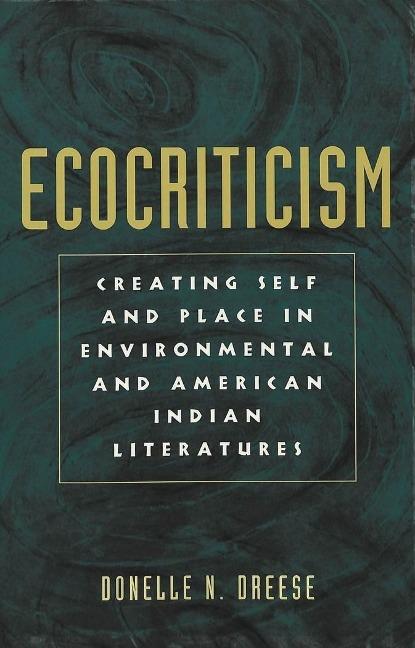
Ecocriticism: Creating Self and Place in Environmental and American Indian Literatures studies twentieth-century poets and prose writers of diverse ethnicity who have attempted to recover a sense of home, identity, community, and place in response to various forms of displacement caused by such forces as colonization, racial and sexual oppression, and environmental alienation. Working from an ecocritical perspective that investigates «place» as inherent in configurations of the self and in the establishment of community and holistic well being, this book examines the centrality of landscape in writers who, either through mythic, psychic, or environmental channels, have identified a landscape or place as intrinsic to their own conceptualizations of self. It also clarifies the territory where postcolonial and American studies intersect by investigating the literary decolonization efforts made by American Indian authors who are writing to reclaim their historical territories.
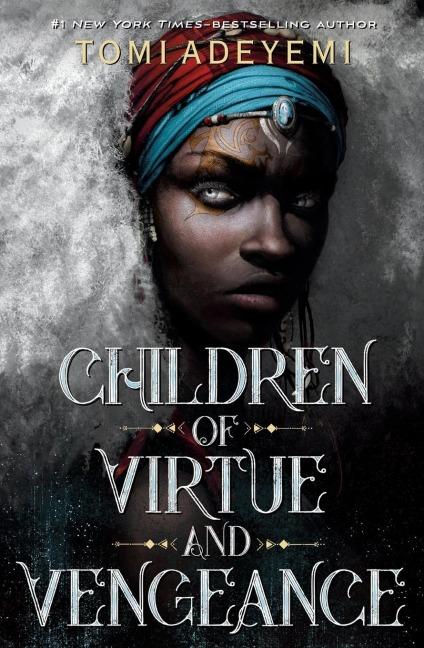
A GOOD MORNING AMERICA BOOK CLUB PICK "Meet Tomi Adeyemi-the new J.K. Rowling. (Yep, she's that good)." -Entertainment WeeklyAfter battling the impossible, Zélie and Amari have finally succeeded in bringing magic back to the land of Orïsha. But the ritual was more powerful than they could've imagined, reigniting the powers of not only the maji, but of nobles with magic ancestry, too. Now, Zélie struggles to unite the maji in an Orïsha where the enemy is just as powerful as they are. But when the monarchy and military unite to keep control of Orïsha, Zélie must fight to secure Amari's right to the throne and protect the new maji from the monarchy's wrath.With civil war looming on the horizon, Zélie finds herself at a breaking point: she must discover a way to bring the kingdom together or watch as Orïsha tears itself apart.Children of Virtue and Vengeance is the stunning sequel to Tomi Adeyemi's New York Times-bestselling debut Children of Blood and Bone, the first book in the Legacy of Orïsha trilogy.Praise for Children of Blood and Bone:"Poses thought-provoking questions about race, class and authority that hold up a warning mirror to our sharply divided society." -The New York Times
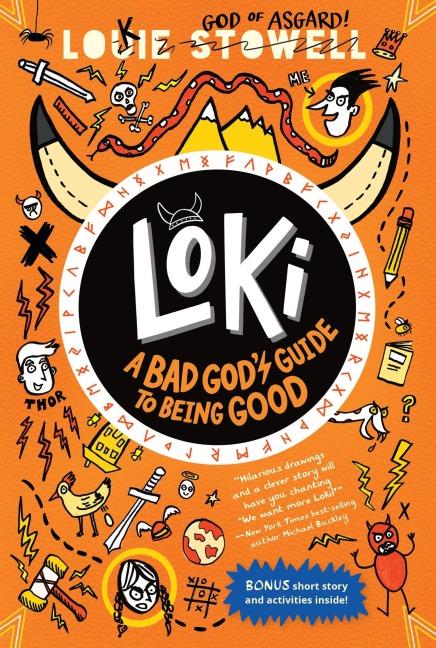
Packed with doodles and cartoons, here is the diary of Loki as he’s trapped on earth as a petulant eleven-year-old—and even worse, annoying thunder god Thor is there, too.After one prank too many, trickster god Loki has been banished to live as a kid on Earth. If he can show moral improvement within one month, he can return to Asgard. If he can't? Eternity in a pit of angry snakes. Rude! To keep track of Loki’s progress, King Odin (a bossy poo-poo head) gives him this magical diary in which Loki is forced to confess the truth, even when that truth is as ugly as a naked mole rat. To make matters worse, Loki has to put up with an eleven-year-old Thor tagging along and making him look bad. Loki is not even allowed to use his awesome godly powers! As Loki suffers the misery of school lunch, discovers the magic of internet videos, and keeps watch for frost giant spies, will he finally learn to tell good from bad, trust from tricks, and friends from enemies? Louie Stowell’s witty text and hysterical drawings will keep readers in stitches from start to finish.
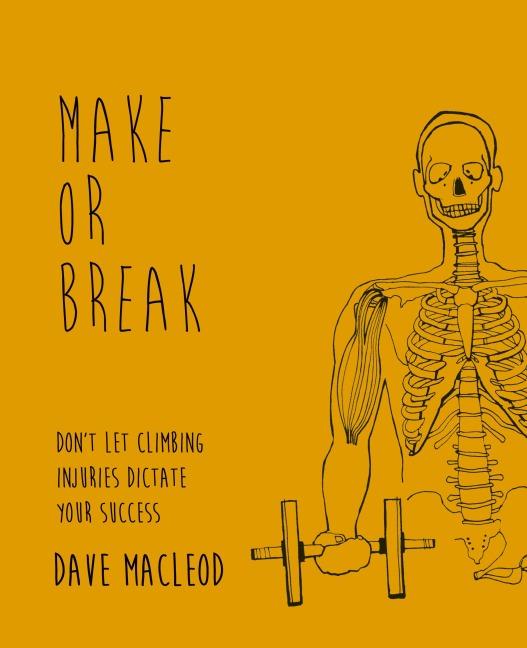
As Wolfgang Gullich said, "getting strong is easy, getting strong without getting injured is hard". Sooner or later, nearly all climbers get injured and it will be injuries that ultimately dictate how far you get in climbing, if you let them. Unfortunately, the data shows it takes over a decade just to get small proportions of medical research adopted in regular practice. Sourcing reliable and up to date advice on preventing and treating finger, elbow, shoulder and other climbing injuries is challenging to say the least. You need to be the expert, because there are so many strands of knowledge and practice to pull together to stay healthy as a climber, and no single source of advice to cover all of these. The book draws together both the cutting edge of peer reviewed sports medicine research, and the subtle concepts of changing your climbing habits and routine to prevent and successfully recover from injuries. It is a handbook on how to take care of yourself as a lifelong climbing athlete. By spanning the fields of climbing coaching, physiotherapy, sports medicine and behavioural science, it goes beyond the general advice on treating symptoms offered by sports medicine textbooks and into much more detail on technique and habits specific to climbing than the existing climbing literature base. You will learn how your current climbing habits are already causing your future injuries and what you can do to change that. If you are already injured, it will prevent you from prolonging your injury with the wrong climbing habits and rehabilitation choices. You will learn how the ingredients of prevention and good recovery come from wildly different sources and how you have been using only a fraction of them. Fully referenced throughout, the practical advice for diagnosis, rehabilitation and prevention of climbing injuries is drawn from up to date peer reviewed sports medicine research.
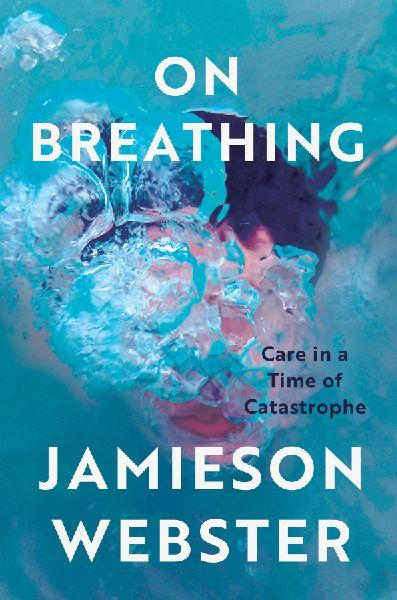
A gorgeous, expansive piece of narrative non-fiction about care, dependence, and what it means to breathe in an age of environmental catastropheA few moments after birth we begin to use our lungs for the first time. From then on, we must continue breathing for as long as we are alive. And although this mostly happens unconsciously, in a society plagued by anxiety, climate change, environmental racism, and illness, there are more and more instances that “teach us about the privilege that is breathing.” Why do we so easily forget the air that we breathe in common? What does it mean to breathe when the environment that sustains life now threatens it? And how can life continue to flourish under conditions that are increasingly toxic? To approach these questions, Jamieson Webster draws on psychoanalytic theory and reflects on her own experiences as an asthmatic teenager, a deep-sea diver, a palliative psychologist during COVID, a psychoanalyst attentive to the somatic, and a new mother. The result is a compassionate and timely exploration of air and breathing as a way to undo the pervasive myth of the individual by considering our dependence on invisible systems, on one another, and the way we have violently neglected this important aspect of life.
This book (hardcover) is part of the TREDITION CLASSICS. It contains classical literature works from over two thousand years. Most of these titles have been out of print and off the bookstore shelves for decades. The book series is intended to preserve the cultural legacy and to promote the timeless works of classical literature. Readers of a TREDITION CLASSICS book support the mission to save many of the amazing works of world literature from oblivion. With this series, tredition intends to make thousands of international literature classics available in printed format again ¿ worldwide.