This classic, definitive series continues with this volume on German armored vehicles from 1905-1945. Spielberger, a leading expert in the field of German military vehicles, presents the wide variety of four-, six-, and eight-wheeled types and their wide r
Language: English, Binding: Hardback, Number of pages: 216, Publishers: Distributed Art Publishers, Author: Rabbi David Ellenson,Ralph Gibson, ISBN-13: 9781942884699, Date of issue: 2020
Perro Apestoso jama?s ha vivido unas Navidades en familia. Para e?l no hay ma?s celebracio?n que la de las basuras recie?n tiradas ni ma?s regalos que las latas de conservas que puede relamer. Pero un di?a conoce a la familia Noel, y piensa que las cosas pueden cambiar...¿Que? aventuras le esperan en esta e?poca tan fri?a del an?o? ¡Acompan?a a Perro Apestoso en su primera Navidad de verdad!
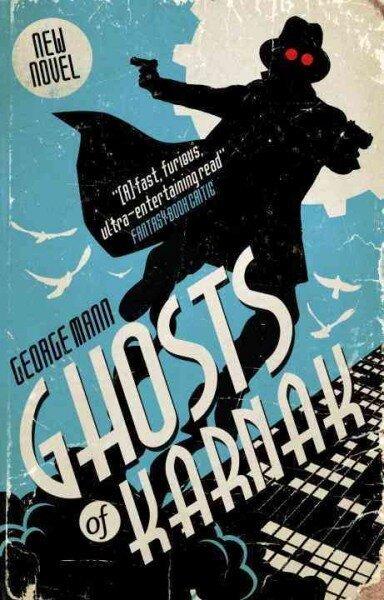
In the aftermath of the events seen in Ghosts of Karnak, and with the political climate somewhat eased, Gabriel takes Ginny to London by airship to recuperate. But he isn’t counting on coming face-to-face with a man who claims to embody the spirit of Albion itself, sinister forces gathering in the London Underground and an old ally – the British spy, Peter Rutherford – who could desperately use his help. Autorid: George Mann
This book's core argument is that an artificial intelligence that could equal or exceed human intelligence is for mathematical reasons impossible. In supporting their claim, the authors marshal evidence from mathematics, physics, computer science, philosophy, linguistics, biology, and anthropology.
Navigate takes an innovative approach to language learning with a state of-the-art syllabus based on the latest research and practical teacher feedback.
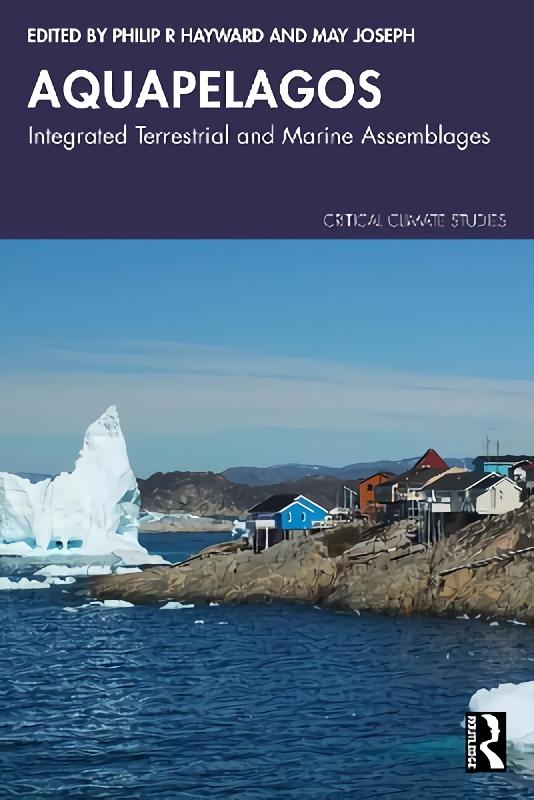
Aquapelagos is a cross disciplinary volume that is geared to a general undergraduate and non-specialist readership while also being rigorous and theoretically exciting for doctoral and advanced researchers of climate and ocean studies. It foregrounds the ocean as a philosophical, navigational and knowledge making interface. Aquapelagos is a cross disciplinary volume that is geared to a general undergraduate and non-specialist readership while also being rigorous and theoretically exciting for doctoral and advanced researchers of climate and ocean studies. It foregrounds the ocean as a philosophical, navigational and knowledge making interface.Drawing on ethnographic, geographic, architectural, sociological and scientific methodogies, Aquapelagos sheds light on varied approaches, dialogues and responses to the catastrophic and impending futures unfolding across the waterfronts from the Andaman Islands, Maldives and Indonesia, to the Grand Banks and the Juan Fernandez Islands. It delves into pressing issues of ocean volatility, ocean toxicity, flooding, inundation, mitigation, rising seas, climate adaptation, in interdisciplinary and comparative global terms. The contributors of this volume explore notions such as the archipelago, lagoon thinking, coastal waterfronts and the littoral imagination as concepts that can open up new ways of understanding the ecologies emerging out of the increasingly wet, accelerated precipitation and global sinking of coastlands and islands across the world. Autorid: Philip Hayward, May Joseph
This text has not been through the Cambridge International endorsement process.. Develop language mastery with targeted skills activities that support and go beyond the textbook. Written for the Cambridge IGCSE French syllabus, this workbook will enable you to: Explore engaging reading and listening extracts, covering every topic in the syllabus - with 28 audio passages online, plus 28 reading passages. Develop your understanding through activities designed to improve specific reading and listening skills. Build your confidence ahead of assessment with activities that help you understand how to approach different question types. Improve your language skills at your own pace, with extracts split into two sections depending on their difficulty level. Keep track of your progress as you work through clear skills development objectives and check your work against the answers supplied online. Autorid: Karine Harrington
Things are quiet in New York. Unusually quiet. Gabriel the Ghost knows that somethings wrong. Theres a heat wave building for a start, and it feels as if the pressures getting unbearable. Somethings going to give.When an expedition returns from Cairo to exhibit their finds at the Metropolitan Museum of Art, Gabriel takes a keen interest. An old friend and lover a girl called Ginny, who he hasnt seen for over a year was part of the expedition.Somethings not right with Ginny, however, and not just the fact shes still drinking something happened to her in Cairo, out on the dig. Something thats related to a strange cult known as The Circle of Thoth, a baboon with a clockwork eye, dust devils on Fifth Avenue, robed assassins, sacrificial rites, a resurrection machine and a ghostly figure clad in trailing bandages, seen floating over the rooftops of the city.Ancient forces are stirring, and the Ghost, Ginny and Gabriels friend Donovan are caught right in the middle Autorid: George Mann
Explore the hidden charm of everyday buildings in this colouring book created by Instagram sensation Urban Anna. From candystores and restaurants to entire urban streets, the beautiful and detailed illustrations in this book are lying in wait for you to add a little magic to every page by bringing them to life with colour. The high quality paper allows you to work with a variety of colouring materials and the easy-to-tear-out pages are perfect for framing and gifting. Step inside and discover a creative urban world with 45 of the most fascinating, inspiring and whimsical buildings from around the globe.
Keep students engaged in online literature classes.This volume considers the challenges and opportunities of online literature classes and suggests instructional strategies that ensure students are engaged in the virtual classroom. The ideas shared here are grounded in research, practice, critical self-reflection, and collaboration. Reflecting a diverse collection of practical tips and experiences from colleagues teaching at a variety of institutions, the essays offer readers the chance to inhabit others' classrooms. Contributors discuss building an interactive and inclusive classroom and using hypertext, video lectures, and other asynchronous and synchronous tools in classes whose subjects include, among others, Shakespeare, the Chinese novel, early American literature, speculative fiction, and contemporary American poetry. Autorid: John Miller, Julie Wilhelm
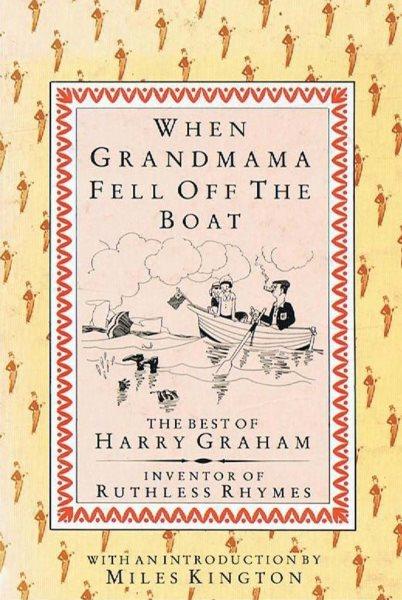
When Grandmama Fell off the Boat is an anthology of the humorous verse of Harry Graham, one of the early 20th centurys wittiest writers. Published in England and America, he was credited with introducing sick verse. His obituary in The Times compared him to Edward Lear, Lewis Carroll and W. S. Gilbert, an epitaph that has stood the test of time. "When Grandmama fell off the boat, And couldnt swim (and wouldnt float), Matilda just stood by and smiled. I almost could have slapped the child."When Grandmama Fell off the Boat is an anthology of the humorous verse of Harry Graham, one of the early 20th centurys wittiest writers. Graham made his name as the author of Ruthless Rhymes for Heartless Homes, published in 1898 under the pseudonym Col. D. Streamer (he was a Coldstream Guard). He went on to become a successful writer of stage-show lyrics, and in 1923 had five smash-hit musicals running simultaneously in the West End of London. His work was published not only in England but also in America, where he was credited with introducing "sick" verse. The Times in its 1936 obituary compared him with Edward Lear, Lewis Carroll, and W. S. Gilbert, an epitaph that has stood the test of time. Grahams secret is his ability to relate common episodes with a sardonic twist. A father irritated by his crying infant finds peace and quiet by popping him in the Frigidaire and a man whose wife elopes with the chauffeur despairs of ever starting the car. His callous and quotable rhymes became the table talk of a generation, influencing emerging writers such as W. H. Auden, George Orwell, and Agatha Christie. Although the ever popular Ruthless Rhymes was republished in 1996, When Grandmama Fell Off The Boat remains the only comprehensive selection of Grahams verse, compiled with the help of his daughter, Virginia. It contains Grahams best work: his sharpest satire, his most readily remembered lines, and his humor at its darkest. This authorized anthology is elegantly designed, and the text is complemented by delightful and amusing period illustrations by Fish, Fougasse, and Ridgewell. Autorid: Harry Graham
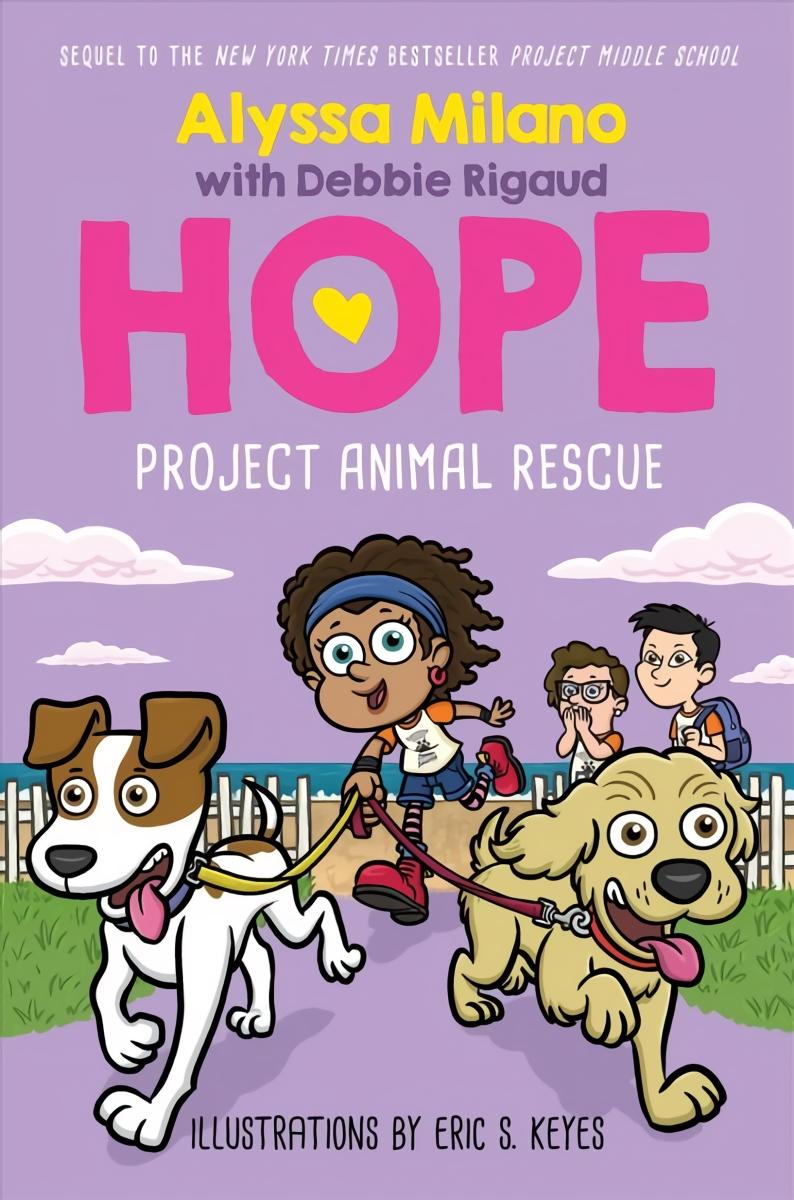
The Eastern Shore Animal Shelter is set to close its doors in just a few weeks, and sixth-grader Hope Roberts is determined to find a way to raise enough money to save the shelter where she adopted her two dogs; she is already working weekends at a doggyday-care site, but it does not seem like that will raise enough money--so Hope needs to come up with another plan to get the support the shelter needs. A sequel to Project Middle School finds 11-year-old Hope Roberts rallying community support when she learns that the local animal shelter from where she adopted her furry best friends is in danger of closing down. Co-written by the author of Truly Madly Royally. Simultaneous eBook. Illustrations. The local animal shelter might be closing -- and it's up to Hope Roberts to save it!Meet Hope Roberts. She's eleven years old, and she wants to be an astrophysicist. She loves swimming, Galaxy Girl comic books, and her two rescue dogs. Hope believes it's always a good day to champion a cause, defend an underdog, and save the future. And most of all, she believes in dreaming big. But though Hope seems super strong on the outside, there's another side of her, too. She's just a regular girl trying to survive middle school.In the second book in Alyssa Milano's funny and relatable middle-grade series, Hope decides to do whatever it takes to stop the local animal shelter from closing down. It's where she found her two furry best friends -- it has to stay open so the other animals there can find their fur-ever homes, too! But can Hope get the support she needs in time to keep the shelter doors open Hope's relatability, kindness, empathy, and can-do attitude will inspire a generation of do-gooders. This new series is a response to the very palpable feeling that not only can young people save the world -- they will! Autorid: Alyssa Milano, Debbie Rigaud, Eric S Keyes
This book brings together experts from different fields and with different jurisdictional focuses to provide fresh ideas and deep insights into crypto regulation. It was originally published as a special issue of Law and Financial Markets Review. This book brings together experts from different fields and with different jurisdictional focuses to provide fresh ideas and deep insights into crypto regulation.Cryptoassets engage many different areas of law, with their own specific terminologies, uncertainties, and regulatory fragmentation. Unsurprisingly, then, crypto has faced calls for new laws, for reform of existing laws, and in some instances outright banning. Against this backdrop, this collection explores different aspects of crypto regulation, with reference to current developments, such as the Markets in Crypto-Assets Regulation, and technological innovations, including central bank digital currencies, smart contracts, and non-fungible tokens. Market, user and law-/policy-maker perspectives are examined to explore not only innovation and opportunities, but also regulatory and policy challenges. This volume will be a key resource for scholars and practitioners of law, finance, public policy, criminology and economics. It was originally published as a special issue of Law and Financial Markets Review. Autorid: Saskia Hufnagel, Colin King
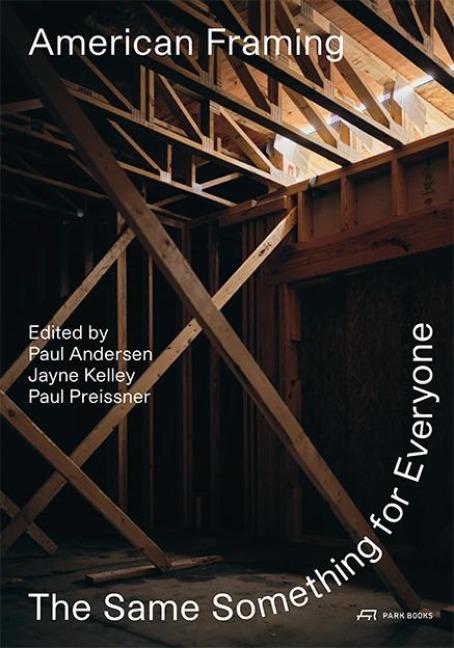
Originating in 1832 in Chicago with a balloon framed warehouse designed by George Washington Snow, the technique of timber framing-also known at the time as "Chicago construction"-introduced softwood construction to the world. Timber frame construction quickly came to dominate the built landscape of America because of the ready availability of the principal material required, the simplicity of construction, and its ability to be erected by low or unskilled workers. The result was a built environment that erased typological and class distinctions of architectural production, as both rich and poor lived in houses that are built the same way. American Framing is a visual and textual exploration of the conditions and consequences of these ubiquitous structures, the architecture which enables architecture. Archival drawings and historical images, along with newly commissioned photographs by Daniel Shea and Chris Strong, in addition to plans and drawings, shed new light on this quintessentially American method of construction.
The book brings together experts from Media and Communication Studies with Postcolonial Studies scholars to illustrate how the two fields may challenge and enrich each other. Its essays introduce readers to selected topics including »Media Convergence«, »Transcultural Subjectivity«, »Hegemony«, »Piracy« and »Media History and Colonialism«. Drawing on examples from film, literature, music, TV and the internet, the contributors investigate the transnational dimensions in today's media, engage with local and global media politics and discuss media outlets as economic agents, thus illustrating mechanisms of power in postcolonial and neo-colonial mediascapes.
Seminar paper from the year 2012 in the subject English Language and Literature Studies - Literature, grade: 2,3, Free University of Berlin (Institut für Englische Philologie), course: Medieval English Literatures II, language: English, abstract: ¿Music, through the sweetness of its melody, brings pleasure and comfort to the soul.¿ This citation by Nigel Wilkin in ¿Music in the Age of Chaucer¿ ascribes a special own form of power to music; the power to affect someone¿s soul. Also in the poem of Orpheus and Eurydice by the Scottish poet Robert Henryson , music plays a decisive role and implies a special power to the protagonist. The poem, which approximately was written in the late fifteenth century, leans on the Greek myth of Orpheus. King Orpheus, who is introduced as the grandson of Memoria and Jupiter, the son of the ¿michty god Phebuss¿ and the muse Caliope, ¿that madin mervalouss,/ The ferd sistir, of all musik maistress¿, gains his bond to music through his mother¿s milk, quod vide ¿gart him souk of hir twa paupis quhyte/ The sueit lecour of all musik perfyte¿. Henryson describes Orpheus as ¿fair and wyse,/ Gentill and gud, full of liberalitie¿. His ¿noble fame¿ was extensive, so that the queen of ¿Trace¿, called Eurydice, heard about him, too. They get married and live their life full of happiness, pleasure and enjoyment.
Winner, Alan Bray Memorial Book Award 2022 Lammy Finalist, LGBTQ Studies Can queer theory be erotophobic? This book proceeds from the perplexing observation that for all of its political agita, rhetorical virtuosity, and intellectual restlessness, queer theory conforms to a model of erotic life that is psychologically conservative and narrow. Even after several decades of combative, dazzling, irreverent queer critical thought, the field remains far from grasping that sexuality's radical potential lies in its being understood as "exogenous, intersubjective and intrusive" (Laplanche). In particular, and despite the pervasiveness and popularity of recent calls to deconstruct the ideological foundations of contemporary queer thought, no study has as yet considered or in any way investigated the singular role of psychology in shaping the field's conceptual impasses and politico-ethical limitations. Through close readings of key thinkers in queer theoretical thoughtEve Kosofsky Sedgwick, Leo Bersani, Lee Edelman, Judith Butler, Lauren Berlant, and Jane GallopHomo Psyche introduces metapsychology as a new dimension of analysis vis-à-vis the theories of French psychoanalyst Jean Laplanche, who insisted on "new foundations for psychoanalysis" that radically departed from existing Freudian and Lacanian models of the mind. Staging this intervention, Ashtor deepens current debates about the future of queer studies by demonstrating how the field's systematic neglect of metapsychology as a necessary and independent realm of ideology ultimately enforces the complicity of queer studies with psychological conventions that are fundamentally erotophobic and therefore inimical to queer theory's radical and ethical project. Autorid: Gila Ashtor
This second edition of Community Oral History Toolkit outlines the basics of oral history, how to design and manage projects, as well as guidelines on interviewing, archiving, and giving back to the community. Updating the original five-volumes into a one-volume publication, the book covers guidelines on thinking through legal needs and ethical issues, the interview process with information on standards, tips on in-person and distance interviewing, interview preparation, question-asking techniques, documenting interview information, and, moving to the final steps, guides for preservation and ongoing access of oral histories. The authors illustrate this work with examples of worldwide community-based oral history projects and individual profiles, while describing the projects' process and outcomes. It also includes sample forms for recordkeeping and updated technology guidelines, as well as resources for community oral historians to stay ahead of changes in the field. The final chapter takes an in-depth look at six community-based projects, each unique in their place and purpose, but all based in the scaffolding of the oral history process. Community Oral History Toolkit will be of interest to oral history, anthropology, and sociology students, as well as practicing and professional historians. This second edition of Community Oral History Toolkit outlines the basics of oral history, how to design and manage projects, as well as guidelines on interviewing, archiving and giving back to the community. Autorid: Mary Kay Quinlan, Barbara W. Sommer, Nancy MacKay
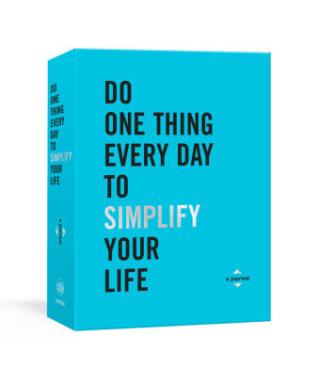
365 quotes and prompts to help you get rid of what's inessential and focus on the important aspects of your life--part of the bestselling Do One Thing Every Day journal series.Clutter is not just what you trip over, or paw through looking for your glasses or car keys. It's a state of mind. This journal offers 365 prompts and inspiring quotes that will help you clear your space, inside and out, including "Write about an important thing that turned out to be simple today and a simple thing that turned out to be hard today," and from Socrates: "How many things can I do without?" These thought-provoking questions will help you declutter various parts of your life so that you can uncover what is truly important and worth keeping.
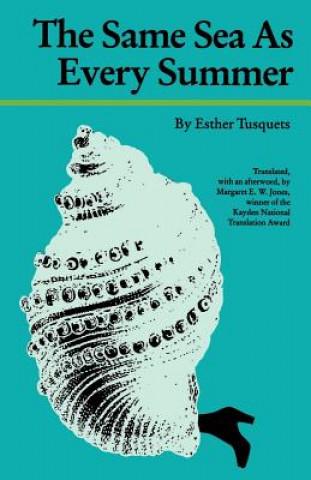
Poetic and erotic, El mismo mar de todos los veranos ( "The Same Sea As Every Summer") was originally published in Spain in 1978, three years after the death of Franco and in the same year that government censorship was abolished. But even in a new era that fostered more liberal attitudes toward divorce, homosexuality, and women's rights, this novel by Esther Tusquets was controversial. Its feminine view of sexuality2;in particular, its depiction of a lesbian relationship2;was unprecedented in Spanish fiction. Now its complex moods and rhythms have been caught in an English translation by Margaret E. W. Jones that has won the Kayden National Translation Award. The disillusioned narrator of "The Same Sea As Every Summer" is a middle-aged woman whose unhappy life prompts a journey into she past to rediscover a more authentic self. However, events force her to realize that love or trust will inevitably be repaid by betrayal. This pattern assumes various forms in a story that moves forward as well as backward, playing out in Barcelona among the haute bourgeoisie. Richly textured with allusion, "The Same Sea As Every Summer" is also a commentary on post-Civil War Spanish society by an author who grew up during the repressive Franco regime. Esther Tusquets7;s other novels include El amor es un juego solitano (1979) and Para no volver (1985).