Can a Canaanite harlot who made her living enticing men be a fitting wife for a leader of Israel? Shockingly, the Bible's answer is yes.This 10th anniversary edition of Pearl in the Sand includes new features that will invite
With a mixture of interesting photographs and charming illustrations, this book is a first introduction to the Hindu holiday of Diwali. Babies will love to explore the touch-and-feel tactiles on every spread as they turn the pages of this bright and colourful board book. Each page features a word and image associated with Diwali, making this the perfect gift for any young child celebrating with their family. Celebrate 25 years of Priddy Books! Inspiring a love of learning in over 200 million babies, toddlers and young children. Autorid: Priddy Books
Interactions between the fields of physics and biology reach back over a century, and some of the most significant developments in biology - from the discovery of DNA's structure to imaging of the human brain - have involved collaboration across this disciplinary boundary. For a new generation of physicists, the phenomena of life pose exciting challenges to physics itself, and biophysics has emerged as an important subfield of this discipline. Here, William Bialek provides the first graduate-level introduction to biophysics aimed at physics students. Bialek begins by exploring how photon counting in vision offers important lessons about the opportunities for quantitative, physics-style experiments on diverse biological phenomena. He draws from these lessons three general physical principles - the importance of noise, the need to understand the extraordinary performance of living systems without appealing to finely tuned parameters, and the critical role of the representation and flow of information in the business of life.Bialek then applies these principles to a broad range of phenomena, including the control of gene expression, perception and memory, protein folding, the mechanics of the inner ear, the dynamics of biochemical reactions, and pattern formation in developing embryos. Featuring numerous problems and exercises throughout, "Biophysics" emphasizes the unifying power of abstract physical principles to motivate new and novel experiments on biological systems. It covers a range of biological phenomena from the physicist's perspective. It features 200 problems. It is draws on statistical mechanics, quantum mechanics, and related mathematical concepts. It includes an annotated bibliography and detailed appendixes. It is an instructor's manual (available only to teachers).
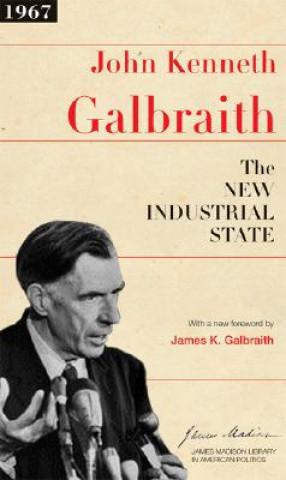
With searing wit and incisive commentary, John Kenneth Galbraith redefined America's perception of itself in "The New Industrial State, one of his landmark works. The United States is no longer a free-enterprise society, Galbraith argues, but a structured state controlled by the largest companies. Advertising is the means by which these companies manage demand and create consumer "need" where none previously existed. Multinational corporations are the continuation of this power system on an international level. The goal of these companies is not the betterment of society, but immortality through an uninterrupted stream of earnings. First published in 1967, "The New Industrial State" continues to resonate today.
This illustrated history portrays one of Englands finest major cities. It provides a nostalgic look at Birminghams past and highlights the special character of some of its most important historic sites. The photographs are taken from the Historic England Archive, a unique collection of over 12 million photographs, drawings, plans and documents covering Englands archaeology, architecture, social and local history. Pictures date from the earliest days of photography to the present and cover subjects from Bronze Age burials and medieval churches to cinemas and seaside resorts. Birmingham has long been an important centre in the West Midlands but during the Industrial Revolution it grew to become Englands second city. The myriad of manufacturing businesses in Birmingham created a dynamic local economy and the city prospered. Although the town was heavily bombed in the Second World War and its infrastructure was badly damaged, the city was redeveloped post-war, with many areas being rebuilt from scratch. Birmingham continued to be regenerated in subsequent decades and today it is a powerful commercial city of international importance.
Black is the favourite colour for a wide range of people, from priests to penitents, artists and ascetics, fashion designers and fascists, and has stood for powerfully opposed ideas: authority, humility, sin, holiness, rebellion, conformity, wealth and poverty. But what is the true meaning of black, and how and why does it change through time?
Reljeefse pinnaviimistluse ja tammepuidu imitatsiooniga ühelipiline laminaatparkett. Parketi mõõtmed on 128,5 x 19,2 cm ja paksus 8 mm. Kasutusklass 32 - sobilik suure koormusega kodupindadele ja mõõduka koormusega äripindadele. Pakis on 9 paneeli ehk 2,22 m².
From the Ishango Bone of central Africa and the Inca quipu of South America to the dawn of modern mathermatics, The Crest of the Peacock makes it clear that human beings everywhere have been capable of advanced and innovative mathematical thinking. George Gheverghese Joseph takes us on a breathtaking multicultural tour of the roots and shoots of non-European mathematics. He shows us the deep influence that the Egyptians and Babylonians bad on the Greeks, the Arabs' major creative contributions, and the astounding range of successe of the great civilizations of India and China.The third edition emphasizes the dialogue between civilizations and further explores how mathematical ideas were transmitted from East to West. The book's scope is now even wider, incorporating recent findings on the history of mathematics in China, India, and early Islamic civilizations as well as Egypt and Mesopotamia. with more detailed coverage of proto-mathematics and the origins of trigonometry and infinity in the East, The Crest of the Peacock further illuminates the global history of mathematics."Enthralling...After reading it, we cannot see the past in the same comforting haze of age-old stories, faithfully and uncritically retold from teacher to pupil down the years... Invaluable for mathematics teachers at all levels."---New Scientist"What is valuable here is the unified approach that Joseph brings. . . and the nontechnical clarity that the attempt to reorder historical priorities and educate his readers out their European prejudices requires."---Times Literary Supplement From the Ishango Bone of central Africa and the Inca quipu of South America to the dawn of modern mathematics, The Crest of the Peacock makes it clear that human beings everywhere have been capable of advanced and innovative mathematical thinking. George Gheverghese Joseph takes us on a breathtaking multicultural tour of the roots and shoots of non-European mathematics. He shows us the deep influence that the Egyptians and Babylonians had on the Greeks, the Arabs' major creative contributions, and the astounding range of successes of the great civilizations of India and China. The third edition emphasizes the dialogue between civilizations, and further explores how mathematical ideas were transmitted from East to West. The book's scope is now even wider, incorporating recent findings on the history of mathematics in China, India, and early Islamic civilizations as well as Egypt and Mesopotamia. With more detailed coverage of proto-mathematics and the origins of trigonometry and infinity in the East, The Crest of the Peacock further illuminates the global history of mathematics. Autorid: George Gheverghese Joseph
"Globalization" has become a popular buzzword for explaining today's world. The expression achieved terminological stardom in the 1990s and was soon embraced by the general public and integrated into numerous languages. But is this much-discussed phenomenon really an invention of modern times? In this work, Jurgen Osterhammel and Niels Petersson make the case that globalization is not so new, after all. Arguing that the world did not turn "global" overnight, the book traces the emergence of globalization over the past seven or eight centuries. In fact, the authors write, the phenomenon can be traced back to early modern large-scale trading, for example, the silk trade between China and the Mediterranean region, the shipping routes between the Arabian Peninsula and India, and the more frequently traveled caravan routes of the Near East and North Africa--all conduits for people, goods, coins, artwork, and ideas. Osterhammel and Petersson argue that the period from 1750 to 1880--an era characterized by the development of free trade and the long-distance impact of the industrial revolution--represented an important phase in the globalization phenomenon. Moreover, they demonstrate how globalization in the mid-twentieth century opened up the prospect of global destruction though nuclear war and ecological catastrophe. In the end, the authors write, today's globalization is part of a long-running transformation and has not ushered in a "global age" radically different from anything that came before. This book will appeal to historians, economists, and anyone in the social sciences who is interested in the historical emergence of globalization. Autorid: Jürgen Osterhammel, Niels P. Petersson, Dona Geyer
Seit Caruso auf dem Hühnerhof eingezogen ist, ist beim alten Petterson und Findus nichts mehr wie es war. Die Hühner sehen nur noch ihn und Kater Findus ist echt sauer...
Using tools of documentary filmmaking, found objects and an expanded visual language Rahima Gambo explores the experimental narrative of walking. In her videos and installations documentary storytelling, embodiment, psycho-spiritual geography, sociopolitics, urban environment, and autobiography intersect. Based on her video the artist contextualizes her work in Nigeria's political situation, describing walking as an artistic practice as well as an act of everyday resistance.
An innovative analysis that traces the continuity of the states custodianship of Islam as the preferred religion in the Middle East and North Africa In The Making of the Modern Muslim State, Malika Zeghal reframes the role of Islam in modern Middle East governance. Challenging other accounts that claim that Middle Eastern states turned secular in modern times, Zeghal shows instead the continuity of the states custodianship of Islam as the preferred religion. Drawing on intellectual, political, and economic history, she traces this custodianship from early forms of constitutional governance in the nineteenth century through postArab Spring experiments in democracy. Zeghal argues that the intense debates around the implementation and meaning of state support for Islam led to a political cleavage between conservatives and their opponents that long predated the polarization of the twentieth century that accompanied the emergence of mass politics and Islamist movements.Examining constitutional projects, public spending, school enrollments, and curricula, Zeghal shows that although modern Muslim-majority polities have imported Western techniques of governance, the state has continued to protect and support the religion, community, and institutions of Islam. She finds that even as Middle Eastern states have expanded their nonreligious undertakings, they have dramatically increased their per capita supply of public religious provisions, especially Islamic educationfurther feeding the political schism between Islamists and their adversaries. Zeghal illuminates the tensions inherent in the partnerships between states and the body of Muslim scholars known as the ulama, whose normative power has endured through a variety of political regimes. Her detailed and groundbreaking analysis, which spans Tunisia, Morocco, Egypt, Turkey, Syria, and Lebanon, makes clear the deep historical roots of current political divisions over Islam in governance. Autorid: Malika Zeghal
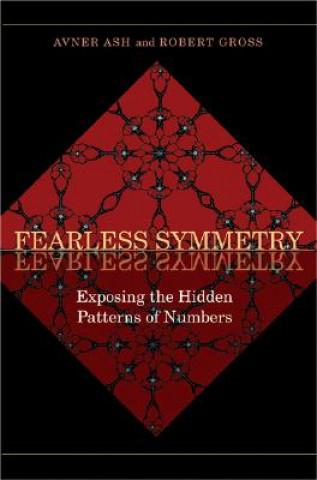
Mathematicians solve equations, or try to. But sometimes the solutions are not as interesting as the beautiful symmetric patterns that lead to them. Written in a friendly style for a general audience, Fearless Symmetry is the first popular math book to discuss these elegant and mysterious patterns and the ingenious techniques mathematicians use to uncover them. Hidden symmetries were first discovered nearly two hundred years ago by French mathematician variste Galois. They have been used extensively in the oldest and largest branch of mathematics--number theory--for such diverse applications as acoustics, radar, and codes and ciphers. They have also been employed in the study of Fibonacci numbers and to attack well-known problems such as Fermat's Last Theorem, Pythagorean Triples, and the ever-elusive Riemann Hypothesis. Mathematicians are still devising techniques for teasing out these mysterious patterns, and their uses are limited only by the imagination. The first popular book to address representation theory and reciprocity laws, Fearless Symmetry focuses on how mathematicians solve equations and prove theorems. It discusses rules of math and why they are just as important as those in any games one might play. The book starts with basic properties of integers and permutations and reaches current research in number theory. Along the way, it takes delightful historical and philosophical digressions. Required reading for all math buffs, the book will appeal to anyone curious about popular mathematics and its myriad contributions to everyday life. Autorid: Avner Ash, Robert Gross
Glasgow 1817 and a young deaf woman is accused of infanticide but is she fit to stand trial? The teacher sent to investigate moves from interpreter to investigator, as he determines to clear her name before it's too late. Based on a true story.
Organized thematically, this book addresses the origin and evolution of snakes; their morphology and function; how and where they live; their methods of feeding, defense, and reproduction; their taxonomy and classification; and their interaction with humans. It also features 200 photographs of snakes from around the world along with fact boxes.
Theorie und Gesellschaft§Als Mitbegründer der "Subaltern Studies" ist der indische Historiker Dipesh Chakrabarty einer der Vorreiter der postkolonialen Geschichtsschreibung. Seine einflussreichen Schriften umfassen ein breites Spektrum, das von der Geschichte der Arbeiterklasse bis zur Herausbildung einer Mittelschicht im kolonialen Indien reicht, aber auch die Geschichte der indigenen Völker Australiens und globale Risiken wie die Klimakatastrophe umfasst. Mit seinen Arbeiten hat Chakrabarty außerdem wesentlich zu einer Kritik des Eurozentrismus in den Geistes- und Sozialwissenschaften beigetragen, zugleich aber auch auf die Schwierigkeiten, diesen zu überwinden, hingewiesen. Seine Studien verdeutlichen die Grenzen der Anwendung zentraler Kategorien der europäischen Moderne, wie Aufklärung und Säkularisation, für eine Analyse nicht westlicher Gesellschaften. Sein Werk ist in mehrere Sprachen übersetzt und weit über die Fachgrenzen der Geschichte hinaus rezipiert worden. Die in diesem Buch versammelten Aufsätze geben erstmals in deutscher Übersetzung einen Überblick über die wichtigsten Thesen und Forschungen von Dipesh Chakrabarty.
Language: English, Binding: Paperback, Number of pages: 672, Publishers: Princeton University Press, Author: HOWELL, ISBN-13: 9780691137278, Date of issue: 2027
Trixie Elli Bed Square – pehme ja vastupidav ruudukujuline pesakoht koertele ja kassidele. Valmistatud struktureeritud polüestrist paksu fliisitäidisega ja libisemiskindla alusega. Lihtne hooldada ja masinpesuprogrammiga pestav.
Sergey Prokofiev (1891-1953), arguably the most popular composer of the twentieth century, led a life of triumph and tragedy. The story of his prodigious childhood in tsarist Russia, maturation in the West, and rise and fall as a Stalinist-era composer is filled with unresolved questions. "Sergey Prokofiev and His World" probes beneath the surface of his career and contextualizes his contributions to music on both sides of the nascent Cold War divide. The book contains previously unknown documents from the Russian State Archive of Literature and Art in Moscow and the Prokofiev Estate in Paris. The literary notebook of the composer's mother, Mariya Grigoryevna, illuminates her involvement in his education and is translated in full, as are ninety-eight letters between the composer and his business partner, Levon Atovmyan.The collection also includes a translation of Sigizmund Krzhizhanovsky's unperformed stage adaptation of "Eugene Onegin", for which Prokofiev composed incidental music in 1936. The essays in the book range in focus from musical sketches to Kremlin decrees.The contributors explore Prokofiev's time in America; evaluate his working methods in the mid-1930s; document the creation of his score for the film "Lieutenant Kizhe"; tackle how and why Prokofiev rewrote his 1930 "Fourth Symphony" in 1947; detail his immortalization by Soviet bureaucrats, composers, and scholars; and, examine Prokofiev's interest in Christian Science and the paths it opened for his music. The contributors are Mark Aranovsky, Kevin Bartig, Elizabeth Bergman, Leon Botstein, Pamela Davidson, Caryl Emerson, Marina Frolova-Walker, Nelly Kravetz, Leonid Maximenkov, Stephen Press, and Peter Schmelz.
Historical accounts of Jewish violence - particularly against Christians - have long been explosive material. Some historians have distorted these records for anti-Semitic purposes. Others have discounted, dismissed, or simply ignored the evidence, often for apologetic purposes. In "Reckless Rites", Elliott Horowitz takes a new and forthright look at both the history of Jewish violence since late antiquity and the ways in which generations of historians have grappled with that history. In the process, he has written the most wide-ranging book on Jewish violence in any language, and the first to fully acknowledge and address the actual anti-Christian practices that became part of the playful, theatrical violence of the Jewish festival of Purim.He has also examined the different ways in which the book of Esther, upon which the festival is based, was used by Jews and Christians over the centuries - whether as an ancient mirror of modern tribulations or as the scriptural basis for anti-Semitic claims regarding the bloodthirstiness of the Jews."Reckless Rites" reassesses the historical interpretation of Jewish violence - from the alleged massacre of thousands of Christians in seventh-century Jerusalem to later medieval attacks on Christian symbols such as the crucifix, transgressions that were often committed in full knowledge that their likely consequence would be death. A book that calls for major changes in the way that Jewish history is written and conceptualized, "Reckless Rites" will be essential reading for scholars and students of history, religion, and Jewish-Christian relations.
International Finance presents the corporate uses of international financial markets to upper undergraduate and graduate students of business finance and financial economics. Combining practical knowledge, up-to-date theories, and real-world applications, this textbook explores issues of valuation, funding, and risk management. International Finance shows how theoretical applications can be brought into managerial practice. The text includes an extensive introduction followed by three main sections: currency markets; exchange risk, exposure, and risk management; and long-term international funding and direct investment. Each section begins with a short case study, and each of the sections' chapters concludes with a CFO summary, examining how a hypothetical chief financial officer might apply topics to a managerial setting. The book also contains end-of-chapter questions to help students grasp the material presented. Focusing on international markets and multinational corporate finance, International Finance is the go-to resource for students seeking a complete understanding of the field.Rigorous focus on international financial markets and corporate finance concepts An up-to-date and practice-oriented approach Strong real-world examples and applications Comprehensive look at valuation, funding, and risk management Introductory case studies and "CFO summaries," and end-of-chapter quiz questions Solutions to the quiz questions are available online Autorid: Piet Sercu
The Chinese invented gunpowder and began exploring its military uses as early as the 900s, four centuries before the technology passed to the West. But by the early 1800s, China had fallen so far behind the West in gunpowder warfare that it was easily defeated by Britain in the Opium War of 1839-42. What happened? In The Gunpowder Age, Tonio Andrade offers a compelling new answer, opening a fresh perspective on a key question of world history: why did the countries of western Europe surge to global importance starting in the 1500s while China slipped behind?
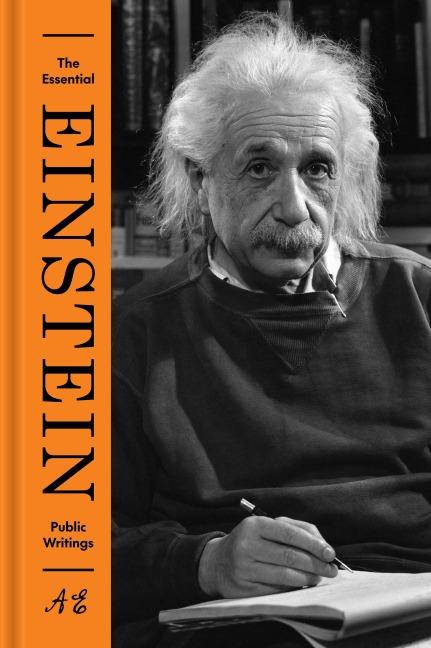
The ultimate collection of Einstein’s public writings on everything from religion and art to pacifism and the atomic bombThe Essential Einstein: Public Writings presents a rich selection of Einstein’s humanistic writings drawn from a diverse array of materials he sanctioned for publication during his lifetime. Distinct from previous collections, this incisive book presents previously excerpted works in their entirety, including key articles, lectures, and speeches. These writings delve into significant topics such as philosophy, religion, and art, but also specific important and often contentious issues in education, politics, disarmament, pacifism, international cooperation, the atomic bomb, and Zionism. Among these works, readers will find the brilliant “Notes for an Autobiography” alongside selected popular science articles, which offer a profound understanding of Einstein’s ethical and political worldview.The Essential Einstein is a two-volume compendium offering general readers and specialists alike a comprehensive resource on the pivotal writings of Albert Einstein. Organized chronologically by leading authorities on Einstein and his work, this collection illuminates the evolution of Einstein’s scientific and humanistic ideas throughout his life. Each selection is accompanied by explanatory notes that detail the work’s background and significance.Together with The Essential Einstein: Scientific Writings, this authoritative collection invites a deeper engagement with the intellectual legacy and enduring influence of Albert Einstein.
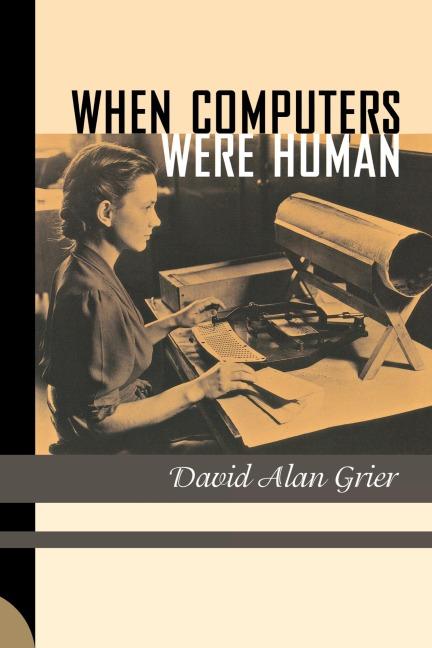
Before Palm Pilots and iPods, PCs and laptops, the term "computer" referred to the people who did scientific calculations by hand. These workers were neither calculating geniuses nor idiot savants but knowledgeable people who, in other circumstances, might have become scientists in their own right. When Computers Were Human represents the first in-depth account of this little-known, 200-year epoch in the history of science and technology. Beginning with the story of his own grandmother, who was trained as a human computer, David Alan Grier provides a poignant introduction to the wider world of women and men who did the hard computational labor of science. His grandmother's casual remark, "I wish I'd used my calculus," hinted at a career deferred and an education forgotten, a secret life unappreciated; like many highly educated women of her generation, she studied to become a human computer because nothing else would offer her a place in the scientific world. The book begins with the return of Halley's comet in 1758 and the effort of three French astronomers to compute its orbit. It ends four cycles later, with a UNIVAC electronic computer projecting the 1986 orbit. In between, Grier tells us about the surveyors of the French Revolution, describes the calculating machines of Charles Babbage, and guides the reader through the Great Depression to marvel at the giant computing room of the Works Progress Administration. When Computers Were Human is the sad but lyrical story of workers who gladly did the hard labor of research calculation in the hope that they might be part of the scientific community. In the end, they were rewarded by a new electronic machine that took the place and the name of those who were, once, the computers.
Problems require solutions. But what is defined as a problem, and how are answers and solutions found? In view of the climate catastrophe, the unjust distribution of wealth and the demand for liveable housing and urban spaces for all, often it is purely technical solutions that are promoted, meaning existing power relations are ignored.In contrast, we propose nonsolution, a politicised approach to the problem of finding a solution. We pick up the word nonsolution, and the conceptual outlook it stands for, from the writings of sociologist, historian and urban theorist Siegfried Kracauer, to open up spaces for thinking critically along the lines of radical democracy: solutions are not avoided, but rather an active nonsolution is pursued. The non marks the rejection of closed identities, the affirmation of conflict and opposition, and the entering of architecture into political alliances. With regard to housing and urban development against the pressure of capitalisation and exclusion, we combine planning activity with political theory to form a critique of architectural practice.
Contemporary discussions in philosophy of mind have largely been shaped by physicalism, the doctrine that all phenomena are ultimately physical. Here, Jaegwon Kim presents the most comprehensive and systematic presentation yet of his influential ideas on the mind-body problem. He seeks to determine, after half a century of debate: What kind of (or "how much") physicalism can we lay claim to? He begins by laying out mental causation and consciousness as the two principal challenges to contemporary physicalism. How can minds exercise their causal powers in a physical world? Is a physicalist account of consciousness possible? The book's starting point is the "supervenience" argument (sometimes called the "exclusion" argument), which Kim reformulates in an extended defense. This argument shows that the contemporary physicalist faces a stark choice between reductionism (the idea that mental phenomena are physically reducible) and epiphenomenalism (the view that mental phenomena are causally impotent). Along the way, Kim presents a novel argument showing that Cartesian substance dualism offers no help with mental causation. Mind-body reduction, therefore, is required to save mental causation. But are minds physically reducible? Kim argues that all but one type of mental phenomena are reducible, including intentional mental phenomena, such as beliefs and desires. The apparent exceptions are the intrinsic, felt qualities of conscious experiences ("qualia"). Kim argues, however, that certain relational properties of qualia, in particular their similarities and differences, are behaviorally manifest and hence in principle reducible, and that it is these relational properties of qualia that are central to their cognitive roles. The causal efficacy of qualia, therefore, is not entirely lost. According to Kim, then, while physicalism is not the whole truth, it is the truth near enough.
The objective of this book is the reconsideration of the practices of personal adornment during the Neolithic period in Greece, through the assemblage, extensive bibliographic documentation, and critical evaluation of all the available data deriving from more than a hundred sites in the mainland and the Aegean islands &;an archaeological archive of wide geographical and chronological scope. In addition, a thorough study of the personal ornament corpus from the Middle-Late Neolithic Dispilio in Kastoria, an important lakeside settlement in north-western Greece, was conducted. The book begins with an overview of the anthropological and archaeological literature on theoretical and methodological issues concerning practices of personal adornment. Then follows an examination of the problems and key points of study regarding personal adornment in Neolithic Greece, as well as a critical evaluation of the methodological approaches and classification schemes that have been applied in previous archaeological works. Subsequently, the technologies and processes of production, consumption, recycling, deposition, and distribution of personal ornaments in Neolithic Greece are discussed. Finally, the social correlates of personal adornment are explored, as they are reflected in the choice of different raw materials (shell, clay, bone, stone, and metal) and ornament types (beads, pendants, annulets, and so forth). Autorid: Fotis Ifantidis
"Essential Radio Astronomy is an excellent introduction to the fundamentals of radio astronomy for advanced undergraduates and beginning graduate students. It is a comprehensive, up-to-date guide to radio astronomical hardware, physical processes, and cosmic sources of radio radiation and belongs in the bookcase of every budding radio astronomer. It can also serve as a basic reference for any astronomer, no matter what their specialty is."--Leo Blitz, University of California, Berkeley"This book provides advanced undergraduates, graduate students, and astronomers with an invaluable introduction to the key ideas in radio astronomy. Written by two highly respected astronomers, Essential Radio Astronomy explains the underlying physics, the properties of astronomical sources ranging from active galactic nuclei to the cosmic microwave background, as well as how radio telescopes observe the sky."--David N. Spergel, Princeton University"Fantastic. I have been teaching radio astronomy at Harvard for more than forty years, and this is the book I wish I had had to teach from--and the book I wish I had written myself. It is destined to become the essential resource for all aspiring radio astronomers and for anyone who uses radio astronomical data."--James M. Moran, Harvard-Smithsonian Center for Astrophysics"This book, honed over many years in the classroom, fills a clear need for a single volume covering the physical and mathematical foundations of radio astronomy. It is greatly to be welcomed and will surely find its place on the shelves of most professional radio astronomers and students of the discipline."--Peter Wilkinson, University of Manchester
In their personal lives, people consider it essential to separate economics and intimacy. We have, for example, a long-standing taboo against workplace romance, while we see marital love as different from prostitution because it is not a fundamentally financial exchange. In The Purchase of Intimacy, Viviana Zelizer mounts a provocative challenge to this view. Getting to the heart of one of life's greatest taboos, she shows how we all use economic activity to create, maintain, and renegotiate important ties--especially intimate ties--to other people. In everyday life, we invest intense effort and worry to strike the right balance. For example, when a wife's income equals or surpasses her husband's, how much more time should the man devote to household chores or child care? Sometimes legal disputes arise. Should the surviving partner in a same-sex relationship have received compensation for a partner's death as a result of 9/11? Through a host of compelling examples, Zelizer shows us why price is central to three key areas of intimacy: sexually tinged relations; health care by family members, friends, and professionals; and household economics.She draws both on research and materials ranging from reports on compensation to survivors of 9/11 victims to financial management Web sites and advice books for same-sex couples. From the bedroom to the courtroom, The Purchase of Intimacy opens a fascinating new window on the inner workings of the economic processes that pervade our private lives.
In the 1980s, America was gripped by widespread panics about Satanic cults. Conspiracy theories abounded about groups who were allegedly abusing children in day-care centers, impregnating girls for infant sacrifice, brainwashing adults, and even controlling the highest levels of government. As historian of religions David Frankfurter listened to these sinister theories, it occurred to him how strikingly similar they were to those that swept parts of the early Christian world, early modern Europe, and postcolonial Africa. He began to investigate the social and psychological patterns that give rise to these myths. Thus was born Evil Incarnate, a riveting analysis of the mythology of evilconspiracy. The first work to provide an in-depth analysis of the topic, the book uses anthropology, the history of religion, sociology, and psychoanalytic theory, to answer the questions "What causes people collectively to envision evil and seek to exterminate it?" and "Why does the representation of evil recur in such typical patterns?" Frankfurter guides the reader through such diverse subjects as witch-hunting, the origins of demonology, cannibalism, and the rumors of Jewish ritual murder, demonstrating how societies have long expanded upon their fears of such atrocities to address a collective anxiety. Thus, he maintains, panics over modern-day infant sacrifice are really not so different from rumors about early Christians engaging in infant feasts during the second and third centuries in Rome. In Evil Incarnate, Frankfurter deepens historical awareness that stories of Satanic atrocities are both inventions of the mind and perennial phenomena, not authentic criminal events. True evil, as he so artfully demonstrates, is not something organized and corrupting, but rather a social construction that inspires people to brutal acts in the name of moral order.
"Deborah Gordon has produced a delightful and scholarly introduction to ant colony organization that teaches as it entertains. Building on decades of observation, experimentation, and simulation, she convincingly demonstrates that ants form self-organized communities, in which individual tasks change dynamically as conditions and interaction networks shift. Placing her work in a historical framework that reaches from Darwin to political theory, Gordon conclusively makes the case that ant societies are model systems for the study of collective behavior."--Simon A. Levin, Princeton University"Deborah Gordon's amazingly detailed book on the complex web of interactions in ant colonies makes fascinating reading for anyone who is curious about the world around us. And--even more interestingly from my point of view--this book provides rich fodder for understanding other kinds of collective intelligence, from neurons in the brain to human societies linked by the Internet."--Thomas W. Malone, Massachusetts Institute of Technology"Ant societies are like--and not like--human societies. Deborah Gordon's new book takes on these fascinating contradictions and achieves the rare balance of serving as an introduction for those wishing to learn about the wonders of the ant society, as well as a guide to the latest developments in group functioning and development."--Peter Nonacs, University of California, Los Angeles"Gordon convincingly argues that the behavior of ants within and outside a colony depends largely upon the simple metric of interactions with others. Provocative and stimulating, this book challenges prevailing paradigms and dogmas about social insect behavior. It will engage biologists interested in social insects and nonbiologists interested in complex systems."--Mark Elgar, University of Melbourne