40 cm läbimõõduga ja kolme reguleeritava kiirusega koos võnkumisega 50 W Neo Tools põrandaventilaator on ideaalne jahutuskaaslane igasse ruumi. See mitmekülgne ventilaator on loodud selleks, et tagada teie ruumis ühtlane ja värske õhuvool ning optimaalne mugavus soojadel päevadel. Selle 50-vatine mootor on nii võimas kui ka säästlik, tagades tugeva jõudluse, hoides samal ajal energiatarbimise kontrolli all. 40 cm läbimõõduga labad on ideaalsed tõhusa õhujaotuse tagamiseks, mistõttu sobib see kasutamiseks suuremates ruumides, näiteks eluruumides, kontorites või töökodades. Kolm ventilaatori kiiruse seadistust võimaldavad reguleerida õhuvoolu intensiivsust vastavalt teie vajadustele, olenemata sellest, kas vajate õrna tuulepuhangut või tugevamat puhangut kiireks jahutamiseks. Lisaks tagab võnkumisfunktsioon laiaulatusliku õhuliikumise suuremal alal, kusjuures ventilaatori pea võnkub küljelt küljele, nii et ükski koht ei jää värske õhuvooluga puutumata. Neo Tools põrandaventilaatori stiilne ja vastupidav disain ei taga mitte ainult vastupidavust, vaid täiendab ka iga moodsat interjööri. Tänu kergele konstruktsioonile on seda lihtne kokku panna ja liigutada, mistõttu on see praktiline ja lihtne kasutada, mis teeb sellest asendamatu lisa koju või töökohta, et võidelda kõrge temperatuuri vastu ja säilitada meeldiv keskkond.
This is one of the world's greatest stories of adventure, survival and escape. SlavomirRawicz was a young Polish cavalry officer. On 9th November 1939, he was arrested by the Russians and after brutal interrogation in Moscow's infamous Lubyanka prison and a farce of a trial, he was sentenced to 25 years' hard labour in the Gulags, for 'spying'. After a three-month journey to Siberia in the depths of winter, he escaped with six companions, realising that to stay in the camp meant almost certain death. In June 1941, they crossed the trans-Siberian railway and headed south, climbing into Tibet and, finally, freedom nine months later in March 1942, after travelling on foot for 4,000 miles through some of the harshest regions in the world, including the Gobi Desert. By the end, he weighed just five stone and 3 of the 7 had died.
Laurie Holcombe is out of a job, out of luck, and out of time. When a prestigious law firm hires her as an assistant to one of its senior partners, it feels like she might finally get back on her feet. All she has to do is put up with the whims of her i
Longlisted for the Booker Prize 2025. On losing her father, Teresa returns to a small town on the Greek coast - the same place she visited when grieving her mother nine years ago. She immerses herself again in the life of the town, observing the inhabitants going about their business, a quiet backdrop for her reckoning with herself. An episode from her first visit resurfaces vividly - her encounter with John, a man struggling to come to terms with the violent death of his nephew. Soon Teresa encounters some of the people she met last time around: Petros, an eccentric mechanic, whose life story may or may not be part of John's; the beautiful Niko, a diving instructor; and Xanthe, a waitress in one of the cafes on the leafy town square. They talk about their longings, regrets, the passing of time, their sense of who they are. Artfully constructed, absorbing and insightful, One Boat is a brilliant novel grappling with questions of identity, free will, guilt and responsibility.
Language: English, Binding: Paperback, Number of pages: 400, Publishers: Little, Brown Book Group, Author: Darynda Jones, ISBN-13: 9780349427171, Date of issue: 2020
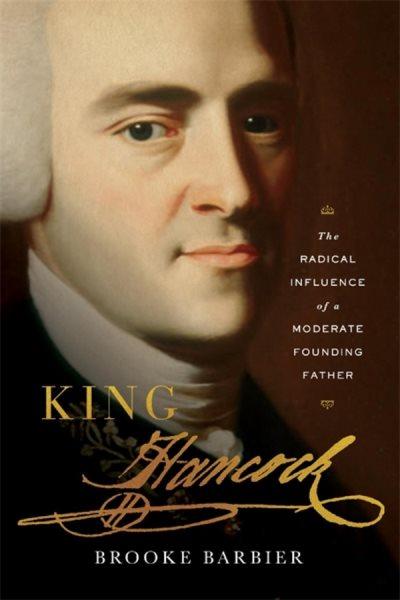
"Today John Hancock is known for his signature, but during the Revolutionary Era, he was famed for his statesmanship. Brooke Barbier explores Hancock's position as a committed revolutionary who nonetheless understood the value of compromise. By shunning political extremes, Hancock became hugely influential in the infant United States"-- Today John Hancock is known for his signature, but during the revolutionary era, he was famed for his pragmatic statesmanship. Brooke Barbier explores Hancocks position as a revolutionary who nonetheless understood the value of compromise. By shunning political extremes, Hancock became hugely influential in the infant United States. A rollicking portrait of the paradoxical patriot, whose measured pragmatism helped make American independence a reality.Americans are surprisingly more familiar with his famous signature than with the man himself. In this spirited account of John Hancocks life, Brooke Barbier depicts a patriot of fascinating contradictionsa child of enormous privilege who would nevertheless become a voice of the common folk; a pillar of society uncomfortable with radicalism who yet was crucial to independence. About two-fifths of the American population held neutral or ambivalent views about the Revolution, and Hancock spoke for them and to them, bringing them along.Orphaned young, Hancock was raised by his merchant uncle, whose business and vast wealth he inheritedincluding household slaves, whom Hancock later freed. By his early thirties, he was one of New Englands most prominent politicians, earning a place on Britains most-wanted list and the derisive nickname King Hancock. While he eventually joined the revolution against England, his ever moderateand moderatingdisposition would prove an asset after 1776. Barbier shows Hancock appealing to southerners and northerners, Federalists and Anti-Federalists. He was a famously steadying force as president of the fractious Second Continental Congress. He parlayed with French military officials, strengthening a key alliance with his hospitable diplomacy. As governor of Massachusetts, Hancock convinced its delegates to vote for the federal Constitution and calmed the fallout from the shocking Shayss Rebellion.An insightful study of leadership in the revolutionary era, King Hancock traces a moment when passion was on the side of compromise and accommodation proved the basis of profound social and political change. Autorid: Brooke Barbier
It's January 1928, the day before the great flood. There's a snowstorm and the river is about to burst its banks-fourteen souls will be lost. Can Glory an orphan with only one hand and her time-travelling friend Needle and their pet crow change the future? Is there anyone among all those people entombed in the snow-shrouded town who will listen? Autorid: Eve McDonnell
Momo's mother, who has been separated from him since birth, suddenly appeared, demanding something back. The cheap ring she had given him as a present when he was a child. After her pride was hurt, the lack of the ring brings back memories of her mother. So with a sense of hopelessness, she subconsciously turns to Yata's house. What about Momo's relationship with his mother and the ring? Momo's past patron, Suda, also makes an appearance bringing Yatamomo to a grand conclusion! !
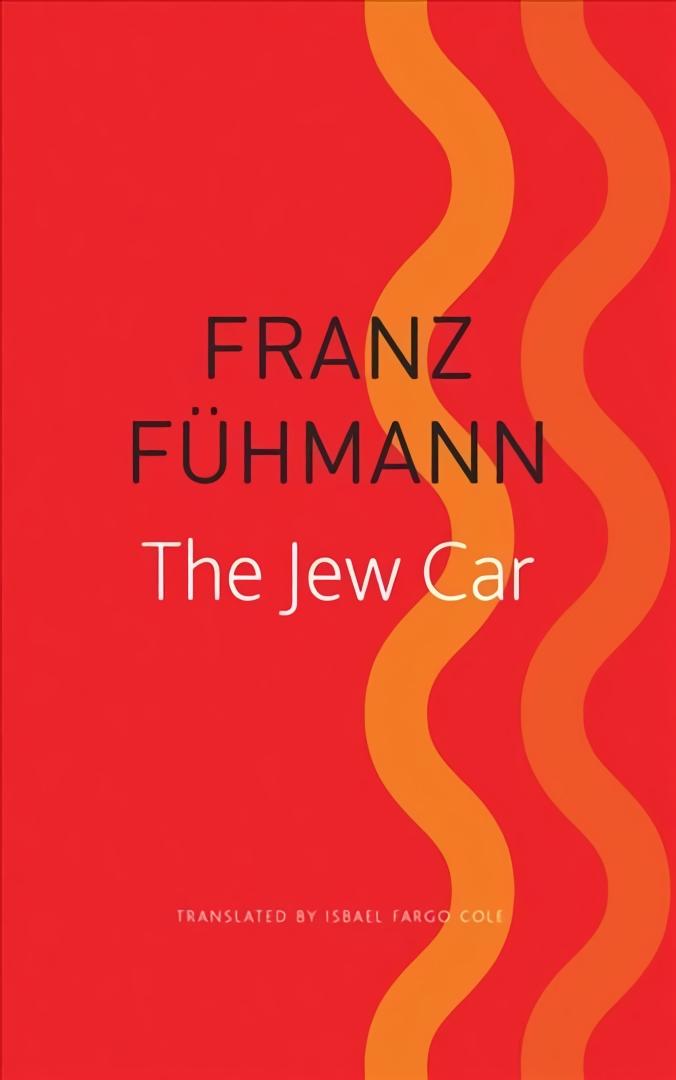
Originally published in 1962, Franz Fühmann’s autobiographical story cycle The Jew Car is a classic of German short fiction and an unparalleled examination of the psychology of National Socialism. Each story presents a snapshot of a personal and historical turning point in the life of the narrator, beginning with childhood anti-Semitism and moving to a youthful embrace—and then an ultimate rejection—of Nazi ideology. With scathing irony and hallucinatory intensity, reflections on the nature of memory, and the individual experience of history, the cycle acquires the weight of a novel."Fühmann’s work, beginning with The Jew Car, can be read as a great literary self-analysis in the spirit of Freud. Through his work, he not only became conscious of his own thinking as it was seduced by totalitarianism, he also became capable of describing the mechanisms of a fascist upbringing with striking poetic power, transcending all theory." —Die Welt, on the German edition Autorid: Franz Fuhmann, Isabel Fargo Cole
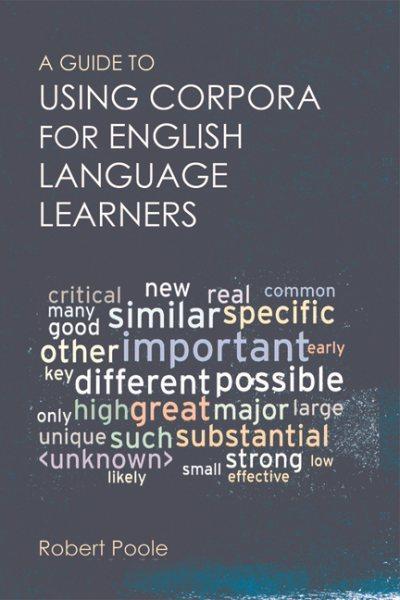
This textbook will help you unlock and access the great potential of corpus linguistics for language learning. While other books discuss how instructors may implement corpora in the classroom, this book provides step-by-step illustrated examples to help learners, graduate students, and language instructors visualize and understand the potential of corpus linguistics for language learning.It guides you through the application of corpus searches for writing, vocabulary and cultural study and provides guidance on building your own corpus. The hands-on approach will strengthen your development into an autonomous language learner and help instructors learn to design and implement their own corpus activities. With tutorials on a range of popular and increasingly user-friendly corpora, it helps usher in a new era of corpus-aided language learning. Autorid: Robert Poole