 Esselte Register Mylar card A4 1-5 Vastupidav register läbipaistvates värvikombinatsioonides. Eeslehteil on suured alad sisu kirjeldamiseks. Tugevad vastupidavad vahelehed Mylar tugevdusega. Plastikuga tugevdatud hoidja eeslehel. 2 värvilist vahelehte, trükitud 1-2 lihtsaks sorteerimiseks. Numbrid trükitud mõlemale poolele. 11 universaalset auku. A4 formaat. Tugev 160 g kartong. | 1 | 2,99 € | Vaata | ||
 University of Pennsylvania Press Dignity Rights: Courts, Constitutions, and the Worth of the Human Person Updated Edition GTIN: 9780812224757 Raamatud This ground-breaking book examines how judicial interpretations of dignity redefine what it means to be human in the modern world. It features a new preface by the author, in which she articulates how, over the past decade, dignity rights cases have evolved to incorporate the convergence of human rights and environmental rights. Originally published in 2012, Dignity Rights is the first book to explore the constitutional law of dignity around the world. In it, Erin Daly shows how dignity has come not only to define specific interests like the right to humane treatment or to earn a living wage, but also to protect the basic rights of a person to control his or her own life and to live in society with others. Daly argues that, through the right to dignity, courts are redefining what it means to be human in the modern world. As described by the courts, the scope of dignity rights marks the outer boundaries of state power, limiting state authority to meet the demands of human dignity. As a result, these cases force us to reexamine the relationship between the individual and the state and, in turn, contribute to a new and richer understanding of the role of the citizen in modern democracies.This updated edition features a new preface by the author, in which she articulates how, over the past decade, dignity rights cases have evolved to incorporate the convergence of human rights and environmental rights that we have seen at the international level and in domestic constitutions. Autorid: Erin Daly, Aharon Barak | 1 | 39,44 € | Vaata | ||
 University of Pennsylvania Press For the Love of Humanity: The World Tribunal on Iraq GTIN: 9780812225235 Raamatud On February 15, 2003, millions of people around the world demonstrated against the war that the United States, the United Kingdom, and their allies were planning to wage in Iraq. Despite this being the largest protest in the history of humankind, the war on Iraq began the next month. That year, the World Tribunal on Iraq (WTI) emerged from the global antiwar movement that had mobilized against the invasion and subsequent occupation. Like the earlier tribunal on Vietnam convened by Bertrand Russell and Jean-Paul Sartre, the WTI sought to document-and provide grounds for adjudicating-war crimes committed by the United States, the United Kingdom, and their allied forces during the Iraq war. For the Love of Humanity builds on two years of transnational fieldwork within the decentralized network of antiwar activists who constituted the WTI in some twenty cities around the world. AyÇa ÇubukÇu illuminates the tribunal up close, both as an ethnographer and a sympathetic participant. In the process, she situates debates among WTI activists-a group encompassing scholars, lawyers, students, translators, writers, teachers, and more-alongside key jurists, theorists, and critics of global democracy. WTI activists confronted many dilemmas as they conducted their political arguments and actions, often facing interpretations of human rights and international law that, unlike their own, were not grounded in anti-imperialism. ÇubukÇu approaches this conflict by broadening her lens, incorporating insights into how Amnesty International, Human Rights Watch, and the Iraqi High Tribunal grappled with the realities of Iraq's occupation. Through critical analysis of the global debate surrounding one of the early twenty-first century's most significant world events, For the Love of Humanity addresses the challenges of forging global solidarity against imperialism and makes a case for reevaluating the relationships between law and violence, empire and human rights, and cosmopolitan authority and political autonomy. Autorid: Ayça Çubukçu | 1 | 34,04 € | Vaata | ||
 Strigo A4 vertikaalköitja 5 lüümikuga, neoonoranž värv GTIN: 5905658812225 Kontoritarbed Strigo A4 vertikaalköitja 5 lüümikuga, neoonoranž värv | 1 | 7,75 € −0,01 € | Vaata | ||
1 | 44,06 € | Vaata | |||
 Ontario Dog Beef With Vegetable In Broth märgtoit koertele veiseliha ja köögiviljadega, 300 g GTIN: 8595681812223 Lemmikloomatarbed Täisväärtuslik Super Premium märgtoit 90% veiseliha ja puljongiga, rikastatud köögiviljade, D3 ja E vitamiinidega. Sobib täiskasvanud koertele ja kutsikatele alates 2. elukuust, soodustab seedimist ja vedelikubilanssi. | 1 | 3,06 € | Vaata | ||
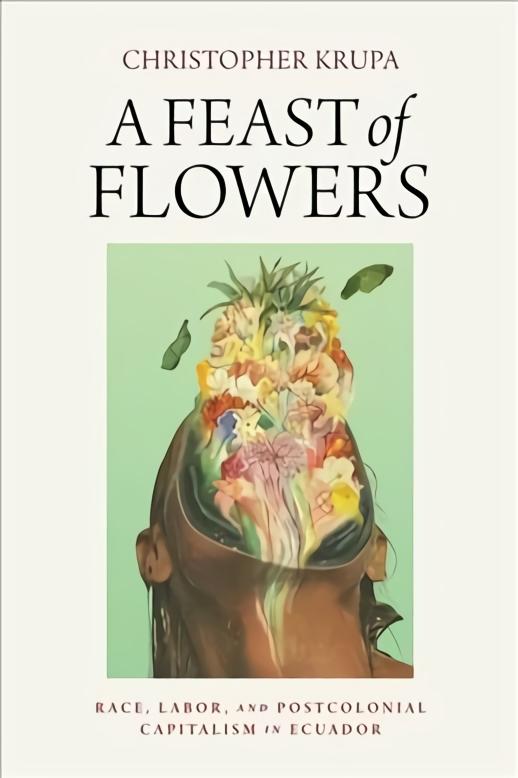 University of Pennsylvania Press Feast of Flowers: Race, Labor, and Postcolonial Capitalism in Ecuador GTIN: 9780812225129 Raamatud When Ecuador's cut-flower industry took off in the mid-1980s, it rode a wave of international credit peddling and currency speculation that would lead countries of the Global South into successive debt crises and northern financial firms to fortune and dominion. By the start of the twenty-first century, as the Ecuadorian economy collapsed and its ties with international finance became strained, flower exporters rebuilt their businesses around the profitability of their indigenous labor force, drawing local communities deeply into new plantation systems taking over the highlands.In A Feast of Flowers, Christopher Krupa goes inside Ecuador's booming cut-flower industry to chronicle the ways its capitalist pioneers built a booming export industry around a racial ideology, turning indigenous people's purported differences into resources for industrial expansion. At the core of this racial system is a belief, central to postcolonial science and politics in Ecuador, in capitalism's unique capacity to change people's racial identity and to liberate oppressed populations from racial subordination. Krupa shows how such views not only guide how indigenous people are today incorporated into demanding labor systems in Ecuador's new export plantations, but also how indigenous minds and bodies became sites of study and intervention by scientists, politicians, and economic planners throughout the last century, all looking to change indigenous people in some way.Combining nearly two decades of ethnographic and historical research, A Feast of Flowers shows how aggressive capitalist expansion in postcolonial contexts may revive longstanding intersections between race and economy to facilitate new modes of dispossession under the guise of humanitarian intervention. In A Feast of Flowers, Christopher Krupa focuses on Ecuador's booming cut-flower sector and shows how capitalist expansion bound the Global South to new modes of financial dependency and subjected indigenous workers to elaborate forms of racial "improvement" and uplift. Autorid: Christopher Krupa | 1 | 54,30 € | Vaata | ||
 University of Pennsylvania Press Elf Queens and Holy Friars: Fairy Beliefs and the Medieval Church GTIN: 9780812224252 Raamatud Starting from the assumption of a far greater cultural gulf between the learned and the lay in the medieval world than between rich and poor, Elf Queens explores the church's systematic campaign to demonize fairies and infernalize fairyland and the responses this provoked in vernacular romance. In Elf Queens and Holy Friars Richard Firth Green investigates an important aspect of medieval culture that has been largely ignored by modern literary scholarship: the omnipresent belief in fairyland.Taking as his starting point the assumption that the major cultural gulf in the Middle Ages was less between the wealthy and the poor than between the learned and the lay, Green explores the church's systematic demonization of fairies and infernalization of fairyland. He argues that when medieval preachers inveighed against the demons that they portrayed as threatening their flocks, they were in reality often waging war against fairy beliefs. The recognition that medieval demonology, and indeed pastoral theology, were packed with coded references to popular lore opens up a whole new avenue for the investigation of medieval vernacular culture.Elf Queens and Holy Friars offers a detailed account of the church's attempts to suppress or redirect belief in such things as fairy lovers, changelings, and alternative versions of the afterlife. That the church took these fairy beliefs so seriously suggests that they were ideologically loaded, and this fact makes a huge difference in the way we read medieval romance, the literary genre that treats them most explicitly. The war on fairy beliefs increased in intensity toward the end of the Middle Ages, becoming finally a significant factor in the witch-hunting of the Renaissance. Autorid: Richard Firth Green | 1 | 39,44 € | Vaata | ||
 | |||||
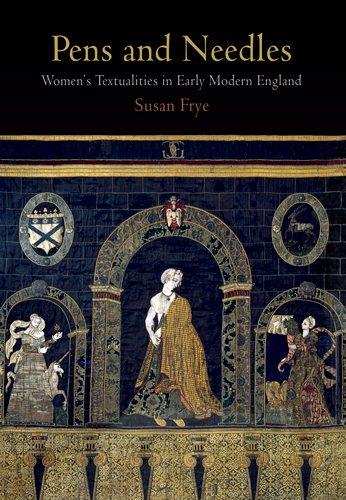 University of Pennsylvania Press Pens and Needles: Women's Textualities in Early Modern England GTIN: 9780812222524 Raamatud The Renaissance woman, whether privileged or of the artisan or the middle class, was trained in the expressive arts of needlework and painting, which were often given precedence over writing. Pens and Needles is the first book to examine all these forms as interrelated products of self-fashioning and communication.Because early modern people saw verbal and visual texts as closely related, Susan Frye discusses the connections between the many forms of women's textualities, including notes in samplers, alphabets both stitched and penned, initials, ciphers, and extensive texts like needlework pictures, self-portraits, poetry, and pamphlets, as well as commissioned artwork, architecture, and interior design. She examines works on paper and cloth by such famous figures as Elizabeth I, Mary, Queen of Scots, and Bess of Hardwick, as well as the output of journeywomen needleworkers and miniaturists Levina Teerlinc and Esther Inglis, and their lesser-known sisters in the English colonies of the New World. Frye shows how traditional women's work was a way for women to communicate with one another and to shape their own identities within familial, intellectual, religious, and historical traditions. Pens and Needles offers insights into women's lives and into such literary texts as Shakespeare's Othello and Cymbeline and Mary Sidney Wroth's Urania. Through an examination of the expressive arts of needlework, painting, and writing, Pens and Needles offers insights into women's lives and, in its final chapters, into literary texts such as Shakespeare's Othello and Cymbeline and Mary Sidney Wroth's Urania. Autorid: Susan Frye | 1 | 54,30 € | Vaata | ||
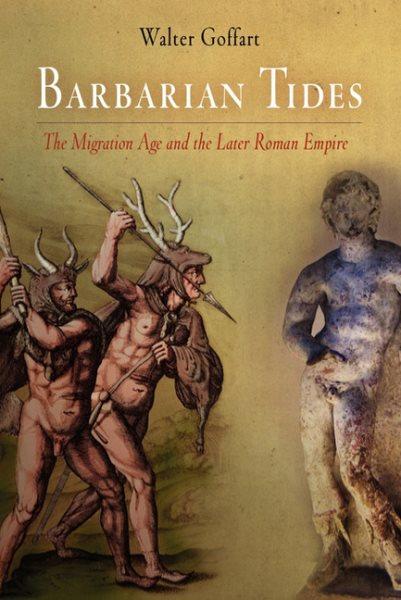 University of Pennsylvania Press Barbarian Tides: The Migration Age and the Later Roman Empire GTIN: 9780812221053 Raamatud Barbarian Tides radically subverts the grand narrative of a "Germanic" migration and reinvents the role of barbarians in the Later Roman Empire. Goffart sets out how the fragmented foreign peoples once living on the edges of the Empire participated with the Romans in the larger stirrings of late antiquity. The Migration Age is still envisioned as an onrush of expansionary "Germans" pouring unwanted into the Roman Empire and subjecting it to pressures so great that its western parts collapsed under the weight. Further developing the themes set forth in his classic Barbarians and Romans, Walter Goffart dismantles this grand narrative, shaking the barbarians of late antiquity out of this "Germanic" setting and reimagining the role of foreigners in the Later Roman Empire.The Empire was not swamped by a migratory Germanic flood for the simple reason that there was no single ancient Germanic civilization to be transplanted onto ex-Roman soil. Since the sixteenth century, the belief that purposeful Germans existed in parallel with the Romans has been a fixed point in European history. Goffart uncovers the origins of this historical untruth and argues that any projection of a modern Germany out of an ancient one is illusory. Rather, the multiplicity of northern peoples once living on the edges of the Empire participated with the Romans in the larger stirrings of late antiquity. Most relevant among these was the long militarization that gripped late Roman society concurrently with its Christianization.If the fragmented foreign peoples with which the Empire dealt gave Rome an advantage in maintaining its ascendancy, the readiness to admit military talents of any social origin to positions of leadership opened the door of imperial service to immigrants from beyond its frontiers. Many barbarians were settled in the provinces without dislodging the Roman residents or destabilizing landownership; some were even incorporated into the ruling families of the Empire. The outcome of this process, Goffart argues, was a society headed by elites of soldiers and Christian clergy—one we have come to call medieval. Autorid: Walter Goffart | 1 | 39,44 € | Vaata | ||
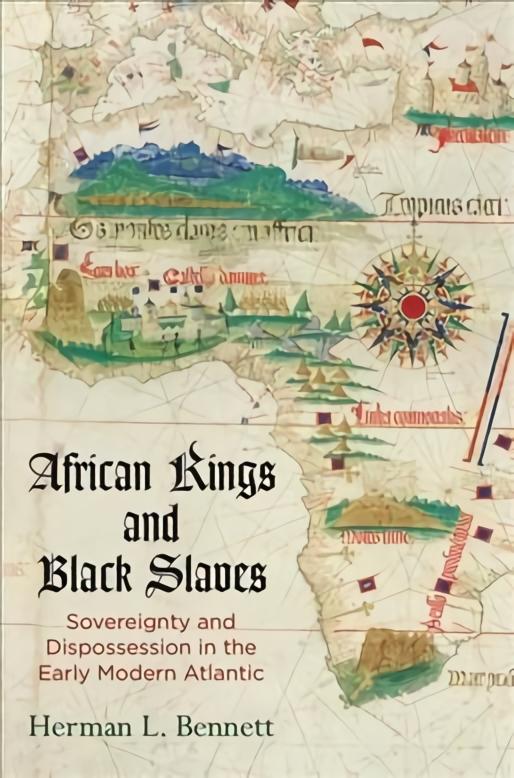 University of Pennsylvania Press African Kings and Black Slaves: Sovereignty and Dispossession in the Early Modern Atlantic GTIN: 9780812224627 Raamatud Through an examination of early modern African-European encounters, African Kings and Black Slaves offers a reappraisal of the dominant depiction of these exchanges as simple economic transactions: rather, according to Herman L. Bennett, they involved clashing understandings of diplomacy, sovereignty, and politics. As early as 1441, and well before other European countries encountered Africa, small Portuguese and Spanish trading vessels were plying the coast of West Africa, where they conducted business with African kingdoms that possessed significant territory and power. In the process, Iberians developed an understanding of Africa's political landscape in which they recognized specific sovereigns, plotted the extent and nature of their polities, and grouped subjects according to their ruler.In African Kings and Black Slaves, Herman L. Bennett mines the historical archives of Europe and Africa to reinterpret the first century of sustained African-European interaction. These encounters were not simple economic transactions. Rather, according to Bennett, they involved clashing understandings of diplomacy, sovereignty, and politics. Bennett unearths the ways in which Africa's kings required Iberian traders to participate in elaborate diplomatic rituals, establish treaties, and negotiate trade practices with autonomous territories. And he shows how Iberians based their interpretations of African sovereignty on medieval European political precepts grounded in Roman civil and canon law. In the eyes of Iberians, the extent to which Africa's polities conformed to these norms played a significant role in determining who was, and who was not, a sovereign people&;a judgment that shaped who could legitimately be enslaved.Through an examination of early modern African-European encounters, African Kings and Black Slaves offers a reappraisal of the dominant depiction of these exchanges as being solely mediated through the slave trade and racial difference. By asking in what manner did Europeans and Africans configure sovereignty, polities, and subject status, Bennett offers a new depiction of the diasporic identities that had implications for slaves' experiences in the Americas. Autorid: Herman L. Bennett | 1 | 28,64 € | Vaata | ||
 DIDIER JEUNESSE Les Amis du bois sans mousse - poche GTIN: 9782278122219 Raamatud Écureuil, Loup et tous les Amis du Bois sans mousse mènent une vie paisible et heureuse jusqu’à l’arrivée de Pim le panda, un voyageur exotique et fascinant, qui va bouleverser leur quotidien. Avec lui, les amis vont se sentir pousser des ailes et voir les choses en grand, allant jusqu’à transformer leur douce colline en rizière digne des plus belles rizières d’Asie… Mais l’hiver et ses premières gelées arrivent, balayant du même coup leur rêve de récolte. Qu’à cela ne tienne, les Amis du Bois sans mousse ne sont pas sans ressource ! Ils vont faire de cette tentative avortée un heureux ratage et de cette rizière glacée une joyeuse patinoire !Un monde animalier, riche, délicat et fascinant, qui accompagne Olivier Desvaux depuis toujours. | 1 | 8,99 € | Vaata | ||
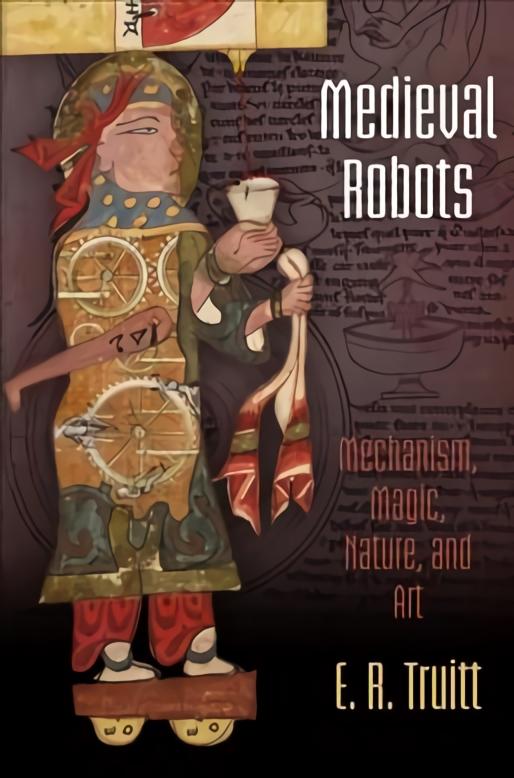 University of Pennsylvania Press Medieval Robots: Mechanism, Magic, Nature, and Art GTIN: 9780812223576 Raamatud A thousand years before Isaac Asimov set down his Three Laws of Robotics, real and imagined automata appeared in European courts, liturgies, and literary texts. Medieval robots took such forms as talking statues, mechanical animals, and silent metal guardians; some served to entertain or instruct while others performed disciplinary or surveillance functions. Variously ascribed to artisanal genius, inexplicable cosmic forces, or demonic powers, these marvelous fabrications raised fundamental questions about knowledge, nature, and divine purpose in the Middle Ages.Medieval Robots recovers the forgotten history of fantastical, aspirational, and terrifying machines that captivated Europe in imagination and reality between the ninth and fourteenth centuries. E. R. Truitt traces the different forms of self-moving or self-sustaining manufactured objects from their earliest appearances in the Latin West through centuries of mechanical and literary invention. Chronicled in romances and song as well as histories and encyclopedias, medieval automata were powerful cultural objects that probed the limits of natural philosophy, illuminated and challenged definitions of life and death, and epitomized the transformative and threatening potential of foreign knowledge and culture. This original and wide-ranging study reveals the convergence of science, technology, and imagination in medieval culture and demonstrates the striking similarities between medieval and modern robotic and cybernetic visions. Medieval robots took such forms as talking statues, mechanical animals, or silent metal guardians; some served to entertain or instruct while others performed surveillance or discipline. Medieval Robots explores the forgotten history of real and imagined machines that captivated Europe from the ninth through the fourteenth centuries. Autorid: E. R. Truitt | 1 | 39,44 € | Vaata | ||
 Turner Publishing Company Murder on the Sea Otter Express: A Grace the Hit Mom Mystery GTIN: 9798887981222 Raamatud "In the third installment of the Grace "the Hit Mom" Mysteries, a field trip to the New Haven Aquarium ends in disaster when a creepy chaperone falls to his death in the beluga whale tank...when Grace was the one who was supposed to kill him. Per usual, Grace Adair is juggling it all-being a full-time mom, part-time lawyer, freelance editor, divinely-contracted assassin-and now, school chaperone. Her son's field trip to the local aquarium takes a dive when Eric Egan, a district curriculum administrator, is unceremoniously thrown off the aquarium's Sea Otter Express into the beluga whale tank. Nobody's especially upset to see the creep's body sleeping with the fishes, but Grace is in trouble because Egan was supposed to be her next hit-and she sure wouldn't have killed him in front of a bunch of first graders. Now, Grace will have to solve the murder, settle decades-old grudges, and keep her own secrets-all while taking care of her family...and serving as flower girl at her handler Madge's wedding. As thetasks pile up, Grace isn't sure if she'll live to see it all done. Don't miss out on books 1 and 2 in the series: Wrong Poison and Hound of the Bonnevilles!"-- Provided by publisher. In the third installment of the Grace "the Hit Mom" Mysteries, a field trip to the New Haven Aquarium ends in disaster when a creepy chaperone falls to his death in the beluga whale tank when Grace was the one who was supposed to kill him. In the third installment of the Grace the Hit Mom Mysteries, a field trip to the New Haven Aquarium ends in disaster when a creepy chaperone falls to his death in the beluga whale tank when Grace was the one who was supposed to kill him.Per usual, Grace Adair is juggling it allbeing a full-time mom, part-time lawyer, freelance editor, divinely-contracted assassinand now, school chaperone.Her sons field trip to the local aquarium takes a dive when Eric Egan, a district curriculum administrator, is unceremoniously thrown off the aquariums Sea Otter Express into the beluga whale tank. Nobodys especially upset to see the creeps body sleeping with the fishes, but Grace is in trouble because Egan was supposed to be her next hitand she sure wouldnt have killed him in front of a bunch of first graders.Now, Grace will have to solve the murder, settle decades-old grudges, and keep her own secretsall while taking care of her family and serving as flower girl at her handler Madges wedding. As the tasks pile up, Grace isnt sure if shell live to see it all done.Don't miss out on books 1 and 2 in the series: Wrong Poison and Hound of the Bonnevilles! Autorid: Nikki Knight | 1 | 20,54 € | Vaata | ||
 Amberley Publishing Bradford Murders and Misdemeanours GTIN: 9781398122277 Raamatud In the century between 1850 and 1950 Bradford witnessed extraordinary growth and changes. Its wealth was based on the textile industry, and the city became known as the wool capital of the world. It was a city of migrants, many from Ireland, and despite the efforts of philanthropic industrialists such as Titus Salt, wealth and poverty often lived close to each other. The city was a breeding ground for crime and Bradford Borough Police Force was formed in the 1840s, dealing with both the high crimes of murder, large-scale robberies and frauds and low-level crimes such as petty theft, vagrancy and loitering. Delving into original sources, court reports and newspaper archives, the authors also look at the effects of illegal gambling before the 1960 Betting & Gaming Act and the involvement of young people and their punishments. This collection of true-life crime stories from the mid-nineteenth century the mid-twentieth century gives a vivid insight into life in Bradford in the past. This book will fascinate anyone with an interest in the history of crime as well as those who want to know more about the history of Bradford. Autorid: Adrian and Dawn L. Bridge | 1 | 24,59 € | Vaata | ||
 Henle, G. Verlag Piano Sonata no. 3 C major op. 2 no. 3: Instrumentation: Piano solo Die drei Klaviersonaten op. 2 sind Beethovens erste Werke dieser Gattung, die er mit einer Opuszahl versah und somit als besonders wertvolle Kompositionen der Musikwelt präsentierte. Sie entstanden in Beethovens ersten Wiener Jahren und etablierten ihn - wie auch die Klaviertrios op. 1 - als einen der bedeutendsten Komponisten seiner Zeit. Alle drei Sonaten sind kleine Meisterwerke, die sich in Schwierigkeit der Ausführung und Bravour steigern. Diese große Sonate ist besonders von ihren temporeichen Ecksätzen geprägt, die mit Allegro con brio und Allegro assai dem sattelfesten Pianisten ein gehöriges Maß an Virtuosität abverlangen. Gelingt alles, wird das Publikum staunen! Murray Perahias in jahrzehntelanger Musizierpraxis bewährte Fingersätze eröffnen einen neuen Zugang zu diesem Meilenstein der Klavierliteratur. | 1 | 12,68 € | Vaata | ||
 University of Pennsylvania Press Gardens in the Modern Landscape GTIN: 9780812222913 Raamatud Between 1937 and 1938, garden designer Christopher Tunnard published a series of articles in the British Architectural Review that rejected the prevailing English landscape style. Inspired by the principles of Modernist art and Japanese aesthetics, Tunnard called for a "new technique" in garden design that emphasized an integration of form and purpose. "The functional garden avoids the extremes both of the sentimental expressionism of the wild garden and the intellectual classicism of the 'formal' garden," he wrote; "it embodies rather a spirit of rationalism and through an aesthetic and practical ordering of its units provides a friendly and hospitable milieu for rest and recreation." Tunnard's magazine pieces were republished in book form as Gardens in the Modern Landscape in 1938, and a revised second edition was issued a decade later. Taken together, these articles constituted a manifesto for the modern garden, its influence evident in the work of such figures as Lawrence Halprin, Philip Johnson, and Edward Larrabee Barnes. Long out of print, the book is here reissued in a facsimile of the 1948 edition, accompanied by a contextualizing foreword by John Dixon Hunt.Gardens in the Modern Landscape heralded a sea change in the evolution of twentieth-century design, and it also anticipated questions of urban sprawl, historic preservation, and the dynamic between the natural and built environments. Available once more to students, practitioners, and connoisseurs, it stands as a historical document and an invitation to continued innovative thought about landscape architecture. | 1 | 36,89 € | Vaata | ||
 University of Pennsylvania Press Digest of Justinian, Volume 1 GTIN: 9780812220339 Raamatud When Justinian became sole ruler of the Byzantine Empire in A.D. 527, he ordered the preparation of three compilations of Roman law that together formed the Corpus Juris Civilis. These works have become known individually as the Code, which collected the legal pronouncements of the Roman emperors, the Institutes, an elementary student's textbook, and the Digest, by far the largest and most highly prized of the three compilations. The Digest was assembled by a team of sixteen academic lawyers commissioned by Justinian in 533 to cull everything of value from earlier Roman law. It was for centuries the focal point of legal education in the West and remains today an unprecedented collection of the commentaries of Roman jurists on the civil law. Commissioned by the Commonwealth Fund in 1978, Alan Watson assembled a team of thirty specialists to produce this magisterial translation, which was first completed and published in 1985 with Theodor Mommsen's Latin text of 1878 on facing pages. This paperback edition presents a corrected English-language text alone, with an introduction by Alan Watson.Links to the three other volumes in the set: Volume 2 [Books 16-29] Volume 3 [Books 30-40] Volume 4 [Books 41-50] | 1 | 72,49 € | Vaata | ||
 University of Pennsylvania Press Digest of Justinian, Volume 4 GTIN: 9780812220360 Raamatud When Justinian became sole ruler of the Byzantine Empire in A.D. 527, he ordered the preparation of three compilations of Roman law that together formed the Corpus Juris Civilis. These works have become known individually as the Code, which collected the legal pronouncements of the Roman emperors, the Institutes, an elementary student's textbook, and the Digest, by far the largest and most highly prized of the three compilations. The Digest was assembled by a team of sixteen academic lawyers commissioned by Justinian in 533 to cull everything of value from earlier Roman law. It was for centuries the focal point of legal education in the West and remains today an unprecedented collection of the commentaries of Roman jurists on the civil law. Commissioned by the Commonwealth Fund in 1978, Alan Watson assembled a team of thirty specialists to produce this magisterial translation, which was first completed and published in 1985 with Theodor Mommsen's Latin text of 1878 on facing pages. This paperback edition presents a corrected English-language text alone, with an introduction by Alan Watson.Links to the three other volumes in the set: Volume 1 [Books 1-15] Volume 2 [Books 16-29] Volume 3 [Books 30-40] | 1 | 72,49 € | Vaata | ||
 University of Pennsylvania Press Digest of Justinian, Volume 3 GTIN: 9780812220353 Raamatud When Justinian became sole ruler of the Byzantine Empire in A.D. 527, he ordered the preparation of three compilations of Roman law that together formed the Corpus Juris Civilis. These works have become known individually as the Code, which collected the legal pronouncements of the Roman emperors, the Institutes, an elementary student's textbook, and the Digest, by far the largest and most highly prized of the three compilations. The Digest was assembled by a team of sixteen academic lawyers commissioned by Justinian in 533 to cull everything of value from earlier Roman law. It was for centuries the focal point of legal education in the West and remains today an unprecedented collection of the commentaries of Roman jurists on the civil law. Commissioned by the Commonwealth Fund in 1978, Alan Watson assembled a team of thirty specialists to produce this magisterial translation, which was first completed and published in 1985 with Theodor Mommsen's Latin text of 1878 on facing pages. This paperback edition presents a corrected English-language text alone, with an introduction by Alan Watson.Links to the three other volumes in the set: Volume 1 [Books 1-15] Volume 2 [Books 16-29] Volume 4 [Books 41-50] | 1 | 72,49 € | Vaata | ||
 University of Pennsylvania Press Digest of Justinian, Volume 2 GTIN: 9780812220346 Raamatud When Justinian became sole ruler of the Byzantine Empire in A.D. 527, he ordered the preparation of three compilations of Roman law that together formed the Corpus Juris Civilis. These works have become known individually as the Code, which collected the legal pronouncements of the Roman emperors, the Institutes, an elementary student's textbook, and the Digest, by far the largest and most highly prized of the three compilations. The Digest was assembled by a team of sixteen academic lawyers commissioned by Justinian in 533 to cull everything of value from earlier Roman law. It was for centuries the focal point of legal education in the West and remains today an unprecedented collection of the commentaries of Roman jurists on the civil law. Commissioned by the Commonwealth Fund in 1978, Alan Watson assembled a team of thirty specialists to produce this magisterial translation, which was first completed and published in 1985 with Theodor Mommsen's Latin text of 1878 on facing pages. This paperback edition presents a corrected English-language text alone, with an introduction by Alan Watson.Links to the three other volumes in the set: Volume 1 [Books 1-15] Volume 3 [Books 30-40] Volume 4 [Books 41-50] | 1 | 72,49 € | Vaata | ||
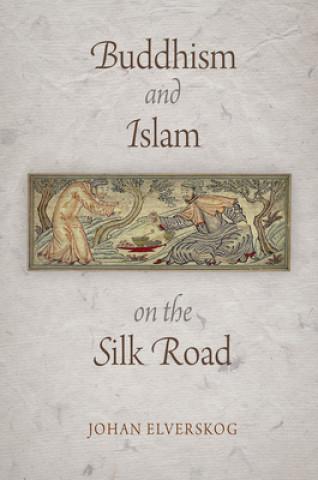 University of Pennsylvania Press Buddhism and Islam on the Silk Road GTIN: 9780812222593 Raamatud In the contemporary world the meeting of Buddhism and Islam is most often imagined as one of violent confrontation. Indeed, the Taliban's destruction of the Bamiyan Buddhas in 2001 seemed not only to reenact the infamous Muslim destruction of Nalanda monastery in the thirteenth century but also to reaffirm the stereotypes of Buddhism as a peaceful, rational philosophy and Islam as an inherently violent and irrational religion. But if Buddhist-Muslim history was simply repeated instances of Muslim militants attacking representations of the Buddha, how had the Bamiyan Buddha statues survived thirteen hundred years of Muslim rule? Buddhism and Islam on the Silk Road demonstrates that the history of Buddhist-Muslim interaction is much richer and more complex than many assume. This groundbreaking book covers Inner Asia from the eighth century through the Mongol empire and to the end of the Qing dynasty in the late nineteenth century.By exploring the meetings between Buddhists and Muslims along the Silk Road from Iran to China over more than a millennium, Johan Elverskog reveals that this long encounter was actually one of profound cross-cultural exchange in which two religious traditions were not only enriched but transformed in many ways. | 1 | 36,89 € | Vaata | ||
 University of Pennsylvania Press How Real Estate Developers Think: Design, Profits, and Community GTIN: 9780812224054 Raamatud Based on interviews in Portland, Chicago, Miami, and Minneapolis/Saint Paul, How Real Estate Developers Think depicts the entrepreneurial personality of the developer, explores the meaning of "good design," and examines the economic risks and rewards of development. Cities are always changing: streets, infrastructure, public spaces, and buildings are constantly being built, improved, demolished, and replaced. But even when a new project is designed to improve a community, neighborhood residents often find themselves at odds with the real estate developer who proposes it. Savvy developers are willing to work with residents to allay their concerns and gain public support, but at the same time, a real estate development is a business venture financed by private investors who take significant risks. In How Real Estate Developers Think, Peter Hendee Brown explains the interests, motives, and actions of real estate developers, using case studies to show how the basic principles of development remain the same everywhere even as practices vary based on climate, local culture, and geography. An understanding of what developers do and why they do it will help community members, elected officials, and others participate more productively in the development process in their own communities.Based on interviews with over a hundred people involved in the real estate development business in Chicago, Miami, Portland (Oregon), and the Twin Cities of Minneapolis and St. Paul, How Real Estate Developers Think considers developers from three different perspectives. Brown profiles the careers of individual developers to illustrate the character of the entrepreneur, considers the roles played by innovation, design, marketing, and sales in the production of real estate, and examines the risks and rewards that motivate developers as people. Ultimately, How Real Estate Developers Think portrays developers as creative visionaries who are able to imagine future possibilities for our cities and communities and shows that understanding them will lead to better outcomes for neighbors, communities, and cities. Autorid: Peter Hendee Brown | 1 | 44,85 € | Vaata | ||
 Jacob Imparfaits Libres Et Heureux FL GTIN: 9782738122292 Raamatud ?Être enfin soi-même. Ne plus se soucier de l'effet que l'on fait. Agir sans craindre ni l'échec ni le jugement. Ne plus trembler à l'idée du rejet. Et trouver tranquillement sa place au milieu des autres. Ce livre va vous aider à avancer sur le chemin de l'estime de soi. À la construire, la réparer, la protéger. Il va vous aider à vous accepter et à vous aimer, même imparfaits. Non pour vous résigner, mais pour mieux évoluer. Imparfaits, mais libres et heureux...Christophe André est médecin psychiatre à l'hôpital Sainte-Anne, à Paris. Tous ses livres rencontrent un très grand succès : Psychologie de la peur, Vivre heureux, L'Estime de soi, La Force des émotions, Comment gérer les personnalités difficiles (avec François Lelord), La Peur des autres (avec Patrick Légeron). | 1 | 15,69 € | Vaata | ||
 University of Pennsylvania Press In My Mother's House: Civil War in Sri Lanka GTIN: 9780812222845 Raamatud In May 2009, the Sri Lankan army overwhelmed the last stronghold of the Liberation Tigers of Tamil Eelam-better known as the Tamil Tigers-officially bringing an end to nearly three decades of civil war. Although the war has ended, the place of minorities in Sri Lanka remains uncertain, not least because the lengthy conflict drove entire populations from their homes. The figures are jarring: for example, all of the roughly 80,000 Muslims in northern Sri Lanka were expelled from the Tamil Tiger-controlled north, and nearly half of all Sri Lankan Tamils were displaced during the course of the civil war. Sharika Thiranagama's In My Mother's House provides ethnographic insight into two important groups of internally displaced people: northern Sri Lankan Tamils and Sri Lankan Muslims. Through detailed engagement with ordinary people struggling to find a home in the world, Thiranagama explores the dynamics within and between these two minority communities, describing how these relations were reshaped by violence, displacement, and authoritarianism. In doing so, she illuminates an often overlooked intraminority relationship and new social forms created through protracted war. In My Mother's House revolves around three major themes: ideas of home in the midst of profound displacement; transformations of familial experience; and the impact of the political violence-carried out by both the Tamil Tigers and the Sri Lankan state-on ordinary lives and public speech. Her rare focus on the effects and responses to LTTE political regulation and violence demonstrates that envisioning a peaceful future for postconflict Sri Lanka requires taking stock of the new Tamil and Muslim identities forged by the civil war. These identities cannot simply be cast away with the end of the war but must be negotiated anew. Autorid: Sharika Thiranagama, Gananath Obeyesekere | 1 | 39,44 € | Vaata | ||
 Zephyr Mirage 2000D : Esacdron de chasse 3/3 Ardennes - Tome 0 - Mirage 2000D : Escadron de chasse 3/3 Arde GTIN: 9782361181222 Raamatud Le principe de cet ouvrage est d'avoir une couverture « recto » intitulée « Mirage 2000D Escadron de Chasse 3/3 Ardennes » et, en le retournant, une couverture verso « inversée » reprenant le visuel en N&B et couleur de « Prisonniers des Serbes », une aventure de Tanguy et Laverdure.LE LIVRECe volume de 80 pages est consacré à une unité parmi les plus prestigieux des armées françaises. 80 pages pour raconter son histoire, ses engagements et ses missions, ses équipements, le tout servi par des illustrations originales, des récits et reportages offrant toutes les informations techniques attendues par les lecteurs passionnés.LA BDPrisonniers des Serbes Une aventure de Tanguy et LaverdureCe premier volume en noir et blanc est consacré à l'escadron de chasse 3/3 « Ardennes » basé à Nancy. Créé pendant la seconde guerre mondiale à Rayak (Liban), le 3/3 Ardennes a d'abord porté les couleurs des Forces Aériennes Françaises Libres. Il est à présent basé à Nancy et met en oeuvre le Mirage 2000D qui a été à la pointe de tous les combats de l'armée de l Air depuis vingt ans. | 1 | 30,39 € | Vaata | ||
 University of Pennsylvania Press This Is Our Music: Free Jazz, the Sixties, and American Culture GTIN: 9780812220032 Raamatud A look at the evolution of free jazz in the 1960s explores the role played by political radicalism, universities, nonprofit organizations, older musicians, Black nationalism, and commercial considerations in the reception and development of this new music. This Is Our Music, declared saxophonist Ornette Coleman's 1960 album title. But whose music was it? At various times during the 1950s and 1960s, musicians, critics, fans, politicians, and entrepreneurs claimed jazz as a national art form, an Afrocentric race music, an extension of modernist innovation in other genres, a music of mass consciousness, and the preserve of a cultural elite. This original and provocative book explores who makes decisions about the value of a cultural form and on what basis, taking as its example the impact of 1960s free improvisation on the changing status of jazz. By examining the production, presentation, and reception of experimental music by Ornette Coleman, Cecil Taylor, John Coltrane, and others, Iain Anderson traces the strange, unexpected, and at times deeply ironic intersections between free jazz, avant-garde artistic movements, Sixties politics, and patronage networks. Anderson emphasizes free improvisation's enormous impact on jazz music's institutional standing, despite ongoing resistance from some of its biggest beneficiaries. He concludes that attempts by African American artists and intellectuals to define a place for themselves in American life, structural changes in the music industry, and the rise of nonprofit sponsorship portended a significant transformation of established cultural standards. At the same time, free improvisation's growing prestige depended in part upon traditional highbrow criteria: increasingly esoteric styles, changing venues and audience behavior, European sanction, withdrawal from the marketplace, and the professionalization of criticism. Thus jazz music's performers and supporters—and potentially those in other arts—have both challenged and accommodated themselves to an ongoing process of cultural stratification. "Takes us back to that moment between the fifties and the sixties when a new music called free jazz took root in the coffeehouses and nightclubs of New York City, Chicago, and Los Angeles."—John Szwed, author of So What: The Life of Miles Davis Autorid: Iain Anderson | 1 | 34,04 € | Vaata | ||

Otsing: 81222
177 toodet
| 1 | 2,99 € | Vaata | ||
1 | 39,44 € | Vaata | |||
1 | 34,04 € | Vaata | |||
| 1 | 7,75 € −0,01 € | Vaata | ||
1 | 44,06 € | Vaata | |||
1 | 3,06 € | Vaata | |||
1 | 54,30 € | Vaata | |||
1 | 39,44 € | Vaata | |||
| |||||
1 | 54,30 € | Vaata | |||
1 | 39,44 € | Vaata | |||
1 | 28,64 € | Vaata | |||
| 1 | 8,99 € | Vaata | ||
1 | 39,44 € | Vaata | |||
1 | 20,54 € | Vaata | |||
| 1 | 24,59 € | Vaata | ||
1 | 12,68 € | Vaata | |||
| 1 | 36,89 € | Vaata | ||
| 1 | 72,49 € | Vaata | ||
| 1 | 72,49 € | Vaata | ||
| 1 | 72,49 € | Vaata | ||
| 1 | 72,49 € | Vaata | ||
| 1 | 36,89 € | Vaata | ||
1 | 44,85 € | Vaata | |||
| 1 | 15,69 € | Vaata | ||
1 | 39,44 € | Vaata | |||
1 | 30,39 € | Vaata | |||
1 | 34,04 € | Vaata | |||