Lõplik parkimiskaitse 70mai Hardwire Kit UP02 tagab, et sinu pardakaamera on alati toitega varustatud. Juhtmestikukomplekt ühendub autoakuga ja võib pakkuda pardakaamerale toidet ööpäevaringselt, isegi kui auto on välja lülitatud. See tagab, et sinu 70mai pardakaamera jätkab öösel filmimist ja su auto on alati parkimiskaitsega varustatud! Kui autoaku pinge langeb vahemikku 11.4V - 22.8V, lülitab juhtseade toite automaatselt välja, tagades, et autos on alati piisavalt akumahtu, et käivituda.
'Absorbing, mind-enlarging, studded with insights ... This could have significant real-world results' Sunday TimesHumanity's greatest feat is our incredible ability to learn. Even in their first year, infants acquire language, visual and social knowledge at a rate that surpasses the best supercomputers.But how, exactly, do our brains learn?In How We Learn, leading neuroscientist Stanislas Dehaene delves into the psychological, neuronal, synaptic and molecular mechanisms of learning. Drawing on case studies of children who learned despite huge difficulty and trauma, he explains why youth is such a sensitive period, during which brain plasticity is maximal, but also assures us that our abilities continue into adulthood. We can all enhance our learning and memory at any age and 'learn to learn' by taking maximal advantage of the four pillars of the brain's learning algorithm: attention, active engagement, error feedback and consolidation.The human brain is an extraordinary machine. Its ability to process information and adapt to circumstances by reprogramming itself is unparalleled, and it remains the best source of inspiration for recent developments in artificial intelligence. How We Learn finds the boundary of computer science, neurobiology, cognitive psychology and education to explain how learning really works and how to make the best use of the brain's learning algorithms - and even improve them - in our schools and universities as well as in everyday life.
Using clear, sharp analysis and comprehensive data, Reinhart and Rogoff document that financial fallouts occur in clusters and strike with surprisingly consistent frequency, duration, and ferocity. They examine the patterns of currency crashes, high and hyperinflation, and government defaults on international and domestic debts--as well as the cycles in housing and equity prices, capital flows, unemployment, and government revenues around these crises. While countries do weather their financial storms, Reinhart and Rogoff prove that short memories make it all too easy for crises to recur.
The Origins and History of Consciousness draws on a full range of world mythology to show how individual consciousness undergoes the same archetypal stages of development as human consciousness as a whole. Erich Neumann was one of C. G. Jung's most creative students and a renowned practitioner of analytical psychology in his own right. In this influential book, Neumann shows how the stages begin and end with the symbol of the Uroboros, the tail-eating serpent. The intermediate stages are projected in the universal myths of the World Creation, Great Mother, Separation of the World Parents, Birth of the Hero, Slaying of the Dragon, Rescue of the Captive, and Transformation and Deification of the Hero. Throughout the sequence, the Hero is the evolving ego consciousness. Featuring a foreword by Jung, this Princeton Classics edition introduces a new generation of readers to this eloquent and enduring work.
One of the world's greatest fantasy novels and a rollicking classic of Chinese literature, in a sparkling new translation and published in a Clothbound Classics edition. A shape-shifting trickster on a kung-fu quest for eternal life, Monkey King is one of the most memorable superheroes in world literature. High-spirited and omni-talented, he can transform himself into whatever he chooses and turn each of his body's 84,000 hairs into an army of clones.But his penchant for mischief repeatedly gets him into trouble, and when he raids Heaven's Orchard of Immortal Peaches, the Buddha pins him beneath a mountain. Five hundred years later, Monkey King is finally given a chance to redeem himself: he must protect the pious monk Tripitaka on his journey in search of precious Buddhist sutras that will bring enlightenment to the Chinese empire. Joined by two other fallen immortals - Pigsy, a rice-loving flying pig, and Sandy, a depressive river-sand monster - Monkey King does battle with Red Boy, Princess Jade-Face, the Monstress Dowager, and all manner of dragons, ogres, wizards and femmes fatales; navigates the perils of Fire-Cloud Cave, the River of Flowing Sand and the Water-Crystal Palace; and is serially captured, lacquered, sauteed, steamed and liquefied - but always hatches an ingenious plan to get himself and his fellow pilgrims out of their latest jam.Comparable to The Canterbury Tales or Don Quixote, Monkey King is at once a gripping adventure, a comic satire and a spring of spiritual insight. With this new translation by the award-winning Julia Lovell, the irrepressible rogue hero of one of the Four Great Classical Novels of Chinese literature has the potential to vault, with his signature cloud-somersault, into the hearts of a whole new generation of readers.
Language: English, Binding: Hardback, Number of pages: 320, Publishers: Princeton University Press, Author: Arvind Narayanan,Sayash Kapoor, ISBN-13: 9780691249131, Date of issue: 2024
Language: English, Binding: Hardback, Number of pages: 240, Publishers: Princeton University Press, Author: Mark O′shea, ISBN-13: 9780691240664, Date of issue: 2023
Cardcaptor Sakura brought a generation of readers to manga, and now it's back in a definitive collector's edition Cardcaptor Sakura is one of the all-time classics of the magical girl genre, and the Collector's Edition will be the definitive ve
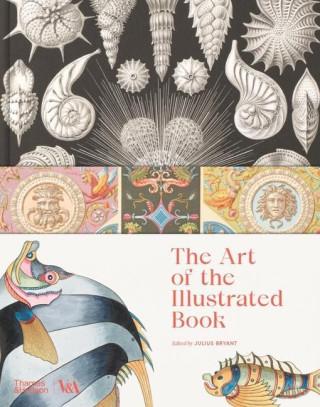
The story of the illustrated book from the earliest printed books to the present day, told through the collections of the V&A's National Art Library. Throughout history, images have been used to reflect the meaning of words and to enhance our understanding of texts. With the invention of mechanized printing in Germany in the 15th century, illustrated books were no longer the preserve of the elite and became a source of knowledge, instruction and pleasure for a wider audience. Traditional accounts of the illustrated book survey its history in terms of technological advances, from illumination to hand-drawn illustrations and photography. This study offers a new approach, grouping books by subject - from natural history and travel to art, architecture and fashion. Gathered here are some of the most influential and compelling examples of the illustrated book, all chosen from the collections of the National Art Library at the Victoria and Albert Museum, London. Each chapter starts with a general introduction to the subject, followed by key examples accompanied by narrative captions. The commentaries range beyond the illustrations to consider the whole book, the design, typeface, binding, inks and papers. Many of the books are not on display to the public and have been specially photographed for this volume. Most examples have been chosen for their significance, being innovative and beautiful. But humble books, often overlooked in histories, have also been selected, when particularly effective in their field, or simply memorable. From beautiful printed Psalters and Books of Hours, to striking natural history books such as Audubon's Birds of America, La Fontaine's Fables illustrated by Marc Chagall, Serlio's treatise on architecture and Owen Jones's Grammar of Ornament, this book gives a fascinating overview of some of the finest illustrated books ever created. In the face of recent pronouncements about the death of the printed book, this volume demonstrates the enduring appeal of the illustrated book.
"Any landscape architect worth their soil should pick up The Architecture of Trees, an all-encompassing atlas of all things tree-related."--The Architect's Newspaper Gorgeous, large format volume shows each hand-drawn illustration in
In this revised, updated, and expanded edition of his New York Times bestseller, Nobel Prize-winning economist Robert Shiller, who warned of both the tech and housing bubbles, cautions that signs of irrational exuberance among investors have only increased since the 2008-9 financial crisis. With high stock and bond prices and the rising cost of housing, the post-subprime boom may well turn out to be another illustration of Shiller's influential argument that psychologically driven volatility is an inherent characteristic of all asset markets. In other words, Irrational Exuberance is as relevant as ever. Previous editions covered the stock and housing markets--and famously predicted their crashes. This edition expands its coverage to include the bond market, so that the book now addresses all of the major investment markets. It also includes updated data throughout, as well as Shiller's 2013 Nobel Prize lecture, which places the book in broader context. In addition to diagnosing the causes of asset bubbles, Irrational Exuberance recommends urgent policy changes to lessen their likelihood and severity--and suggests ways that individuals can decrease their risk before the next bubble bursts. No one whose future depends on a retirement account, a house, or other investments can afford not to read this book.
Language: English, Binding: Hardback, Number of pages: 224, Publishers: Princeton University Press, Author: Gregory S. Paul, ISBN-13: 9780691253169, Date of issue: 2024
Would you like to be able to identify any bird species in Europe, in all plumages, in every season? ID Handbook of European Birds is the resource for you. This identification handbook blends incisive descriptions with stunning high-resolution photos to provide the most comprehensive, in-depth coverage of European birds available. Never before has so much current information been brought together in one place and presented so clearly and completely. This monumental two-volume work is destined to become a standard reference to Europe’s birds.Covers 733 species known to occur in EuropeFeatures more than 5,500 spectacular color photosDetailed species accounts describe key identification features, molting, age, and genderThe high-quality photos depict the characteristics most essential for identificationInnovatively designed for easy, at-a-glance referenceAn ideal resource for anyone who wants to enhance their experience in the fieldA must for bird-watchers everywhere, from beginners to seasoned birders
The most up-to-date and authoritative illustrated guide to the marvelous flying reptiles that dominated the skies of the Mesozoic for 160 million yearsOnce seen by some as evolutionary dead-enders, pterosaurs were vigorous winged reptiles capable of thriving in an array of habitats and climates, including polar winters. The Princeton Field Guide to Pterosaurs transforms our understanding of these great Mesozoic archosaurs of the air. This incredible guide covers 115 pterosaur species and features stunning illustrations of pterosaurs ranging in size from swallows to small sailplanes, some with enormous, bizarre head crests and elongated beaks. It discusses the history of pterosaurs through 160 million years of the Mesozoic―including their anatomy, physiology, locomotion, reproduction, growth, and extinction―and even gives a taste of what it might be like to travel back to the Mesozoic. This one-of-a-kind guide also challenges the common image of big pterosaurs as ultralights that only soared, showing how these spectacular creatures could be powerful flappers as heavy as bears.Features detailed species accounts of 115 different kinds of pterosaurs, with the latest size and mass estimatesWritten and illustrated by the acclaimed researcher and artist who helped to redefine the anatomy and flight performance of pterosaursCovers everything from pterosaur biology to the colorful history of pterosaur paleontologyIncludes dozens of original skeletal drawings and full-color life studies
Language: English, Binding: Hardback, Number of pages: 384, Publishers: Princeton University Press, Author: Gregory S. Paul, ISBN-13: 9780691231570, Date of issue: 2024
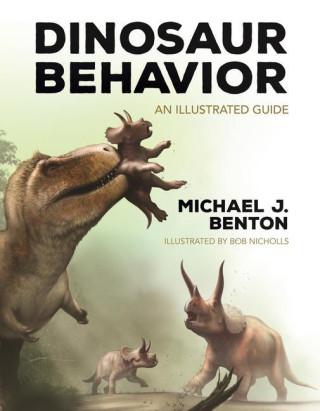
Language: English, Binding: Hardback, Number of pages: 224, Publishers: Princeton University Press, Author: Michael Benton,Bob Nicholls, ISBN-13: 9780691244297, Date of issue: 2023
Language: English, Binding: Hardback, Number of pages: 424, Publishers: Princeton University Press, Author: Emma Jung,Ann Conrad Lammers,Thomas Fischer,Medea Hoch,Alison Kappes, ISBN-13: 9780691253275, Date of issue: 2025
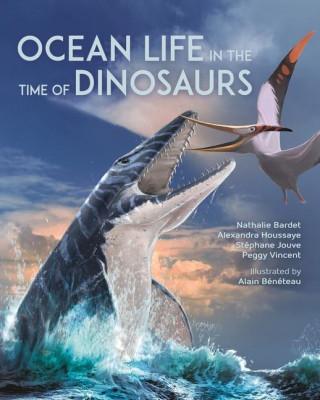
Language: English, Binding: Hardback, Number of pages: 208, Publishers: Princeton University Press, Author: Nathalie Bardet,Alexandra Houssaye,Stéphane Jouve,Peggy Vincent,Alain Bénéteau, ISBN-13: 9780691243948, Date of issue: 2023
Language: English, Binding: Hardback, Number of pages: 288, Publishers: Princeton University Press, Author: Robert Lücking,Toby Spribille, ISBN-13: 9780691247274, Date of issue: 2024
Language: English, Binding: Paperback, Number of pages: 488, Publishers: Princeton University Press, Author: Matt Rohal,Peter Singer, ISBN-13: 9780691237862, Date of issue: 2023
From Nobel Prize–winning economist and New York Times bestselling author Robert Shiller, a groundbreaking account of how stories help drive economic events―and why financial panics can spread like epidemic virusesStories people tell―about financial confidence or panic, housing booms, or Bitcoin―can go viral and powerfully affect economies, but such narratives have traditionally been ignored in economics and finance because they seem anecdotal and unscientific. In this groundbreaking book, Robert Shiller explains why we ignore these stories at our peril―and how we can begin to take them seriously. Using a rich array of examples and data, Shiller argues that studying popular stories that influence individual and collective economic behavior―what he calls "narrative economics"―may vastly improve our ability to predict, prepare for, and lessen the damage of financial crises and other major economic events.The result is nothing less than a new way to think about the economy, economic change, and economics. In a new preface, Shiller reflects on some of the challenges facing narrative economics, discusses the connection between disease epidemics and economic epidemics, and suggests why epidemiology may hold lessons for fighting economic contagions.
Language: English, Binding: Paperback, Number of pages: 288, Publishers: Princeton University Press, Author: Dr. Sarah Fowler,Dr. David A. Ebert, ISBN-13: 9780691218748, Date of issue: 2021
Language: English, Binding: Hardback, Number of pages: 240, Publishers: Princeton University Press, Author: Laurence Packer, ISBN-13: 9780691226620, Date of issue: 2023
The most complete and user-friendly photographic field guide to the world's canidsThis stunningly illustrated and easy-to-use field guide covers every species of the world's canids, from the Gray Wolf of North America to the dholes of Asia
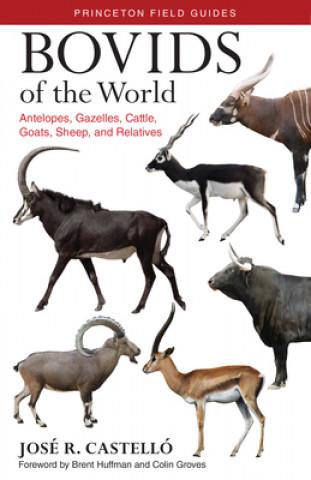
Bovids are a diverse group of ruminant mammals that have hooves and unbranched hollow horns. Bovids of the World is the first comprehensive field guide to cover all 279 bovid species, including antelopes, gazelles, cattle, buffaloes, sheep, and goats. From the hartebeest of Africa and the takin of Asia to the muskox of North America, bovids are among the world's most spectacular animals and this stunningly illustrated and easy-to-use field guide is an ideal way to learn more about them.
The color red has represented many things, from the life force and the divine to love, lust, and anger. Up through the Middle Ages, red held a place of privilege in the Western world. For many cultures, red was not just one color of many but rather the only color worthy enough to be used for social purposes. In some languages, the word for red was the same as the word for color. The first color developed for painting and dying, red became associated in antiquity with war, wealth, and power. In the medieval period, red held both religious significance, as the color of the blood of Christ and the fires of Hell, and secular meaning, as a symbol of love, glory, and beauty. Yet during the Protestant Reformation, red began to decline in status. Viewed as indecent and immoral and linked to luxury and the excesses of the Catholic Church, red fell out of favor. After the French Revolution, red gained new respect as the color of progressive movements and radical left-wing politics.
The changing face of the liberal creed from the ancient world to todayThe Lost History of Liberalism challenges our most basic assumptions about a political creed that has become a rallying cry--and a term of derision--in today's in
Language: English, Binding: Hardback, Number of pages: 856, Publishers: Princeton University Press, Author: William Clare Roberts,Wendy Brown,Karl Marx,Paul Reitter,Paul North, ISBN-13: 9780691190075, Date of issue: 2024
What a rare mushroom can teach us about sustaining life on a fragile planetMatsutake is the most valuable mushroom in the world―and a weed that grows in human-disturbed forests across the northern hemisphere. Through its ability to nurture trees, matsutake helps forests to grow in daunting places. It is also an edible delicacy in Japan, where it sometimes commands astronomical prices. In all its contradictions, matsutake offers insights into areas far beyond just mushrooms and addresses a crucial question: what manages to live in the ruins we have made?A tale of diversity within our damaged landscapes, The Mushroom at the End of the World follows one of the strangest commodity chains of our times to explore the unexpected corners of capitalism. Here, we witness the varied and peculiar worlds of matsutake commerce: the worlds of Japanese gourmets, capitalist traders, Hmong jungle fighters, industrial forests, Yi Chinese goat herders, Finnish nature guides, and more. These companions also lead us into fungal ecologies and forest histories to better understand the promise of cohabitation in a time of massive human destruction.By investigating one of the world's most sought-after fungi, The Mushroom at the End of the World presents an original examination into the relation between capitalist destruction and collaborative survival within multispecies landscapes, the prerequisite for continuing life on earth.
The essential resource on military and political strategy and the making of the modern worldThe New Makers of Modern Strategy is the next generation of the definitive work on strategy and the key figures who have shaped the theory and practice of war and statecraft throughout the centuries. Featuring entirely new entries by a who’s who of world-class scholars, this new edition provides global, comparative perspectives on strategic thought from antiquity to today, surveying both classical and current themes of strategy while devoting greater attention to the Cold War and post-9/11 eras. The contributors evaluate the timeless requirements of effective strategy while tracing the revolutionary changes that challenge the makers of strategy in the contemporary world. Amid intensifying global disorder, the study of strategy and its history has never been more relevant. The New Makers of Modern Strategy draws vital lessons from history’s most influential strategists, from Thucydides and Sun Zi to Clausewitz, Napoleon, Churchill, Mao, Ben-Gurion, Andrew Marshall, Xi Jinping, and Qassem Soleimani.With contributions by Dmitry Adamsky, John Bew, Tami Davis Biddle, Hal Brands, Antulio J. Echevarria II, Elizabeth Economy, Charles Edel, Eric S. Edelman, Andrew Ehrhardt, Lawrence Freedman, John Lewis Gaddis, Francis J. Gavin, Christopher J. Griffin, Ahmed S. Hashim, Eric Helleiner, Wayne Wei-siang Hsieh, Seth G. Jones, Robert Kagan, Jonathan Kirshner, Matthew Kroenig, James Lacey, Guy Laron, Michael V. Leggiere, Margaret MacMillan, Tanvi Madan, Thomas G. Mahnken, Carter Malkasian, Daniel Marston, John H. Maurer, Walter Russell Mead, Michael Cotey Morgan, Mark Moyar, Williamson Murray, S.C.M. Paine, Sergey Radchenko, Iskander Rehman, Thomas Rid, Joshua Rovner, Priya Satia, Kori Schake, Matt J. Schumann, Brendan Simms, Jason K. Stearns, Hew Strachan, Sue Mi Terry, and Toshi Yoshihara.
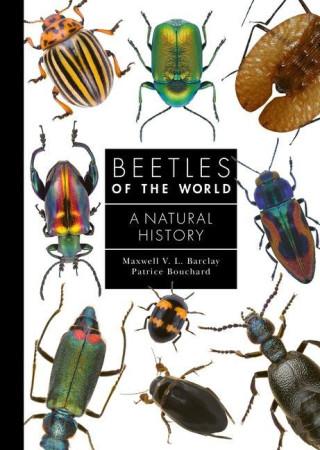
Language: English, Binding: Hardback, Number of pages: 240, Publishers: Princeton University Press, Author: Maxwell V. L. Barclay,Patrice Bouchard, ISBN-13: 9780691240732, Date of issue: 2023
Language: English, Binding: Paperback, Number of pages: 304, Publishers: Princeton University Press, Author: Eric H. Cline, ISBN-13: 9780691208015, Date of issue: 2021
Language: English, Binding: Hardback, Number of pages: 608, Publishers: Princeton University Press, Author: Sarah Fowler,Marc Dando, ISBN-13: 9780691205991, Date of issue: 2021
Language: English, Binding: Paperback, Number of pages: 688, Publishers: Princeton University Press, Author: Yang Liu,Chen Shuihua, ISBN-13: 9780691237527, Date of issue: 2023
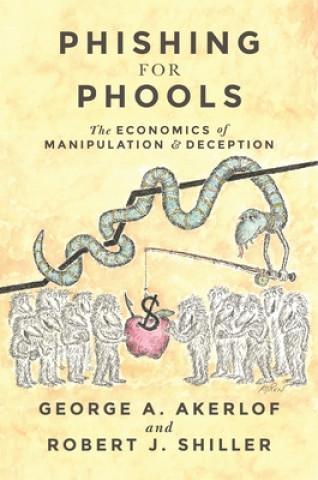
Ever since Adam Smith, the central teaching of economics has been that free markets provide us with material well-being, as if by an invisible hand. In Phishing for Phools, Nobel Prize-winning economists George Akerlof and Robert Shiller deliver a fundamental challenge to this insight, arguing that markets harm as well as help us. As long as there is profit to be made, sellers will systematically exploit our psychological weaknesses and our ignorance through manipulation and deception. Rather than being essentially benign and always creating the greater good, markets are inherently filled with tricks and traps and will "phish" us as "phools." Phishing for Phools explores the central role of manipulation and deception in fascinating detail in each of these areas and many more. It thereby explains a paradox: why, at a time when we are better off than ever before in history, all too many of us are leading lives of quiet desperation. At the same time, the book tells stories of individuals who have stood against economic trickery--and how it can be reduced through greater knowledge, reform, and regulation.