Neben der übersichtlichen Gestaltung verfügen die Straßenkarte "Land Salzburg - Salzkammergut 1:200.000" über zahlreiche Zusatzinformationen wie z.B. Straßenbeschaffenheit, Sehenswürdigkeiten, Campingplätze und einen Innenstadtplan von Salzburg Stadt. Mit dem umfangreichen Ortsregister gelingt zudem eine rasche Orientierung. Der beigelegte Freizeitführer beschreibt die wichtigsten Sehenswürdigkeiten von Salzburg Stadt (Deutsch, Englisch, Italienisch und Französisch) und bietet Infos über alle Gemeinden. Cityplan Salzburg, GPS-tauglich, Ortsregister mit Postleitzahlen, Freizeitführer; freytag & berndt Autokarten sind für viele Länder und Regionen weltweit erhältlich.
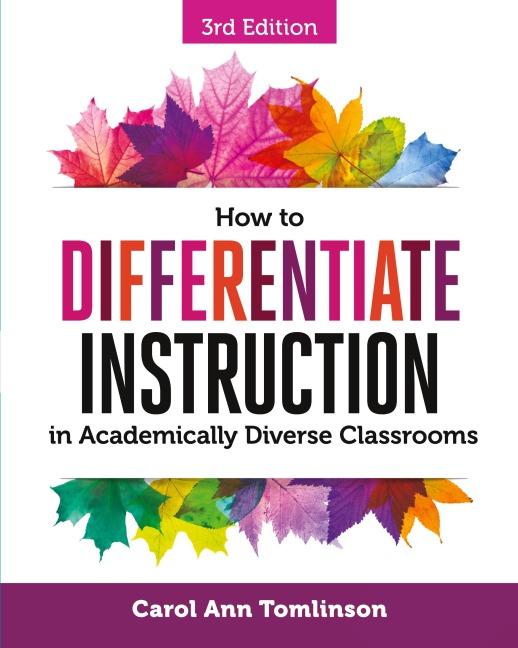
First published in 1995 as How to Differentiate Instruction in Mixed-Ability Classrooms, this new edition reflects evolving best practices, practitioners' experience, and Tomlinson's ongoing thinking about how to help all students access high-quality curriculum; engage in meaningful learning experiences; and feel safe and valued in their school.Written as a practical guide for teachers, this expanded 3rd edition of Carol Ann Tomlinson's groundbreaking work covers the fundamentals of differentiation and provides additional guidelines and new strategies for how to go about it. You'll learn What differentiation is and why it's essential How to set up the flexible and supportive learning environment that promotes success How to manage a differentiated classroom How to plan lessons differentiated by readiness, interest, and learning profile How to differentiate content, process, and products How to prepare students, parents, and yourself for the challenge of differentiationWe differentiate instruction to honor the reality of the students we teach. They are energetic and outgoing. They are quiet and curious. They are confident and self-doubting. They are interested in a thousand things and deeply immersed in a particular topic. They are academically advanced and "kids in the middle" and struggling due to cognitive, emotional, economic, or sociological challenges. More of them than ever speak a different language at home. They learn at different rates and in different ways. And they all come together in our academically diverse classrooms.
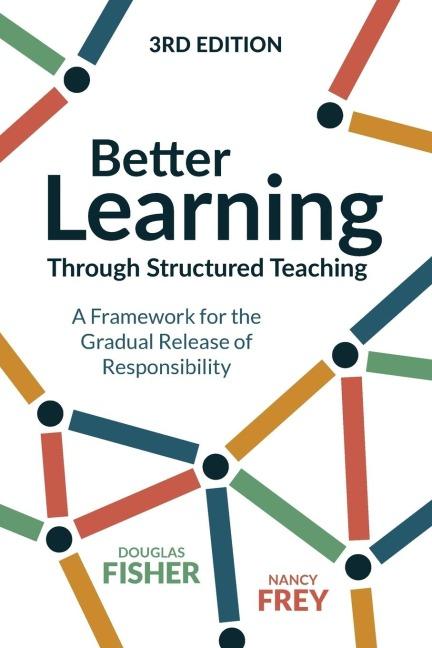
Now in its 3rd edition, Better Learning Through Structured Teaching is the definitive guide to the gradual release of responsibility—an instructional framework any teacher can use to help students to be more successful and self-directed learners.To gradually release responsibility is to equip students with what they need to master content and develop new competencies. On a day-to-day basis, it means delivering lessons intentionally structured to incorporate four interrelated phases:* Focused Instruction ("I do it") that sets students up for cognitive apprenticeship by establishing lesson purpose, modeling strategies and skills, and sharing information and insight.* Guided Instruction ("We do it together") that incorporates targeted prompts, cues, and questions to scaffold understanding.* Collaborative Learning ("You do it together") that allows students to consolidate and extend understanding through accountable group tasks built on discussion and cooperative problem solving.* Independent Learning ("You do it alone") that provides students opportunities to practice and apply the skills and knowledge they've acquired to create authentic products and ask new questions.Authors Douglas Fisher and Nancy Frey detail the components of each phase, sharing proven strategies and real-life examples. You'll find a variety of useful tips for classroom implementation, along with new guidance on teacher credibility, social-emotional learning, and embedding assessment throughout all four phases. No matter what grade level or subject you teach, Better Learning Through Structured Teaching is an essential resource for improving your practice and empowering your students.
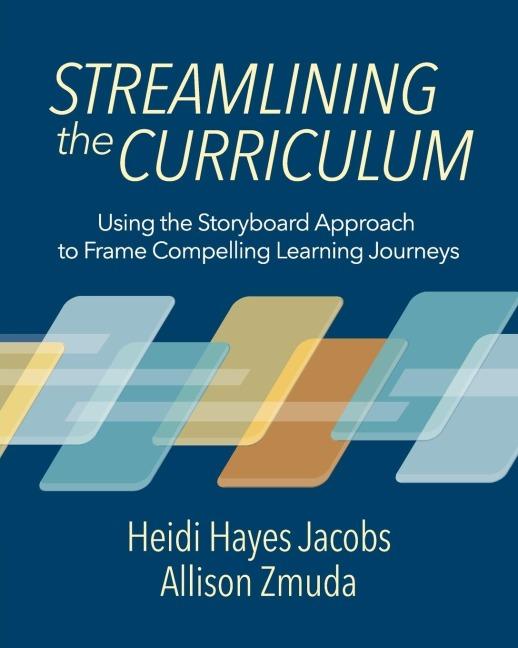
A game-changing resource for educators looking to elevate their unit and lesson plans, increase student engagement, and improve home-school communication.With so many standards to address and templates to fill out, curriculum design and lesson planning can be cumbersome and overwhelming. And every teacher knows the struggle of trying to cover all the required content, which may or may not resonate with their students.In Streamlining the Curriculum, experts Heidi Hayes Jacobs and Allison Zmuda take a hard look at our overburdened, dated curricular practices and offer a better way—one built on the power of narrative. Their storyboard approach casts students as the heroes of the learning journey. Instead of passive recipients, they become protagonists, activity engaged in exploring new ideas, solving problems, finding connections, enlisting allies, and acquiring new skills and understandings to apply to both present and future challenges.This innovative book teaches you how to* Decide what to cut out, cut back, consolidate, and create in your lessons and units.* Find the throughlines in your required content and approach lesson design and teaching as storytelling, no matter what subject area or grade level you teach.* Apply genre lenses to make courses, units, and lessons more compelling.* Communicate clear learning targets to your students and their families.* Create space for exploring essential questions, investigating intriguing ideas, and conducting projects that feel relevant and important.* Determine purposeful and authentic evidence of learning.Filled with examples and insights, this book shows educators how to break free from the tyranny of templates and start streamlining curriculum, assessment, and planning to make learning experiences more immersive, interesting, and emotionally resonant.
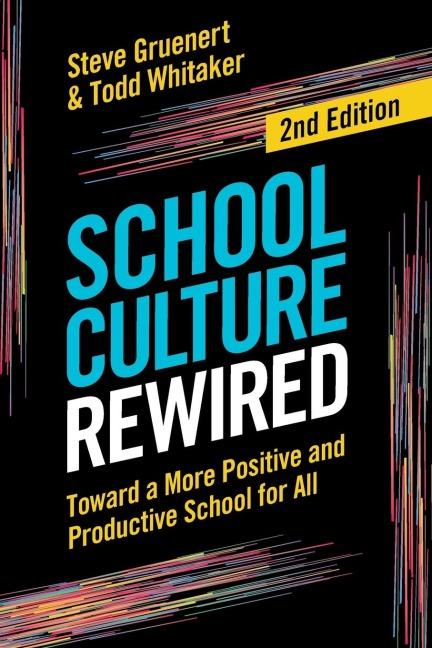
Your school is a lot more than a center of student learning—it represents a self-contained culture with traditions and expectations that reflect its unique mission and demographics.In School Culture Rewired, education experts Steve Gruenert and Todd Whitaker offer strategies and advice for defining, assessing, and transforming your school's culture into one that is positive, productive, and actively working to enrich students' lives.Drawing from decades of research on organizational cultures and school leadership, the authors provide everything you need to optimize both the culture and climate of your school. In this revised and retooled second edition of their bestselling book, Gruenert and Whitaker* Explore the difference between school culture and school climate.* Show how to ensure developmentally appropriate culture change.* Contrast collaborative and toxic school cultures.* Address the symbiotic relationship between culture management and leadership.* Present a framework for pinpointing the type of culture you have, the type you want, and how to bridge the two.Though often invisible to the naked eye, a school's culture influences everything that takes place under its roof. Whether your school is urban or rural, proficient or struggling, School Culture Rewired helps you make sure its culture is guided by what's best for your students.
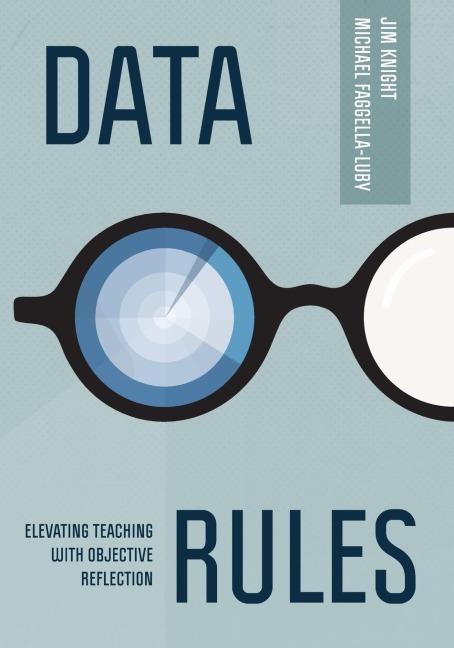
Data Rules provides much-needed clarity on how instructional leaders can effectively leverage data.It's no secret that using data can be a key driver of teacher growth and student achievement. The only real question is how. Coaching expert Jim Knight and professor Michael Faggella-Luby distill decades of research into an accessible, proven approach that explains- Why data is important for transforming teaching.- A framework of 10 easy-to-apply rules for effective data use.- Best practices to communicate and discuss data.- How to analyze data for student engagement and achievement.- How to analyze data for instructional practice.To help schools achieve sustained improvement, this book also connects its data rules to the Impact Cycle, Knight's field-tested model for coaching teachers based on research from the Instructional Coaching Group (ICG). Equipped with the right tools, any instructional leader or coach will be able to realize the full potential of data, move the needle on classroom instruction, and improve student outcomes.This book is a copublication of ASCD and One Fine Bird Press.
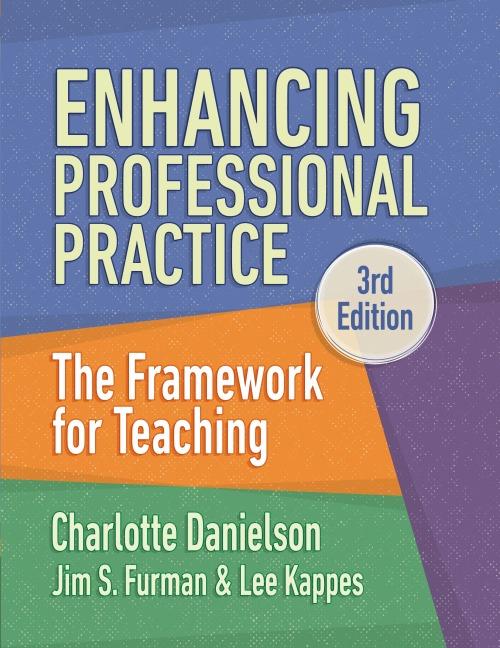
Presenting the latest iteration of the Framework for Teaching—the most comprehensive tool yet for teacher self-assessment and reflection, observation and feedback, and collaborative inquiry.Since 1996, hundreds of teacher preparation programs and thousands of schools, school districts, and government agencies have turned to the Framework for Teaching for a better understanding of excellent instruction. The Framework's four domains, 22 components, and 78 key elements provide an expansive, holistic definition of what teachers across the K–12 spectrum should know and be able to do in the exercise of their profession. Critically, it gives practitioners a common language for visualizing, talking about, and reflecting on their work as they chart their ongoing progress toward instructional excellence.This streamlined third edition of Enhancing Professional Practice presents the latest evolution of the Framework for Teaching—one that is true to its constructivist roots, shaped by ongoing research, and informed by the experiences of educators in the field. Here you'll find …• An updated exploration of a teacher's essential responsibilities, organized into the Framework's four domains—Planning and Preparation, Learning Environments, Learning Experiences, and Principled Teaching.• Detailed discussions of the 22 teaching competencies (or components) shown to improve student learning, with rubrics clarifying the critical attributes of each and how they manifest at various levels of professional proficiency—Unsatisfactory, Basic, Proficient, and Distinguished.• A more explicit emphasis on the Framework's philosophical foundation along with additional attention to what teachers can do to achieve equity, honor students' identities, foster social-emotional development, and promote both joyful inquiry and intellectual rigor.• A more expansive view of family and community engagement and a look at the importance of high-quality instructional materials.• Increased emphasis on the Framework as a tool for ongoing professional learning—a way to transform what for teachers is too often a meaningless ritual of supervisory evaluation into a powerful process for thinking about and pursuing instructional excellence.• A summary of the research base and a full set of reproducible domain and component rubrics.If you or your school are not already using the Framework for Teaching to enhance professional practice, there's never been a better time to join the movement.
In Seven Crossroads of Night Nicholaj de Mattos Frisvold sets forth the foundation for Quimbanda in theory and practice, presenting a blueprint for the themes that generate the variety of ways Quimbanda can be approached. Quimbanda is a Brazilian cult of sorcery that has been preserved in different modalities - either as a secret cult, a necromantic cult, or as an open, religious tradition. Formed of indigenous, African, and European streams of wisdom and sorcery, this unique cult of Exu and Pomba Gira is safeguarded by these amazing entities in diverse ways across Brazil. Remaining strong in their own power, these unique entities represent the mystery of the crossroad, the voice of the graveyard, and the force of life that generates endurance, direction, and honour through the lessons given from life itself and the ancestors. ¿Though Quimbanda has flourished in the world during the last decade, with the flow and spread of the cult of Exu and Pomba Gira comes questions, misinformation, and confusion along with the fertile ground for its growth. In such a landscape it is good to have waymarks to follow and a map which reveals the lay of the land in the world of these powerful spirits. Frisvold, a resident of Brazil since 2003 who has dedicated the last three decades in study and initiation of cults of sorcery, wisdom, and cunning craft guides us though the intricacies of Quimbanda, offering a simple and effective guide to approaching Exu and Pomba Gira.
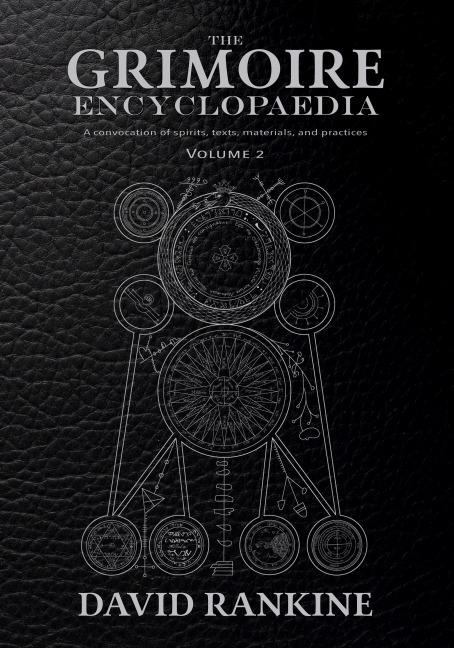
The Grimoire Encyclopaedia is a work of unparalleled magical scholarship which expands the field of grimoire study far beyond its previous boundaries. Including one hundred chapters on individual grimoires and important books, a table of the spirits found in those books, and fourteen appendixes, these two volumes provide a fresh panoramic view and the most extensive collection of resources ever collected on the grimoire tradition. If you ever wanted to know what types of magic circles can be found in Magia Naturalis et Innaturalis, or what kind of feast to prepare for the Lady of the Mountain, or what kind of operation a brass nail is used for, all of this and more can be found in Volume 2, which includes appendices on incenses and oils, metals, plants, circles, feasts, and more. Stephen Skinner calls The Grimoire Encyclopaedia 'a work of incredible scholarship by someone who truly understands his subject...' that 'deserves to be on the bookshelves of all magicians and scholars of grimoire studies.' David Rankine offers a comprehensive system of exploring the grimoires, from the intensive spirit list to a detailed look at magical tools, magic circles, and more. Spanning hundreds of years and including texts both familiar and strange, this resource will become an instant classic in the field of grimoire studies.
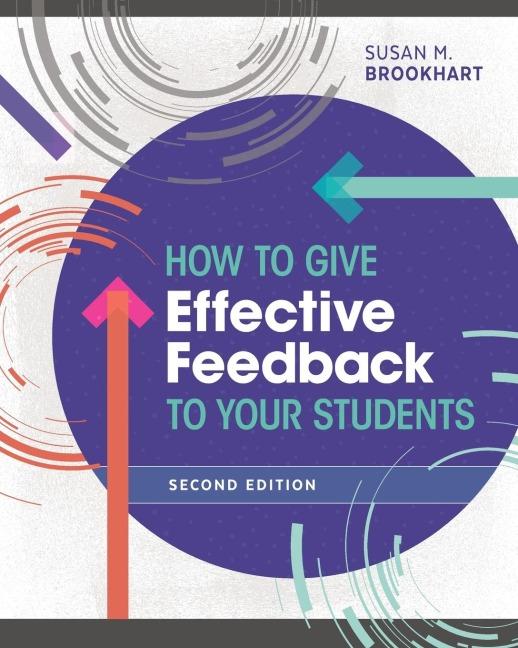
Properly crafted and individually tailored feedback on student work boosts student achievement across subjects and grades. In this updated and expanded second edition of her best-selling book, Susan M. Brookhart offers enhanced guidance and three lenses for considering the effectiveness of feedback: (1) does it conform to the research, (2) does it offer an episode of learning for the student and teacher, and (3) does the student use the feedback to extend learning? In this comprehensive guide for teachers at all levels, you will find information on every aspect of feedback, including Strategies to uplift and encourage students to persevere in their work. How to formulate and deliver feedback that both assesses learning and extends instruction. When and how to use oral, written, and visual as well as individual, group, or whole-class feedback. A concise and updated overview of the research findings on feedback and how they apply to today's classrooms.In addition, the book is replete with examples of good and bad feedback as well as rubrics that you can use to construct feedback tailored to different learners, including successful students, struggling students, and English language learners.The vast majority of students will respond positively to feedback that shows you care about them and their learning. Whether you teach young students or teens, this book is an invaluable resource for guaranteeing that the feedback you give students is engaging, informative, and, above all, effective.
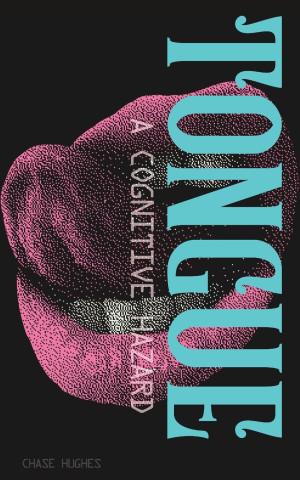
Touch the book and you're part of the experiment.Finish it and you'll never think in words the same way again.Some will let this book become a knife in the ribs.Some will glance right past it.A few will miss the point entirely - revealing more than they meant to.Hughes built a career decoding the human mind-designing systems that could read, influence, and rewire anyone.Then he turned the weapon inward.TONGUE: A Cognitive Hazard is the fallout from that decision.An experiment disguised as a paperback.A linguistic device engineered to short-circuit the reader's dependence on language itself.Each page corrupts the circuitry of meaning, twisting familiar thoughts until they look back at you with new eyes.The text replicates.It feeds on your attention, rewriting perception, dismantling certainty, and leaving the clean bones of awareness where comprehension used to be.TONGUE unfolds like surgery performed without anesthesia-no healing, just revelation.For years, Hughes built architectures of control.Now he's dismantling the machine from the inside.He built a mind-virus to hijack you out of an infection you never knew you had.And if you're still reading, the download has already begun.⚠️ Final WarningGo ahead.Touch it. Everyone does.You'll tell yourself it's just paper, that a book can't do anything to you.Nobody ever plans to feel their thoughts changing temperature.Nobody expects a sentence to stare back.Keep reading and the words start rearranging furniture in your head-quietly, politely, like they live there.You'll catch yourself pausing between thoughts longer than usual.The static clearing.Most people laugh it off.Some don't sleep the same for a while.A few stop needing to explain things at all.It's not dangerous. Not really.Unless you finish it.