Do you like to get messy? These hands-on, not-so-ordinary science projects are for you! Create slippery slimes and frothy foams. Have a blast making colourful chalk explosions. Then, learn the science behind each marvellous mess! Simple step-by-step instructions supported by clear photos make it easy to start experimenting and discover just how fun STEM can be. Autorid: Elsie Olson
A heartwarming picture book about two best friends who learn how accept each other's differences. Hank and Hoog are best friends - they do EVERYTHING together. Until one evening when Hank confesses that he's scared of the dark... Hoog can't understand - there's nothing to be scared of! But Hank can't stop thinking about the shadows, and what's making those nighttime noises? They may not agree on the dark, but there's something they both definitely like: each other. And with a good friend, there will always be light in the darkness... With a laugh-out-loud story bursting with personality and beautiful illustrations full of heart, I Definitely Don't Like the Dark is an instant picture book classic Christine Pym's hand-drawn illustrations bring a uniquely special character to this story Enjoy more of Hank and Hoog's adventures with the first book in the series I Definitely Don't Like Winter With themes of friendship, disagreement, compromise and honesty Autorid: Fiona Barker, Christine Pym
Cet ouvrage de Mikhaïl Botvinnik, le sixième champion du monde, est intéressant non seulement pédagogiquement pour l'apprentissage des échecs, mais aussi en offrant un regard historique et humain sur l'auteur, qui distille au gré de ses commentaires quelques anecdotes concernant le quotidien de sa vie de joueur d'échecs professionnel.En présentant seulement des fins de parties remarquables issues de sa pratique et non pas des parties entières, Botvinnik propose en fait une réflexion sur une question essentielle que se pose constamment tout joueur d'échecs durant sa pratique : "Comment forcer la victoire lorsque je possède une position supérieure ?" En effet, il est bien connu qu'il n'y a rien de plus difficile aux échecs que de convertir en gain effectif les positions supérieures. En corollaire, Botvinnik apporte aussi certaines fois une réponse à la question "Comment sauver une position compromise ?"Ainsi cet ouvrage, en vingt-cinq petits chapitres qui sont autant de leçons pédagogiques, se révélera particulièrement profitable à tout joueur pour améliorer son propre niveau aux échecs : ici, nulle théorie abstraite concernant les finales, mais avant tout des réflexions concrètes et pratiques présentées par le sixième champion du monde. Bref : tout ce qu'un joueur demande à un bon manuel d'échecs !
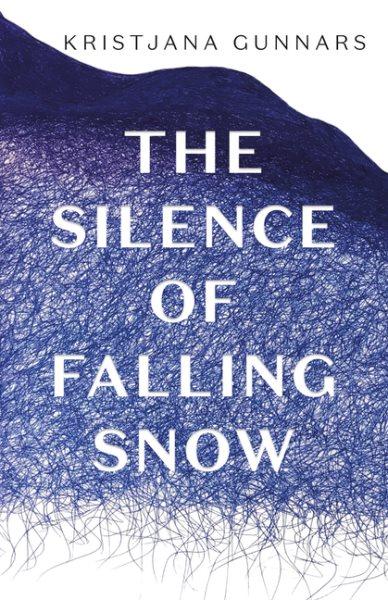
From an innovator of autofiction comes a meditation on grief, care, Buddhism, and artmaking. 'This is a story. It is a story about someone accompanying another to the last gate.'Years ago, Kristjana Gunnars took her husband back to his home in Oslo to die. Through the dark, cold days, she tends to his needs as she feels her own self disintegrating. Later, as she looks back to this slow departure of the man she loved, she weaves together threads from her own life, reflections on the thoughts of Gautama Buddha, discussions of Renaissance art, and considerations of contemporary artists. Engaging with thinkers as varied as Ingmar Bergman and Jacques Derrida, Henry David Thoreau, and Ursula K. Le Guin, Gunnars one of the earliest practitioners of "autofiction" crafts a new kind of hybrid text, with elements of memoir, lyrical essay, Buddhist teachings, poetics, art theory, and meditation.The Silence of Falling Snow is a deep dive into grief, the way we circle around it, dipping in and out of the pain, finding comfort in art and philosophy and religion where we can. Its an intellectual cabaret, a Buddhist primer, and a pointillist portrait of grief above all, its the consoling and invigorating reflection we need in this moment. Autorid: Kristjana Gunnars
"This book presents salient examples of architectural projects and practices in South Africa since 1994 that collectively subscribe to the paradigm shift towards Public Interest Design. Despite radical political transformation in the country, the people of South Africa remain adversely affected by the socio-spatial legacies of a segregated urban landscape. The contributions by architects to address these challenges go largely unnoticed and remain a marginalised practice, even within the mainstream profession. Kim's (2018) Conceptual Taxonomy, along with relevant themes of Spatial Agency (Awan et al 2011) are unpacked in terms of the South African context, learning from a selection of local architectural examples. Projects include the Warwick Markets in eThekwini, the Violence Prevention through Urban Upgrade programme in Cape Town, projects undertaken by Carin Smuts of CS Studios, as well as a collection of smaller but impactful interventions across the country. The selection illustrates the deliberate and necessary shift from a culture of segregation, fortification and private interest, to one of intense collaboration, democratic engagement and responsive design thinking. Serving as a microcosm of the challenges to integration and democracy faced by society globally, this book will be of great interest not only to scholars and students of architecture, urban planning, and development studies in South Africa, but also internationally"-- Provided by publisher. This book presents salient examples of architectural projects and practices in South Africa since 1994 that collectively subscribe to the paradigm shift towards Public Interest Design. Despite radical political transformation in the country, the people of South Africa remain adversely affected by the socio-spatial legacies of a segregated urban landscape. The contributions by architects to address these challenges go largely unnoticed and remain a marginalised practice, even within the mainstream profession.Kims (2018) Conceptual Taxonomy, along with relevant themes of Spatial Agency (Awan et al 2011) are unpacked in terms of the South African context, learning from a selection of local architectural examples. Projects include the Warwick Markets in eThekwini, the Violence Prevention through Urban Upgrade programme in Cape Town, projects undertaken by Carin Smuts of CS Studios, as well as a collection of smaller but impactful interventions across the country. The selection illustrates the deliberate and necessary shift from a culture of segregation, fortification and private interest, to one of intense collaboration, democratic engagement and responsive design thinking.Serving as a microcosm of the challenges to integration and democracy faced by society globally, this book will be of great interest not only to scholars and students of architecture, urban planning, and development studies in South Africa, but also internationally. This book presents salient examples of architectural projects and practices in South Africa since 1994 that collectively subscribe to the paradigm shift towards Public Interest Design. Autorid: Carin Combrinck, Claire du Trevou, Tshepo Mokholo
A modern, class-conscious Mrs. Dalloway, this unsettling novel dissects common narratives of family and community, showing the fragile ties that hold us together.A spring day in an average gentrifying neighbourhood begins unremarkably enough; by evening someone has died. The local residents go about their daily routines: Nat, a middle-aged queer mother of two, feigns normalcy as she worries about her daughter and her taciturn, loner son locked in his room upstairs. Her friend Maddy, a failed actress and fellow parent, and her husband plan to go to Nat's for dinner. Next door, Ilya, still recovering from a gruesome industrial accident, is struggling to renovate a fixer-upper, but a buried stream keeps threatening to flood the basement. The troubled residents stumble through their errands and to-do lists, but each seemingly inconsequential exchange tightens in around the neighbourhood, until finally tragedy strikes, leaving it forever changed. With crystalline prose that balances emotional complexity and a hint of satire, Property explores the thorniness of class and privilege in a city stretched to the breaking point. The novel shows the complicated politics of queer respectability, friendship, the real and imaginary perils of raising children, and the ways that we hurt one another without meaning to.
The American Society of Civil Engineers 2016 economic study (Failure to Act: Closing the Infrastructure Investment Gap for Americäs Economic Future) predicted that Americäs infrastructure investment gap was $3.9 trillion in losses to the U.S. GDP by 2025. Further, it found a gap of $7 trillion in lost business sales by 2025. Moreover, it predicted that, due to this infrastructure gap, lost American jobs in 2025 would total 2.5 million. On top of those costs, hardworking American families will lose upwards of $3,400 in disposable income each year ¿ about $9 each day. Infrastructure includes government projects (highways, airports, ports, water systems, sewer system, Mass transit, etc.). Private infrastructure (electric grid, internet) is also severely underfunded and generally unregulated.
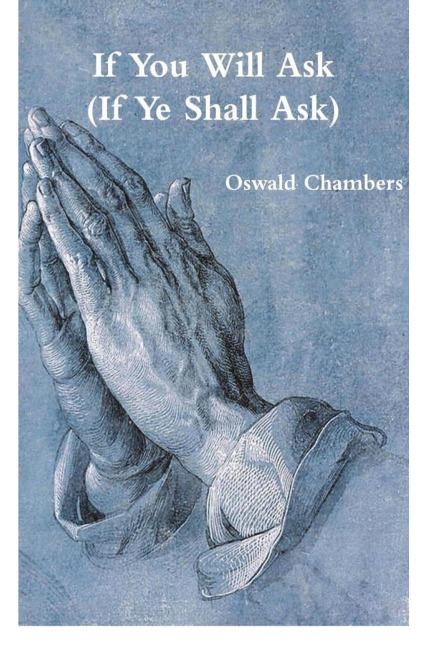
The author believed that "prayer changes the one praying" as much as "prayer moves the hand of God." He knew prayer was a way of "getting to know God" that would "develop the life of God" in those who prayed. This powerful book on prayer, filled with wisdom and keen perception, is one to savor slowly and return to time and time again. Written by a devout man of God who "shows us what we are missing when we don't have 'the life of God in us.' Oswald Chambers brings you a simple approach to prayer. It has little to do with getting what you need from God and everything to do with God getting what He needs from you. In this refreshing approach to this important biblical principle, If You Will Ask helps you discover that prayer is intimate communication intended to bring the bride alongside her Bridegroom, to bring you closer in relationship to the God Almighty who created and loves you. ¿There aren't enough stars to value its worth, whether five, ten, fifty or a hundred.
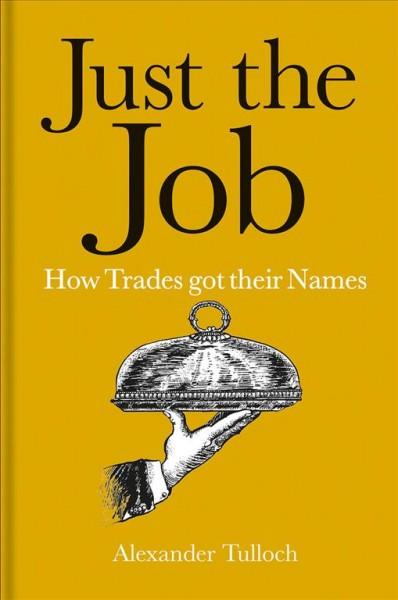
What did a gongfarmer do? How is a chaperone connected to a bird of prey? What is the etymology behind cloud architect? Is there a link between secretaries and secrets? The story behind these (and many more) job titles is rarely predictable and often fascinating. In this highly original book, linguist Alexander Tulloch examines the etymology behind a selection of trades and professions, unearthing intriguing bits of historical information along the way. Here readers will find explanations of common surnames, such as Spencer, Hayward, and Fletcher; obsolete jobs such as pardoner, cordwainer, or telegraph boy; and roles for the modern era, such as wedding planner, pundit, and sky marshal. Packed with additional etymological information and literary quotations, this book will appeal not only to linguists, but to anyone interested in the quirky twists and turns of meaning that have led to the familiar job titles of today. Autorid: Alexander Tulloch
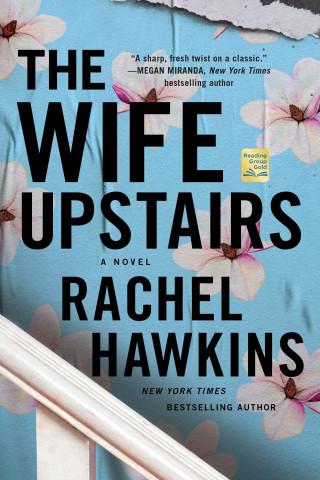
Instant New York Times and USA Today Bestseller"Compulsively readable...a gothic thriller laced with arsenic." ––EWOne of the Most Anticipated Books of 2021: CNN • Newsweek • Vulture • PopSugar • Parade • BuzzFeed • E!Online • TimeOut • Woman"s Day • Goodreads • She Reads • Good Housekeeping • CrimeReads • Frolic • Hello! • Mystery and Suspense January 2021 Indie Next Pick and #1 LibraryReads Pick A delicious twist on a Gothic classic, The Wife Upstairs pairs Southern charm with atmospheric domestic suspense, perfect for fans of B.A. Paris and Megan Miranda.Meet Jane. Newly arrived to Birmingham, Alabama, Jane is a broke dog-walker in Thornfield Estates––a gated community full of McMansions, shiny SUVs, and bored housewives. The kind of place where no one will notice if Jane lifts the discarded tchotchkes and jewelry off the side tables of her well-heeled clients. Where no one will think to ask if Jane is her real name.But her luck changes when she meets Eddie Rochester. Recently widowed, Eddie is Thornfield Estates’ most mysterious resident. His wife, Bea, drowned in a boating accident with her best friend, their bodies lost to the deep. Jane can’t help but see an opportunity in Eddie––not only is he rich, brooding, and handsome, he could also offer her the kind of protection she’s always yearned for. Yet as Jane and Eddie fall for each other, Jane is increasingly haunted by the legend of Bea, an ambitious beauty with a rags-to-riches origin story, who launched a wildly successful southern lifestyle brand. How can she, plain Jane, ever measure up? And can she win Eddie’s heart before her past––or his––catches up to her?With delicious suspense, incisive wit, and a fresh, feminist sensibility, The Wife Upstairs flips the script on a timeless tale of forbidden romance, ill-advised attraction, and a wife who just won’t stay buried. In this vivid reimagining of one of literature’s most twisted love triangles, which Mrs. Rochester will get her happy ending?
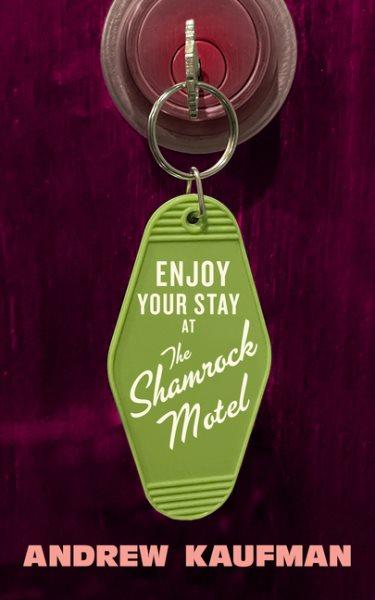
Aesop meets Anaïs Nin in these absurdist stories of very unexpected redemption Getting to the Shamrock Motel isnt easy. Its just off Concession #18, but you cant get there through a sequence of lefts and rights. To find the Shamrock you have to be lost not just on the map, but in your heart and soul. The Shamrock Motel does not accept reservations. The only way to get a room is by walking into the office and asking Rosemary, the owner/operator for one. Try not to stare at her hair. Fair warning: no one spends the night, or even an hour at the Shamrock without experiencing some form of transformation. Whether its accidentally sleeping with a bear, turning yourself into a river, or getting entirely too intimate with the sun, time spent at the Shamrock will make you wiser, stronger, sexier, and more yourself. Even if thats the last thing you want. These linked stories explore the intersection of personality and desire, love and lust, the joy and sadness of being alive and in love. Heated pool, cable TV, and a shot at redemption: the Shamrock Motel offers it all. Credit cards are accepted, but cash is preferred. Autorid: Andrew Kaufman
our love was different it was erotic passionate playful domestic romantic we could have moved mountains together; I hope you see soon that separately we can't