The classic book on systems thinking, with more than half a million copies sold worldwide!This is a fabulous book. This book opened my mind and reshaped the way I think about investing. ForbesPerfect for fans of Kate Raworth, Rutger Bregman and Daniel Kahneman!The co-author of the international best-selling book Limits to Growth, Donella Meadows is widely regarded as a pioneer in the environmental movement and one of the world's foremost systems analysts . Her posthumously published Thinking in Systems, is a concise and crucial book offering insight for problem solving on scales ranging from the personal to the global. This essential primer brings systems thinking out of the realm of computers and equations and into the tangible world, showing readers how to develop the systems-thinking skills critical for 21st-century life.Some of the biggest problems facing the world war, hunger, poverty, and environmental degradation are essentially system failures. They cannot be solved by fixing one piece in isolation from the others, because even seemingly minor details have enormous impact.While readers will learn the conceptual tools and methods of systems thinking, the heart of the book is grander than methodology. Donella Meadows reminds readers to pay attention to what is important, not just what is quantifiable, to stay humble, and to stay a learner.No matter what industry or career you re in, Thinking In Systems will bring clarity to the complicated, crowded and interdependent networks that make up the world today. Thinking in Systems helps readers avoid confusion and helplessness, the first step toward finding proactive and effective solutions.
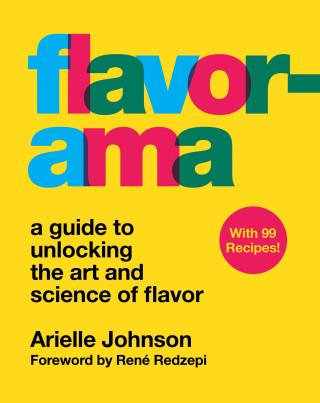
An irreverent, accessible, essential guide to the science of flavor and how to use it in your own kitchen, from the food scientist-confidante of some of the world’s best chefs, Arielle Johnson, with more than 75 recipes—plus a foreword by René Redzepi. "Arielle changed the way that I think about flavor, and in these pages, she will do the same for you” (René Redzepi, chef of Noma). Meet Arielle Johnson—she’s a flavor scientist (she loves flavor so much, she got a Ph.D.in the subject). She spends most of her time helping chefs better understand what’s going on beneath the hood of flavor and make delicious new foods. Now, with Flavorama, she shares this invaluable knowledge with home cooks everywhere.Mixing equal parts fun and braininess, Arielle dives into how chemistry, sensation, and craft unite to create flavor, distilling what flavor really is (molecules!) and how to get it to work for you (spotting patterns, breaking rules) in an easy-to-digest handbook. You don’t need a lab or a professional kitchen—or even a background in science—to get something out of the science of flavor. With Flavorama, you’ll be able to easily finesse flavor while cooking to give any dish a little oomph, easily swap out an ingredient for one you have on hand, use a recipe or technique to improvise something new, or boldly replicate a flavor.Out of basil for pesto? Pivot and use mint, shiso, or tarragon—all are members of the same "herbal-aromatic” flavor family—for a new-but-somehow-familiar herb sauce. Or add a drizzle of olive oil and a sprinkling of flaky salt to chocolate ice cream— a simple hack for deliciously complex flavor. Included are 99 recipes so you can hit the ground running with your new science-of-flavor knowledge: An Algorithm for a Minimalist but Excellent Dressing for LettuceUmami-Boosted Cacio e PepeChilled Soba Noodles with GrapefruitThe Meatiest Slow-Cooked MeatPanela-Coconut Iced CoffeePineapple Caramel SauceBurnt Scallion ButterUnder-appreciated–Spice Pumpkin PieCook with the creativity, confidence, and flexibility of a world-class chef and learn how to unlock the flavor potential of your ingredients, create your own dishes, make your own bitters, ferment your own miso, and much, much more.Charming illustrations and diagrams drawn by Arielle herself accompany this indispensable guidebook to flavor town.
'Upon her neck and breast was blood, and upon her throat were the marks of teeth having opened the vein: - to this the men pointed, crying, simultaneously struck with horror, "a Vampyre, a Vampyre!"
A New York Times Bestseller! Cruel Prince meets A Court of Thorns and Roses in this sexy, action-packed fantasy about a girl who is caught between two treacherous faerie courts and their dangerously seductive princes.Brie hates the Fae and refuses to have anything to do with them, even if that means starving on the street. But when her sister is sold to the sadistic king of the Unseelie court to pay a debt, she'll do whatever it takes to get her back—including making a deal with the king himself to steal three magical relics from the Seelie court.Gaining unfettered access to the Seelie court is easier said than done. Brie's only choice is to pose as a potential bride for Prince Ronan, and she soon finds herself falling for him. Unwilling to let her heart distract her, she accepts help from a band of Unseelie misfits with their own secret agenda. As Brie spends time with their mysterious leader, Finn, she struggles to resist his seductive charm.Caught between two dangerous courts, Brie must decide who to trust with her loyalty. And with her heart.
Somewhere deep inside, you know what your gift, purpose, and mission are. Boyd Varty, a lion tracker and life coach, reveals how the wisdom from the ancient art of tracking can teach you how to recognize these essential ingredients in a meaningful life.
Aurora Leigh is the foremost example of the mid-nineteenth-century poem of contemporary life. This verse-novel is a richly detailed representation of the early Victorian age. The social panorama extends from the slums of London, through the literary world, to the upper classes and a number of superb satiric portraits: an aunt with rigidly conventional notions of female education; Romney Leigh, the Christian socialist; Lord Howe, the amateur radical; Sir Blaise Delorme, the ostentatious Roman Catholic; and the unscrupulous society beauty Lady Waldemar. However, the dominant presence in the work is the narrator, Aurora Leigh herself. From early years in Italy and adolescence in the West Country to the vocational choices, creative struggles, and emotional entanglements of her first decade of adult life, Aurora Leigh develops her ideas on art, love, God, the Woman Question, and society. This is the first critically edited and fully annotated edition for almost a century.
"An enthralling story . . . A work of history that reads like a novel." -- Christian Science Monitor "As Hochschild's brilliant book demonstrates, the great Congo scandal prefigured our own times . . . This book must be read and reread." -
This magical adventure from the #1 digital comic platform WEBTOON continues as Dani and Dorian answer the question they’ve been avoiding: could one of them be the king of witches? A classic good-vs-evil struggle plays out on an epic stage in the second volume of this bestselling comic.Dani and Dorian Wytte have been through everything together—including joining forces with trouble maker Nico, Princess Monica, and golden boy Mark to sneak into the witch's sabbath, spring hostages from prison, and defend the castle when it was attacked by witches.With witches like their parents out for power and blood and non-magical people increasingly threatened by them, Dani and Dorian don't know whose side they're on . . .or if anyone's on their side. That includes their brother, Damien, who disappeared after being crowned King of Witches. But since Monica's father, the king, and her fiancé, Prince William disappeared, too, Dani and Dorian know they must set out to find their lost allies. Luckily, they aren't alone.Based on the beloved webcomic from WEBTOON, Hooky Volume 2 picks up right where the action left off and is in stunning print format for the first time with exclusive new content sure to please fans new and old.
Language: English, Binding: Hardback, Number of pages: 720, Publishers: STANFORD UNIV PR, Author: Lenn E. Goodman,Phillip I. Lieberman, ISBN-13: 9780804787383, Date of issue: 2024
'The Art of Fermentation' is the most comprehensive guide to do-it-yourself home fermentation ever published. Sandor Katz presents the concepts and processes behind fermentation in ways that are simple enough to guide a reader through their first experience making sauerkraut or yogurt, and in-depth enough to provide greater understanding and insight for experienced practitioners.While Katz expertly contextualizes fermentation in terms of biological and cultural evolution, health and nutrition, and eveneconomics, this is primarily a compendium of practical information--how the processes work; parameters for safety; techniques for effective preservation; troubleshooting; and more.With full-color illustrations and extended resources, this book provides essential wisdom for cooks, homesteaders, farmers, gleaners, foragers, and food lovers of any kind who want to develop a deeper understanding and appreciation for arguably the oldest form of food preservation, and part of the roots of culture itself.Readers will find detailed information on fermenting vegetables; sugars into alcohol (meads, wines, and ciders); sour tonic beverages; milk; grains and starchy tubers; beers (and other grain-based alcoholic beverages); beans; seeds; nuts; fish; meat; and eggs, as well as growing mold cultures, using fermentation in agriculture, art, and energy production, and considerations for commercial enterprises. Sandor Katz has introduced what will undoubtedly remain a classic in food literature, and is the first--and only--of its kind
This extensively revised and expanded edition broadens the reach and depth of the permaculture approach for urban and suburban gardeners.The text's message is that working with nature, not against it, results in more beautiful, abundant, and forgiving gardens.
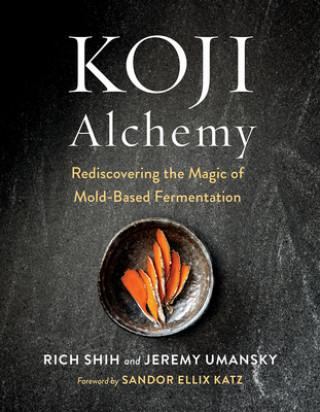
The first book devoted to processes, concepts, and recipes for fermenting and culturing foods with koji, the microbe behind the delicious, umami flavors of soy sauce, miso, mirin, and so many of the ingredients that underpin Japanese cuisine
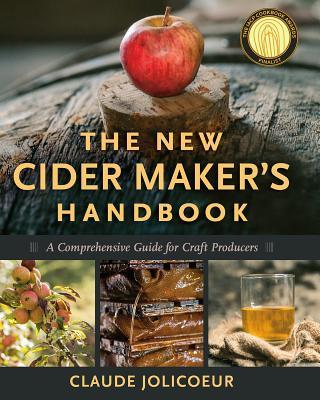
All around the world, the public’s taste for fermented cider has been growing more rapidly than at any time in the past 150 years. And with the growing interest in locally grown and artisanal foods, many new cideries are springing up all over North America, often started up by passionate amateurs who want to take their cider to the next level as small-scale craft producers.To make the very best cider―whether for yourself, your family, and friends or for market―you first need a deep understanding of the processes involved, and the art and science behind them. Fortunately, The New Cider Maker’s Handbook is here to help. Author Claude Jolicoeur is an internationally known, award-winning cider maker with an inquiring, scientific mind. His book combines the best of traditional knowledge and techniques with up-to-date, scientifically based practices to provide today’s cider makers with all the tools they need to produce high-quality ciders.The New Cider Maker’s Handbook is divided into five parts containing:An accessible overview of the cider making process for beginners;Recommendations for selecting and growing cider-appropriate apples;Information on juice-extraction equipment and directions on how to build your own grater mill and cider press;A discussion of the most important components of apple juice and how these may influence the quality of the cider;An examination of the fermentation process and a description of methods used to produce either dry or naturally sweet cider, still or sparkling cider, and even ice cider. This book will appeal to both serious amateurs and professional cider makers who want to increase their knowledge, as well as to orchardists who want to grow cider apples for local or regional producers. Novices will appreciate the overview of the cider-making process, and, as they develop skills and confidence, the more in-depth technical information will serve as an invaluable reference that will be consulted again and again. This book is sure to become the definitive modern work on cider making.A mechanical engineer by profession, Claude Jolicoeur first developed his passion for apples and cider after acquiring a piece of land on which there were four rows of old abandoned apple trees. He started making cider in 1988 using a "no-compromise” approach, stubbornly searching for the highest possible quality. Since then, his ciders have earned many awards and medals at competitions, including a Best of Show at the prestigious Great Lakes International Cider and Perry Competition (GLINTCAP).Claude actively participates in discussions on forums like the Cider Digest, and is regularly invited as a guest speaker to events such as the annual Cider Days festival in western Massachusetts. He lives in Quebec City.
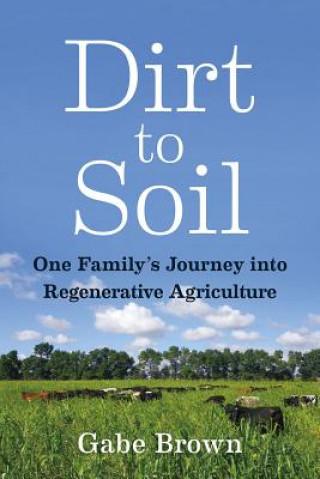
At the turn of the 1990s, Gabe Brown and his wife, Shelly, bought a farm near Bismarck, North Dakota and began growing grains and raising cattle using heavy tillage, herbicides, insecticides, and artificial fertilizer. Brown demonstrates in Dirt to Soil his tried-and-true solutions to our most pressing and complex contemporary agricultural challenge, which lies right beneath our feet.