Royal Canin Beagle Adult – spetsiaalselt tasakaalustatud koeratoit üle 12 kuu vanustele beagle koertele. Spetsiaalselt tasakaalustatud toit aitab säilitada ideaalkaalu. Ideaalne kaal – Beagle’i tõugu koerad kipuvad olema ülekaalulised. See valem aitab tasakaalustatud kalorite tarbimise tõttu säilitada beagle ideaalset kaalu. Spetsiaalne pellet – pelleti tekstuur ja koostis on spetsiaalselt kohandatud beagle koertele. Luude ja liigeste tugevdamine – spetsiaalne valem aitab säilitada terveid luid ja liigeseid ning säilitada ideaalkaalu. Rikastatud EPR ja DHR rasvhapete kombinatsiooniga. Toidukontroll – eksklusiivne graanulikuju aitab pikendada toitmisaega ja soodustab närimist. See valem on rikastatud ka kiudainetega. LISANDID (toidu kilogrammi kohta): Toidulisandid: vitamiin A - 28000 IU, vitamiin D3 - 700 IU, E1 (raud) - 42 mg, E2 (jood) - 4,2 mg, E4 (vask) - 5 mg, E5 (mangaan) - 55 mg, E6 (tsink) ) - 164 mg, E8 (Seleen) - 0,09 mg. Säilitusained. Antioksüdandid. Energeetiline väärtus: 3584 kcal / kg ANALÜÜTILISED KOOSTISOSAD: Toorproteiin - 27%, toorõlid ja -rasvad - 12%, toortuhk - 6,1%, toorkiud - 3,7%, rasvhapped EPR ja DHR - 3 g / kg. * L.I.P .: Väga hästi imenduvad valgud.
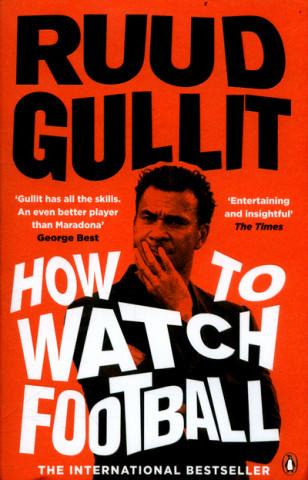
From the Ballon d'Or winner and twice-voted World Football Player of the Year, this is an articulate and informative masterclass on how to 'read' a match.
Thirty-one stunning full-page illustrations feature brilliantly patterned butterflies in a variety of creative settings that will flutter to life with color. Each dazzling design centers around delicately beautiful creatures nestled within complex landscap
Philipsi kaabel ühendab mattpinnal kanga ja metalli ning toob teie elutuppa retro stiili. Sobib pirnile max: 60W. Kaabli pikkus max: 2 m. Pirn ei kuulu komplekti.
The "painters' painter," Anders Zorn (1860-1920) studied at the Stockholm Royal Academy of Art and took up residence in London and Paris, where he established an international roster of high-society clients. His striking portraits rivaled those of his cont
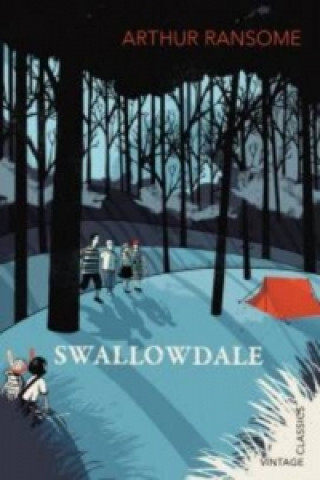
'Ahoy! Ahoy! Swallows! Ahoy!' Have you ever sailed in a boat or built a camp? Have you caught trout and cooked it yourself? The four Swallows, John, Susan, Titty and Roger return to the lake full of such plans and they can't wait to meet up with Nancy and Peggy, the Amazon Pirates. When the Swallow is shipwrecked and the Amazon's fearsome Great-Aunt makes decides to make a visit their summer seems ruined. Then they discover a wonderful hidden valley and things take a turn for the better...BACKSTORY: Discover the real Swallowdale, swot up on seafaring and learn all about the adventurous author.
Suure jõudlusega piduriklotsid DS 2500 ilma homologeeringuta; tagumine, sobib: VOLVO C30, C70 II, S40 II, V40, V50; CADILLAC BLS, CTS; CITROEN C5 III; FORD C-MAX, C-MAX II 1.0-Electric 01.99-
Is traditional American religion doomed?Traditional religion in the United States has suffered huge losses in recent decades. The number of Americans identifying as "not religious" has increased remarkably. Religious affiliation, service attendance, and belief in God have declined. More and more people claim to be "spiritual but not religious." Religious organizations have been reeling from revelations of sexual and financial scandals and cover-ups. Public trust in "organized religion" has declined significantly. Crucially, these religious losses are concentrated among younger generations. This means that, barring unlikely religious revivals among youth, the losses will continue and accelerate in time, as less-religious younger Americans replace older more-religious ones and increasingly fewer American children are raised by religious parents. All this is clear. But what is less clear is exactly why this is happening. We know a lot more about the fact that traditional American religion has declined than we do about why this is so. Why Religion Went Obsolete aims to change that. Drawing on survey data and hundreds of interviews, Christian Smith offers a sweeping, multifaceted account of why Americans have lost faith in traditional religion. An array of large-scale social forces-everything from the end of the Cold War to the rise of the internet to shifting ideas about gender and sexuality-came together to render traditional religion culturally obsolete. For growing numbers of Americans, traditional religion no longer seems useful or relevant. Using quantitative empirical measures of big-picture changes over time as well as exploring the larger cultural environment--the cultural "zeitgeist"--Smith explains why this is the case and what it means for the future. Crucially, he argues, it does not mean a strictly secular future. Rather, Americans' spiritual impulses are being channelled in new and interesting directions.Why Religion Went Obsolete is a tour de force from one of our leading chroniclers of religion in America. Traditional religion in the United States has suffered huge losses in recent decades. But we know a lot more about the fact that traditional American religion has declined than we do about why this is so. Why Religion Went Obsolete aims to change that. Drawing on survey data and hundreds of interviews, Christian Smith offers a sweeping, multifaceted account of why Americans have lost faith in traditional religion. Autorid: Christian Smith
Suure jõudlusega piduriklotsid DS 2500 ilma homologeeringuta; esiosa, sobib: AUDI A3; SEAT ALHAMBRA; SKODA OCTAVIA III, SUPERB II, SUPERB III; VW ARTEON, ARTEON SHOOTING BRAKE, CC B7 1.4-3.6 02.08-
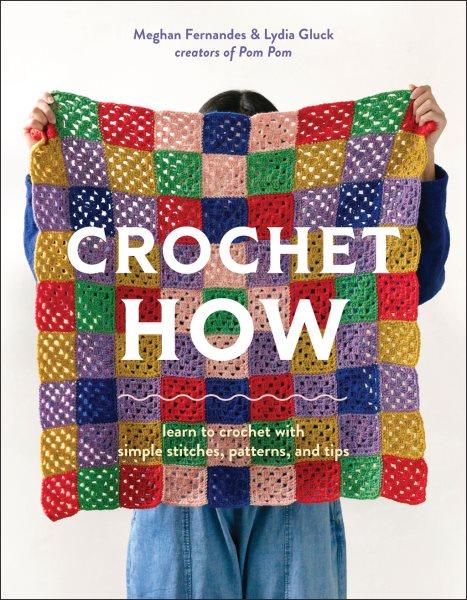
The perfect learn-to-crochet book for beginners, from the creators of the premier knit and crochet brand Pom PomCrochet How takes new crocheters through the basics so they can develop their skills and increase their crochet confidence with each new project. The books friendly teaching style, clear instructions, and easy to make patterns are specifically designed to make starting out fun and to inspire new crocheters to stick with the craft. Following in the footsteps of Knit How, Pom Poms classic beginning knitting guide, Crochet How demonstrates key first stitches and helps readers build their skills while progressing at their own pace. With 15 trendy and fun patterns, and endless possibilities for customizing, Crochet How keeps readers motivated and inspired as they stitch their way through the projects and master a new craft. Pom Pom is well-known for their exciting use of color, and these new crochet designs do not disappoint. Start with an easy throw blanket, scarf, or tote, then complete your new crocheted collection by stitching up a cute hat, a sweet cowl, pullover, crop top, and granny square creations galore. Autorid: Meghan Fernandes, Lydia Gluck
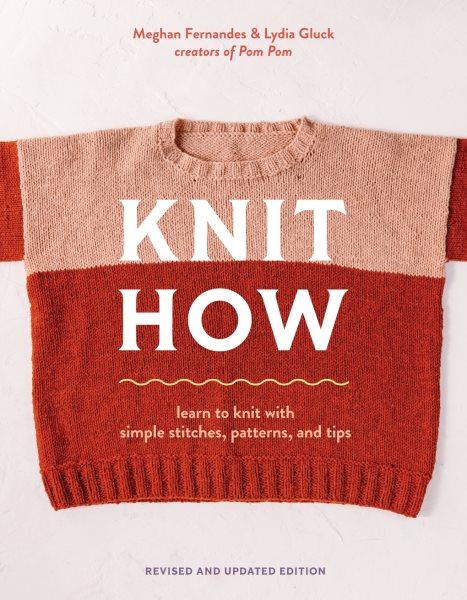
A fresh, updated edition of the classic learn-to-knit book, from the creators of the premier knit and crochet brand Pom PomKnit How is the classic learn-to-knit book, stocked by more independent yarn stores than any other beginner book. Now, straight from the needles of Pom Pom, comes a fresh edition of this all-time favorite, with all-new photography, a bright new design, two new patterns, and a companion YouTube video channel. Like the OG, the new Knit How is friendly and easy to use. It now includes 18 knitting patterns, along with step-by-step techniques (illustrated with beginners in mind), plus tips to keep you on the path to success. Packed with tutorials and advice, Knit How guides you from those first shaky stitches to knitting a host of cute projects. Pick and choose among simple scarves and cowls, hats and fingerless mitts to knit up fast, and easy socks and sweaters to stitch and show off. Autorid: Meghan Fernandes, Lydia Gluck
History teaches that antisemitism is a disease which begins with the Jews but does not end with them. Once antisemitism is unleashed, it knows no bounds and can attack the very fabric of society. This deadly strain of hatred often turns against other minority groups too, not to mention foundational democratic values, beginning with equal rights and equal protection before the law. Therefore, antisemitism should be viewed as a universal human rights issue of importance to all, and not solely as a parochial Jewish or Israeli concern. Antisemitism: What Everyone Needs to Know^® explores how, in the 21st century, antisemitism is once again resurgent. In recent years, the FBI reported that well over half of all religiously motivated hate crimes in the United States targeted Jews, even though Jews comprise just over two percent of the population. It is striking how little understood antisemitism, including the term itself, still is. This extends quite widely to political leaders, educational authorities, law enforcement and the judiciary, civic groups, and media outlets. Polls have also shown how knowledge of the Holocaust, which was widely considered to be a firewall against the resurgence of antisemitism, is declining, notwithstanding ongoing attention to the topic in education, museums and memorials, and culture. Antisemitism, or pathological hatred of Jews, is not a new phenomenon. To the contrary, it is often described as the world's oldest social disease, it has led to atrocities on an unparalleled scale over the centuries. While some believed it was now in remission, at least in the West, once again it is surging and is a frequent topic in the media and political discourse. Why? And, most importantly, what can be done about it? This book attempts to answer these questions in a manner accessible to a wide range of readers. Autorid: David Harris
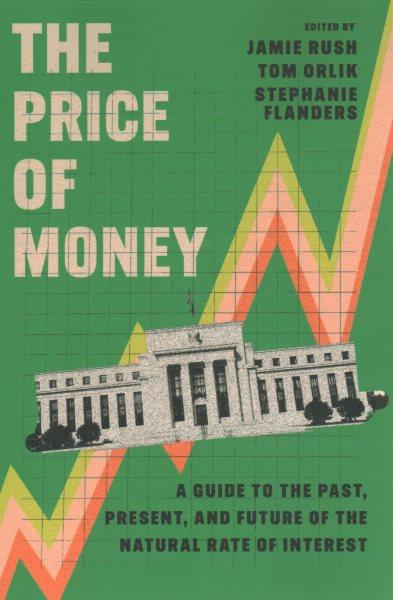
"In the final decades of the 20th century and the first decade of the 21st, long-term borrowing costs fell - with significant consequences for the global economy and financial markets. The Price of Money introduces a new model of the natural rate of interest, bringing together a top-down estimate of the level, with bottom-up estimates of the drivers. The results show that falling trend growth and baby boom savers accounted for about half of the three-percentage point decline in the natural rate for the US between 1970 and a trough in the mid-2010s. Global spillovers account for most of the rest of the decline. The model suggests the natural rate has climbed more than half a percentage point since the trough, partly the result of massive fiscal stimulus. Drawing on forecasts for the key drivers, The Price of Money projects the natural rate for the US and other advanced economies in the decades ahead. The main finding: borrowing costs have further to climb"-- An accessible guide to the natural rate of interest, why it is likely going up, and what that means for the future of the global economy and markets. Ask most people who sets interest rates, and they'll say it's the central bank. At a fundamental level, though, decisions by the Federal Reserve, European Central Bank, and their peers around the world are constrained by the natural rate of interest. The natural rate - the interest rate that balances supply of saving and demand for investment, whilst keeping inflation low and employment high - has moved from academic obscurity to a central role in monetary policy, and the operation of the economy and financial markets.For almost half a century from the 1970s to the 2010s, the natural rate in the US and other advanced economies fell. In the last decade, it has started to rise. In the years ahead, the cost of borrowing has further to climb. That shift from falling to rising borrowing costs reflects seismic shifts in demographics, technology, and geopolitics. In the years ahead, risk factors from war to artificial intelligence and climate change could accelerate its rise. For everyone from Ministers of Finance balancing the books to Wall Street titans making the next big bet, the shift from falling to rising borrowing costs has profound consequences. In a world where money is more expensive, the cost of managing it poorly gets higher.In The Price of Money, the Bloomberg Economics team explain the evolution of the natural rate, the forces driving it, where it is headed, and what that means for everything from government debt to saving for retirement. From the 1970s to the 2010s, the natural rate of interest in the US and other advanced economies fell. In the last decade, it has started to rise, and it has further to climb. That change reflects seismic shifts in demographics, technology, and geopolitics. In the future, risks from war to artificial intelligence and climate change could accelerate the rise. The Price of Money explains the evolution of the natural rate, the forces driving it, where it is headed, and what that means for everyone from Wall Street titans to 401K investors. Autorid: Jamie Rush, Tom Orlik, Stephanie Flanders
Originally conceived as a Portuguese-English phrase book, this literary curiosity was written by an author who, remarkably, spoke no English. With the help of a pair of dictionaries, Pedro Carolino translated a series of expressions from his native Portugu
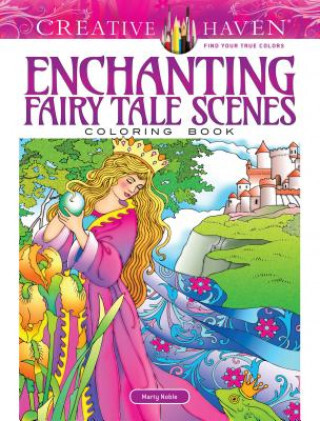
Bring these fanciful illustrations to colorful life Thirty-one beautiful drawings depict highlights from such timeless tales as "Puss in Boots," "The Ugly Duckling," "Sleeping Beauty," "Hansel and Gretel," "Cinderella," "The Little Mermaid," "Rapunzel," "
Language: English, Binding: Hardback, Number of pages: 688, Publishers: Faber & Faber, Author: Pierre Boulez, ISBN-13: 9780571334278, Date of issue: 2018
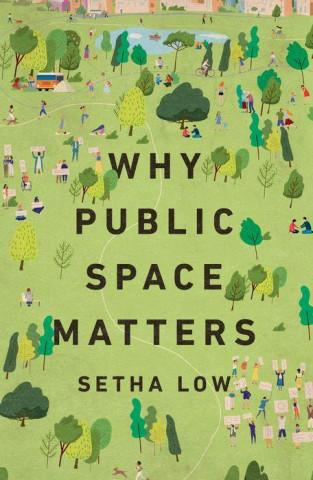
Language: English, Binding: Paperback, Number of pages: 336, Publishers: Oxford University Press Inc, Author: Low,Setha (Distinguished Professor of Anthropology,Distinguished Professor of Anthropology,CUNY Graduate Center), ISBN-13: 9780197800898, Date of issue: 2024
Language: English, Binding: Paperback, Number of pages: 257, Publishers: Hay House UK Ltd, Author: Diamond,Marie, ISBN-13: 9781401978006, Date of issue: 2023
Language: English, Binding: Paperback, Number of pages: 200, Publishers: Kana, Author: Takashi Nagasaki,Kristi Iwashiro, ISBN-13: 9781419780080, Date of issue: 2026
An intricate revenge plot lead by a capable villainess in a video-game world, with uniquely compassionate motivations involving another protagonist who presumably lives within her.
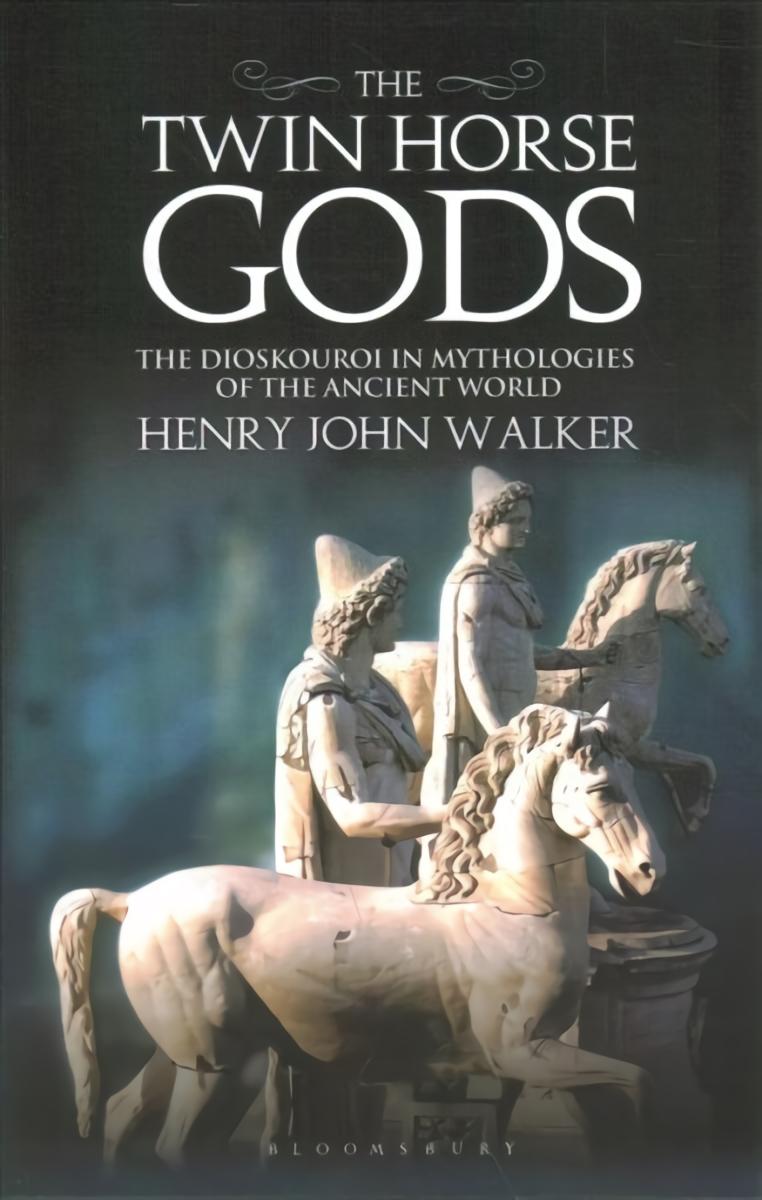
The twin deities known by the ancient Greeks as the Dioskouroi, and by the Romans as the Gemini, were popular figures in the classical world. They were especially connected with youth, low status and service, and were embraced by the common people in a way that eluded those gods associated with regal magnificence or the ruling classes. Despite their popularity, no dedicated study has been published on the horse gods for over a hundred years. Henry John Walker here addresses this neglect. His comparative study traces the origins, meanings and applications of the twin divinities to social and ritual settings in Greece, Vedic India (where the brothers named Castor and Pollux were revered as Indo-European gods called the Asvins), Etruria and classical Rome. In the Bronze and Early Iron Ages of Vedic India, the young horse gods are seen to have markedly similar characteristics to their Greco-Roman counterparts. Quick to come to the rescue of those in trouble, the Asvins are ready to assist the old, the weak and the humble. Charting the parallels and correspondences between these ancient myths, Walker uncovers not a single, universal coda but rather a great variety of loosely related beliefs and practices relating to the sibling deities. He demonstrates, for example, that, just as the Dioskouroi were regarded as being halfway between gods and men, so young Spartans undergoing a fierce and uncompromising military training saw themselves as standing midway between animal and human. Such diverse and creative interpretations of the myth seem to have played a central role in the culture and society of antiquity. Autorid: Henry John Walker
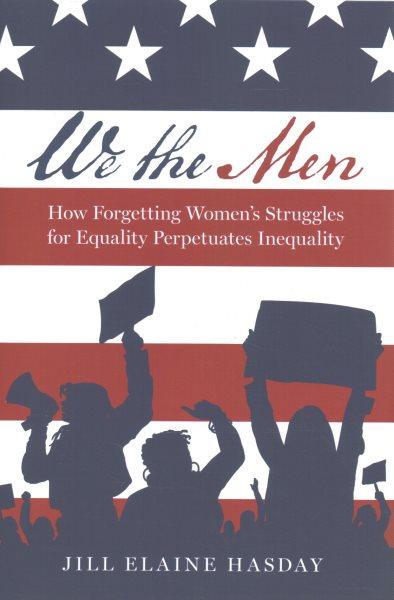
"In a nation whose Constitution purports to speak for "We the People," too many of the stories that powerful Americans tell about law and society include only We the Men. America's dominant modes of forgetting about women help perpetuate women's inequality, rationalizing the status quo, promoting complacency, and undercutting reform. I argue that remembering women's stories more often and more accurately can help the nation advance toward sex equality"-- In a nation whose Constitution purports to speak for "We the People," too many of the stories that powerful Americans tell about law and society include only We the Men. A long line of judges, politicians, and other influential voices have ignored women's struggles for equality or distorted them beyond recognition by wildly exaggerating American progress. Even as sexism continues to warp constitutional law, political decision making, and everyday life, prominent Americans have spent more than a century proclaiming that the United States has already left sex discrimination behind.Jill Elaine Hasday's We the Men is the first book to explore how forgetting women's struggles for equalityand forgetting the work America still has to doperpetuates injustice, promotes complacency, and denies how generations of women have had to come together to fight for reform and against regression. Hasday argues that remembering women's stories more often and more accurately can help the nation advance toward sex equality. These stories highlight the persistence of women's inequality and make clear that real progress has always required women to disrupt the status quo, demand change, and duel with determined opponents.America needs more conflict over women's status rather than less. Conflict has the power to generate forward momentum. Patiently awaiting men's spontaneous enlightenment does not. Transforming America's dominant stories about itself can reorient our understanding of how women's progress takes place, focus our attention on the battles that are still unwon, and fortify our determination to push for a more equal future. Too many of the stories that powerful Americans tell about law and society include only 'We the Men." A long line of judges, politicians, and other influential scene setters have ignored women's struggles for equality or even claimed that the United States has already left sex discrimination behind. Jill Hasday's We the Men is the first book to explore how forgetting women's struggles for equality--and forgetting the work America still has to do on this front--perpetuates injustice, promotes complacency, and denies how generations of women have had to fight for reform. Autorid: Jill Elaine Hasday
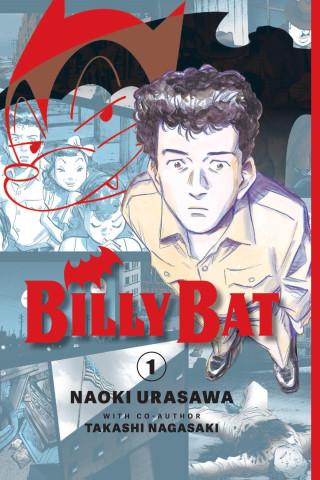
A highly requested title from Naoki Urasawa and Takashi Nagasaki, the in-demand manga Billy Bat is a historical conspiracy-thriller meta-manga spanning multiple millennia following a Japanese American comic artist’s search for the truth regarding the origins of his character “Billy Bat.” This is the first thrilling volume in the sci-fi mystery by Naoki Urusawa and Takashi Nagasaki, beautifully packaged and available for the first time in English. It’s 1949 Los Angeles, and Kevin Yamagata, a Japanese American comic book author, is drawing his bestselling character, Billy Bat: a quick-witted detective who is, unsurprisingly, a cartoon bat. Everything is going well for Kevin until he discovers an unfortunate truth: He may have unintentionally plagiarized his beloved character from a drawing he once saw in Japan. Devastated by the news, Kevin returns to war-torn Japan to find the drawing’s original artist . . . but the character’s origins turn out to be far older and more perplexing than he had ever imagined.
The representation of the ancient world in film has long been an established site of scholarly interest, but animation remains understudied. Given the medium's popularity and its role as an access point to ancient history for young audiences, it deserves more attention and analysis. Why do certain elements of the ancient past resonate and recur in cartoons? Do these productions render the ancient world more accessible, or do they reinforce a sense of distance? This collection of sixteen essays, written by a diverse group of leading scholars, offers answers to these questions as it explores how animation has utilized ancient stories, handed down through mythology, history, and philosophy. In the first section, "Heroes," chapters reflect on the enduring popularity of Hercules, Odysseus, and Icarus, as they explore how mythological tropes, characters, and imagery are frequently mixed and matched to create hybrid interpretations of these timeless tales. "Worlds," the second section, expands outward from the heroic realm and contemplates how animation enables the re-creation of fantastical ancient landscapes. Contributors investigate the classically inspired escapist utopia of Cloud Cuckoo Land in animated productions such as The Lego Movie, Adventure Time, and Gravity Falls, as well as the deployment of the concept of katabasis (descent to the underworld) in features such as Spirited Away and Weathering with You. The last section, "Histories," shows how animation has been used to reconceive the events of the Greco-Roman past in vivid and sometimes subversive ways. Contributors show how Soviet animations drew upon the wise men of antiquity to promote Soviet ideology, and how other productions used representations of Alexander the Great, the Emperor Nero, and the ideas of the philosopher Xenophon to re-evaluate ancient styles of political leadership.This collection adopts a global perspective and shows how an analysis of these productions might not only help us better understand how ancient history is received by a modern audience but can also reveal new aspects of ancient texts themselves, offering clearer and more expansive visions of the past and present. Why do certain elements of the ancient past resonate and recur in cartoons? Do these productions render the ancient world more accessible, or do they reinforce a sense of distance? This collection of sixteen essays, written by a diverse group of leading scholars, offers answers to these questions as it explores how animation has utilized ancient stories, handed down through mythology, history, and philosophy. Autorid: Chiara Sulprizio, C. W. Marshall