'An extraordinary novel... as beautiful and as wrenching as anything I've ever read' Emily St. John MandelA dark past. An impossible journey. The will to survive.Franny Stone is determined to go to the end of the earth, following the last of the Arctic terns on what may be their final migration to Antarctica.As animal populations plummet, Franny talks her way onto one of the few remaining boats heading south. But as she and the eccentric crew travel further from shore and safety, the dark secrets of Franny's life begin to unspool.Haunted by love and violence, Franny must confront what she is really running towards - and from.From the west coast of Ireland to Australia and remote Greenland, this is an ode to the wild places and creatures now threatened, and an epic, moving story of the possibility of hope against all odds.______________READERS LOVE MIGRATIONS:'Wrenchingly beautiful"Visceral, heart-breaking"Simply phenomenal"Raw and gripping"Riveting"Here's your next favourite"A story...about love, passion, wandering'*Previously published as The Last Migration*
Language: English, Binding: Paperback, Number of pages: 90, Publishers: University of Minnesota Press, Author: Catherine Liu, ISBN-13: 9781517912253, Date of issue: 2021
• Elastne ja kleepuv sporditeip; • Võimaldab nahal hingata; • Annab hea kaitse, säilitades samal ajal liikuvuse; • Lateksivaba, pehme ja mugav; Kangas: 95% puuvill, 5% spandex Suurus 5 cm. x 6,9 m
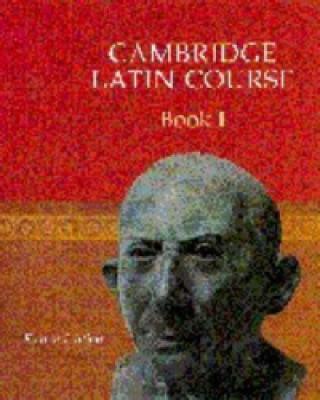
The leading Latin course worldwide Book I begins in the city of Pompeii shortly before the eruption of Vesuvius. Book I is full colour throughout, with a clear layout of stories and language notes. Featuring a glossary for quick reference and comprehension questions, the book also includes a full explanation of language points and grammar practice exercises.
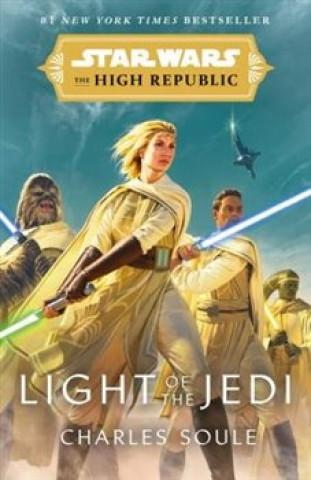
Long before the First Order, before the Empire, before even The Phantom Menace . . . Jedi lit the way for the galaxy in The High Republic. It is a golden age for the galaxy.Intrepid hyperspace scouts expand the reach of the Republic to the furthest stars, worlds flourish under the benevolent leadership of the Senate, and peace reigns, enforced by the wisdom and strength of the renowned order of Force users known as the Jedi. With the Jedi at the height of their power, the free citizens of the galaxy are confident in their ability to weather any storm But the even brightest light can cast a shadow, and some storms defy any preparation.When a shocking catastrophe in hyperspace tears a ship to pieces, the flurry of shrapnel emerging from the disaster threatens an entire system. No sooner does the call for help go out than the Jedi race to the scene. The scope of the emergence, however, is enough to push even Jedi to their limit.As the sky breaks open and destruction rains down upon the peaceful alliance they helped to build, the Jedi must trust in the Force to see them through a day in which a single mistake could cost billions of lives.Even as the Jedi battle valiantly against calamity, something truly deadly grows beyond the boundary of the Republic. The hyperspace disaster is far more sinister than the Jedi could ever suspect.A threat hides in the darkness, far from the light of the age, and harbours a secret that could strike fear into even a Jedi's heart.
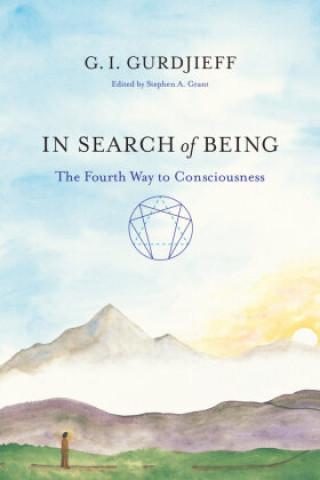
Over one hundred years ago in Russia, G. I. Gurdjieff introduced a spiritual teaching of conscious evolution a way of gnosis or knowledge of being passed on from remote antiquity. Gurdjieff s early talks in Europe were published in the form of chronological fragments preserved by his close followers P. D. Ouspensky and Jeanne de Salzmann. Now these teachings are presented as a comprehensive whole, covering a variety of subjects including states of consciousness, methods of self-study, spiritual work in groups, laws of the cosmos, and the universal symbol known as the Enneagram. Gurdjieff respected traditional religious practices, which he regarded as falling into three general categories or ways : the Way of the Fakir, related to mastery of the physical body; the Way of the Monk, based on faith and feeling; and the Way of the Yogi, which focuses on development of the mind. He presented his teaching as a Fourth Way that integrates these three aspects into a single path of self-knowledge. The principles are laid out as a way of knowing and experiencing an awakened level of being that must be verified for oneself.
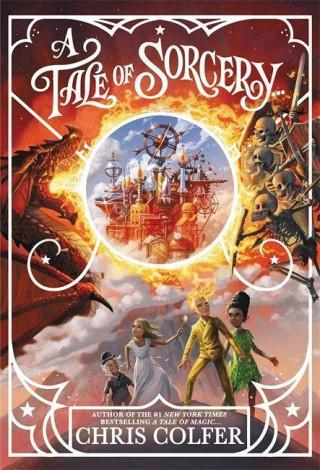
The thrilling third book in Chris Colfer's No.1 New York Times bestselling A Tale of Magic... series Brystal Evergreen is running out of time. It's almost been a year since she made a deal with Death to find and destroy the Immortal in exchange for her life and she still hasn't found a single clue about who or where the Immortal is. To make matters worse, something dark and malignant has risen from deep within the earth, threatening life as we know it. To stop this new evil, the fairies and witches must work with all the kingdoms and territories, including the Righteous Brotherhood and their Army of the Dead. But is the threat more familiar than they expected? And why are a secretive group of Sorcerers convinced Xanthous Hayfield is connected to it? Have you discovered the rest of the series: A Tale of Magic and A Tale of Witchcraft? Chris Colfer is also the author of the million-copy bestselling series The Land of Stories.
Money in the history of political thought, from ancient Greece to the Great Inflation of the 1970sIn the wake of the 2008 financial crisis, critical attention has shifted from the economy to the most fundamental feature of all market economiesmoney. Yet despite the centrality of political struggles over money, it remains difficult to articulate its democratic possibilities and limits. The Currency of Politics takes readers from ancient Greece to today to provide an intellectual history of money, drawing on the insights of key political philosophers to show how money is not just a medium of exchange but also a central institution of political rule.Money appears to be beyond the reach of democratic politics, but this appearancelike so much about moneyis deceptive. Even when the politics of money is impossible to ignore, its proper democratic role can be difficult to discern. Stefan Eich examines six crucial episodes of monetary crisis, recovering the neglected political theories of money in the thought of such figures as Aristotle, John Locke, Johann Gottlieb Fichte, Karl Marx, and John Maynard Keynes. He shows how these layers of crisis have come to define the way we look at money, and argues that informed public debate about money requires a better appreciation of the diverse political struggles over its meaning.Recovering foundational ideas at the intersection of monetary rule and democratic politics, The Currency of Politics explains why only through greater awareness of the historical limits of monetary politics can we begin to articulate more democratic conceptions of money. Autorid: Stefan Eich