
 Victory Belt Publishing Energetic Diagnosis Uus! GTIN: 9781628604269 Raamatud In his new book Energetic Diagnosis, Dr Neil Nathan, renowned physician and bestselling author of TOXIC, delivers his groundbreaking thesis on diagnosing disease and chronic illness using the patient&;s personal energy fields as the launchpad for treatment. An individual&;s energy is often overlooked when treating difficult to identify disease. Dr. Nathan puts forth the premise that patient evaluation should be highly personal, beginning with a thorough analysis of events leading up to sickness, including lingering mental trauma. To do this, he urges medical professionals to use a process called Energetic Intuition&;the ability to utilize pattern recognition presented by our own subconscious. In this book, Dr. Nathan details how he taps into his own intuition and learns to trust both himself and what the patient&;s physical and mental state tell him. Dr. Nathan&;s personal experience and years using this methodology has helped hundreds of patients understand their ailments and a find balance that helps them achieve optimal health. Energetic Diagnosis also features a robust detailing of how human energy is measured and perceived in a clinical setting using specific medical devices, interference fields and various autonomic response testing. Dr. Nathan invites guest doctors to detail the kinds of energy-focused treatments they use in their practices, such as A.R.T. (autonomic response testing), Kinesiology, and FSM (frequency specific microcurrents). Dr. Nathan concludes with important energetic considerations to open and build our awareness for a total, mind, body soul experience. He reveals the importance of dreams, native healing, communication with the natural world. Autorid: Neil Nathan | 1 | 32,69 € | Vaata | ||
 Victory Belt Publishing Made Whole: More Than 145 Anti-Inflammatory Keto-Paleo Recipes to Nourish You from the Inside Out Uus! GTIN: 9781628602944 Raamatud Cristina Curp, the creator of the popular food blog and wellness site The Castaway Kitchen, delivers everything you need to do away with diets and discover the right nutritional path for you in her new book, Made Whole. Made Whole is a comprehensive cookbook and resource guide that combines the Paleo approach with the low-carb/ketogenic diet, using only whole, natural, unprocessed ingredients. Cristina includes all the tools you need to be successful on a ketogenic diet, along with advice and how-tos for using the keto template to eat intuitively and develop a personalized nutrition plan based on your unique needs. Each recipe is free of grain, gluten, sugar, and dairy, along with nuts, starches, nightshades, and alcohol—making this a perfect cookbook for those following keto, Paleo, low-carb, AIP, or allergen-free diets. Cristina’s eclectic and mouthwatering recipes draw inspiration from international cuisines to keep cooking fun and exciting. You will feel like a gourmet chef with easy-to-make meals prepared from accessible ingredients that you can find at your local grocer using just the one master list that she provides in the book! Made Whole is a user-friendly guide to cooking beautiful food, eating well, and enjoying every last bite, while reaching your health and fitness goals. Sample recipes include: • Chewy Chocolate Chip Cookies • Turkey Falafel with Tzatziki Sauce • Spaghetti and Meatballs with Roasted Beet Marinara • Toasted Coconut Salmon • Savory Flax Waffles • and many more! Made Whole will teach you that healthy food doesn’t have to fit into a certain label, box, or idea of what it should be. Once you begin to forget about what you can’t eat and embrace the wonderful and delicious things you can eat, you will find freedom and pleasure in fueling your body with the most exceptional sustenance that nature has to offer. Autorid: Cristina Curp | 1 | 36,74 € | Vaata | ||
 Victory Belt Publishing Ketogenic Cookbook: Nutritious Low-Carb, High-Fat Paleo Meals to Heal Your Body Uus! GTIN: 9781628600780 Raamatud In 2013, the fifth-most Googled diet search term was "ketogenic"; in 2014, it rose to number two. Now,The Ketogenic Cookbook, one of the most highly anticipated cookbooks of 2015, is set to be the ultimate resource for the growing number of people interested in eating a low-carb, moderate-protein, high-fat diet to lose weight, improve their health, and heal their bodies from the inside out.In this first-of-its-kind collection, Jimmy Moore, leading low-carb diet blogger and podcaster and bestselling author ofKeto Clarity, joins forces with fellow keto advocate and nutritionist Maria Emmerich to bring you more than 150 delicious, real foodbased, keto-friendly recipes that are ideal for anyone who wants to be in nutritional ketosis or simply wants to eat healthier.In addition, The Ketogenic Cookbook explains why a ketogenic diet can help treat chronic illnesses from type 2 diabetes to heart disease to epilepsy, offers practical advice for pursuing nutritional ketosis, outlines the unique combination of whole foods that will help you become ketogenic, and much more.If you're seeking a healthier way to eat that will help heal your body of damage done by years of eating tons of sugar and carbs, the ketogenic diet may be for you. There's no need to sacrifice taste for good health! Autorid: Jimmy Moore, Maria Emmerich | 1 | 42,14 € | Vaata | ||
 Red Wheel/Weiser Book of Astrological Returns: Your Complete Guide to Every Life Cycle from the Sun to Pluto Uus! GTIN: 9781578639007 Raamatud The first comprehensive book of its kind covering every planetary returnfrom the sun to Pluto. Written for both astrologers and astrology enthusiasts alike. In astrology, a planetary return refers to the moment when a planet returns to the same position in the sky as it was at the time of a persons birth. Take the Saturn return, for instance. Its a pivotal time of maturity. While there are a few books on Saturn returns, they tend to focus solely on the first return at age twenty-eight. This is a disservice, as most of us will live well beyond fifty-seven or even into our eighties when we experience the second and third returns, respectively. The Book of Astrological Returns: Your Complete Guide to Every Life Cycle from the Sun to Pluto fills the gaps, empowering the reader with knowledge to navigate these crucial life stages. It is the first book to comprehensively cover every planetary returnsolar, lunar, Saturn, and more. Because people will experience many planetary returns in a lifetime, understanding these returns is crucial for the professional astrologer who is reading for a client. Doing a chart reading for a person in their twenties is different from doing a reading for a person in their seventies. The way a returning planet affects you at one age is entirely different from how it will affect you at a later age. All of this insight is beneficial for nonprofessionals as well, as anyone interested in their chart will gain greater insight into their life by discovering how a birth chart is a living thing that matures and ages along with you. While most of the returns focus on the individual chart, the outer planetary returnswhich are so far away that they have much longer cycleshave profound implications for civilizations, cities, and countries (for example, the United States finished its first Pluto return, a 248-year cycle, which saw events rotating from the Revolutionary War to the well-known political uprising in January 2021). Having this unique perspective allows us to look back at history and contemplate the future.The Book of Astrological Returns: Your Complete Guide to Every Life Cycle from the Sun to Pluto is the manual every astrologer and astrology enthusiast needs. No more searching through multiple books to get the infoits all in one place. The first comprehensive book of its kind covering every planetary returnfrom the sun to Pluto. Written for both astrologers and astrology enthusiasts alike. Autorid: Theresa Reed, Samuel F Reynolds | 1 | 23,75 € | Vaata | ||
 Taylor & Francis Ltd Rethink and Revise: A Roadmap to Brave Change in K-2 Reading Instruction Uus! GTIN: 9781032875682 Raamatud As schools navigate the changing landscape of reading instruction, many educators are left wondering how to move forward in big ways to better align their practices to what they are learning about the science of reading. They wonder, Which teaching practices should we continue, and which should we change or even let go of? In Rethink and Revise: A Roadmap to Brave Change in K-2 Reading Instruction, Lizzie Hetzer brings those questions to life, sharing the ways she has revised her own teaching and the tools and strategies shes learned along the way.In each chapter, Rethink and Revise takes on a different part of reading instruction and examines ways teachers can rethink and revise their practice, including:Literacy Assessment Tools: Move beyond guided reading levels to choose and use assessments that help us better understand the profiles of readers in our classroomsWhole-Class English Language Arts Instruction: Consider powerful ways to build comprehension not only through strategies, but also through study-centered reading, meaningful discussion, and connected writingWhole-Class Foundational Skills Instruction: Fine-tune foundational skills routines with thoughtful fidelity to strong instructional practicesSmall-Group Reading Instruction: Form and teach differentiated groups based on students evolving reading skills. Refine instructional routines and classroom systems to support meaningful learning for allLizzie Hetzer invites us to reflect on goals and get curious about new possibilities, recognizing that change is hardbut feels easier to navigate when we keep our goals for students at the center. As schools navigate the new landscape of reading instruction, educators are wondering how to move forward in big ways to align their practices to the science of reading. In this book, Lizzie Hetzer brings those questions to life, sharing how she has revised her own teaching, and the tools and strategies shes learned along the way. Autorid: Lizzie Hetzer | 1 | 42,14 € | Vaata | ||
 State University of New York Press King's English: Strategies of Translation in the Old English Boethius Uus! GTIN: 9780791464489 Raamatud Shows how Alfred the Great's translations of Latin works exposed Anglo-Saxon elites to classical learning and Christian thought while bringing prestige to the king and his West Saxon dialect. In the late ninth century, while England was fighting off Viking incursions, Alfred the Great devoted time and resources not only to military campaigns but also to a campaign of translation and education unprecedented in early medieval Europe. The King's English explores how Alfred's translation of Boethius's Consolation of Philosophy from Latin into Old English exposed Anglo-Saxon elites to classical literature, history, science, and Christian thought. More radically, the Boethius, as it became known, told its audiences how a leader should think and what he should be, providing models for leadership and wisdom that live on in England to this day. It also brought prestige to its kingly translator and enshrined his dialect, West Saxon, as the literary language of the English people.Nicole Guenther Discenza looks at the sources Alfred used in his translation and demonstrates his selectivity in choosing what to retain, what to borrow, and how to represent it to his Anglo-Saxon audience. Alfred's appeals to Latin prestige, spiritual authority, Old English poetry, and everyday experience in England combine to make the Old English Boethius a powerful text and a rich source for our understanding of Anglo-Saxon literature, culture, and society. Autorid: Nicole Guenther Discenza | 1 | 40,12 € | Vaata | ||
 The History Press Ltd Surrey Folk Tales Uus! GTIN: 9780752466354 Raamatud Surreys landscape, shaped by the Devils mischief and the whims of dancing Pharisees, is home to a wealth of tales. For Surrey is a place where dragons have stalked, dripping poisoned saliva from their yellow teeth; a place where horses have sprouted wings in order to rescue bewitched villagers; a place where pumas with the gift of speech have prowled the countryside. From the legends of Stephen Langton to the marvels of Captain Salvin and his flying pig, Janet Dowling has vividly retold these myths and stories of Surrey, and brought to life the countys heroes, villains and saints. Autorid: Janet Dowling | 1 | 20,54 € | Vaata | ||
 APress Building the Sustainable Web: How to Create Web Products That Respect People and the Planet Uus! GTIN: 9798868825200 Raamatud The web has become one of the most influential systems shaping our lives. It connects billions of people every day, yet this convenience carries an impact we rarely see. The energy used to design, build, host, and use digital products affects both people and the planet, even though most of that impact is invisible, widely distributed, and easy to underestimate. Your website or application may only represent a small fraction of the total, but the scale of the web means that every improvement matters. And even if sustainability is not your first motivation, the same decisions that lower environmental impact usually improve performance, accessibility, user trust, and long term maintainability. Better for people, better for organisations, better for the planet. Building the Sustainable Web takes you through the entire digital stack and shows where impact happens, why it matters, and how to make meaningful progress. From infrastructure choices and backend architecture to frontend performance, UX design, content strategy, and marketing practices, this book gives you practical ways to make digital products lighter, faster, and more responsible. It also explains what we can measure today, what remains uncertain, and how to navigate that complexity without getting stuck. You Will : Learn how the webs physical footprint works and where its energy and emissions come from Learn to estimate the impact of websites and web applications using todays best available models Understand How backend and infrastructure decisions influence performance, cost, and sustainability Explore how to design and build frontend experiences that are faster, lighter, and more inclusive Learn how to build workflows and governance that keep websites efficient over time This Book is for: Anyone involved in creating, managing, or maintaining websites and web applications. This includes frontend and backend developers, infrastructure engineers, UX and UI designers, product managers, content strategists, SEO and marketing teams Autorid: Chris Chinchilla, Ines Akrap | 1 | 44,23 € | Vaata | ||
 | |||||
 Tyndale House Publishers Preacher's Greek Companion to Ephesians: A Selective Commentary for Meditation and Sermon Preparation Uus! GTIN: 9798400506031 Raamatud Preachers know that understanding Greek and Hebrew can strengthen their sermons. However, years after taking language courses, it becomes challenging to study texts in the original languages, especially when time is limited.This volume offers:The entire text of Ephesians, broken into passagesClearly formatted lexical and grammatical tools needed to study the Greek textA commentary section that helps preachers effectively bridge the gap between reading the Greek text and preaching itWhether ones Greek is beginner or advanced, this series will empower readers to deepen their study of the Greek text and preach engaging, content-driven sermons. This bookas well as the entire Preachers Companion Seriesis a fresh and helpful companion to traditional commentaries and a valuable addition to every preachers library. Autorid: Mateus F. de Campos | 1 | 50,00 € | Vaata | ||
 Bergverlag Rudolf Rother Cote d'Azur: The Finest Valley and Mountain Walks 2001 Uus! GTIN: 9783763348176 Raamatud Rother walking guides are pocket-sized, in full colour and include 50 walks, varying from day-long hikes, mountain and valley walks, some easy some more demanding. Each walk has accompanying mapping, usually 1:50 000 and colour photos capture the 'feel' of each of the countries. This guide focuses on routes along the famous coastline of the Cote d'Azur - touring a floral landscape comprising nothing but colours, scents and the ocean. Walking along dream-like bays, in the high land of Grasse, but also in the Maritime Alps on up to 1500 m high mountain summits from where on the one side can be seen the Alps, and on the other side the Mediterranean. Daniel Anker, one of the most renowned alpine journalists in Switzerland, presents 44 selected day and multiple-day excursions between Meton and Marseille. The selection of walks on offer ranges from walks on Iles de L'Erins through beach hikes at St.Tropez to solid mountain walking in the Massiv de I'Esterel or the Maritime Alps. The famous crossing of the Cal Autorid: Daniel Anker, Gill Round | 1 | 16,49 € | Vaata | ||
 Springer Nature Switzerland AG Researchers Journey in the Age of AI: Reappraising Social Science Research Uus! GTIN: 9783032230683 Raamatud The rapid development of AI has exposed long-standing weaknesses in how the social sciences explain behavior, meaning, and social order. As machines increasingly replicate tasks once thought uniquely human, the question is no longer whether the social sciences must rethink themselves, but how. This book argues that the most robust and enduring contributions to the social sciences are those grounded in evolutionary theory. By drawing systematically on biology, cognition, culture, and systems thinking, it develops a coherent framework for organizing the social sciences around a shared understanding of human nature. Especially in light of AI, the future may demand us to define our humanity not only by intelligence, but also by responsibility and stewardship. In this sense, the renewal of social science unfolds within a broader ethical horizon relevant to planetary sustainability. Autorid: Klaus Solberg Söilen | 1 | 48,87 € | Vaata | ||
 Springer Nature Switzerland AG Adventures in Climate Science, Ocean Waves, and the Flute: A Memoir Uus! GTIN: 9783032198471 Raamatud Lawrence Mysak provides the reader with memorable stories of pivotal events and distinguished mentors during his long career as a mathematician-turned climate scientist. After growing up as a Ukrainian-Canadian on the prairies, he did graduate studies in Adelaide, Australia and then Harvard. While a professor of mathematics and oceanography at the University of British Columbia, he was blown away by the 1982-83 El Niño climate event of the century. This resulted in his taking up a new chair at McGill University in the hot topic of climate change research. He established an internationally recognized research and teaching center for climate and global change. Collaborating with graduate students and colleagues from around the world on understanding climate and global change and its impacts led to many scientific breakthroughs and much joy. The book will especially be of interest to young people contemplating studies in science, to established scientists considering a career change, and to the public at large who often wonder about the work of scientists. The reader will learn that in addition to teaching and research, many scientists, the author included, play important leadership roles in several activities. They work as principal investigators of interdisciplinary projects, journal and book editors, science policy advisors, promoters of international cooperation, and public speakers raising awareness of important issues such as climate change. The result: science is challenging but can be fun! In addition, the book describes the authors search for a satisfying work-life balance. As a youth, he had many interests and hobbies, including music. While he once contemplated a career as a professional flutist, a wise music professor advised keeping music as a hobby and taking up a profession which would provide for a more comfortable lifestyle. Following this advice led to a rich and fulfilling life in which a scientific career was balanced with music, family, international travel (including to Russia and Ukraine), adventures in nature, and friendships across the globe. Finally, the author looks back on the exciting and challenging times he had while serving as president of the (Canadian) Academy of Science in the 1990s, and a decade later, as president of the International Association for the Physical Sciences of the Oceans. Autorid: Lawrence Mysak | 1 | 48,87 € | Vaata | ||
 Archaeopress Art as Metaphor: The Prehistoric Rock-Art of Britain Uus! GTIN: 9781905739165 Raamatud Mazel (cultural and heritage studies, Newcastle U.), Nash (anthropology and archaeology), and Waddington (Archaeological Research Services Ltd.) present papers on recent research in British rock-art. Chapters are divided into sections that focus on period studies and geographical or thematic studies. Periods included are the British Upper Paleolithic, the Mesolithic, and Neolithic, with a special chapter on Pictish rock art; geographical locations include Cleveland and northeast Yorkshire, Cumbria, and Northumberland. Papers can be read individually or as part of the whole. The articles are well illustrated with color photos, b&w drawings, and numerous site plans.This title provides no index. Distributed in North America by The David Brown Book Co. Annotation ©2008 Book News, Inc., Portland, OR (booknews.com) Autorid: Aron Mazel, George Nash, Clive Waddington | 1 | 43,50 € | Vaata | ||
 i2i Publishing Alzheimer's! Uus! GTIN: 9781838046439 Raamatud A collection of poetry telling the story of the author's mother's descent into Alzheimer's disease Autorid: Barbara O'Donnell | 1 | 13,79 € | Vaata | ||
 Vallentine Mitchell & Co Ltd Jewish Nobel Prize Winners: With a Foreword by Theresa May, former Prime Minister of the United Kingdom New edition Uus! GTIN: 9781803710839 Raamatud Jews make up 0.2% of the worlds' population, yet they have won over 20% of the Nobel prizes 204 in total out of around 900 awarded since the first Laureates at the start of the 20th century. Nobel prizes can be worth up to a million pounds, and it is not surprising there are hundreds of nominations every year in each category. What is the reason for this disparity? Derek Taylor provides biographical chapters on all the prize-winning men and women, and an additional one on the founder, Alfred Nobel himself. These chapters include their backgrounds and the work for which they received the awards. In addition to this Taylor provides the historical background to the development of scientific research. If physics has previously been a closed book to you, if your knowledge of chemistry is somewhat limited, if you've wondered how solutions were discovered for so many previously incurable diseases, you will find the answers clearly and simply explained. The book also covers the Literary, Economics and Peace awards in similar detail. It all makes a fascinating story of how to overcome prejudice, and how to take advantage of ancestry and tradition. Autorid: Derek Taylor | 1 | 29,93 € | Vaata | ||
 Chronicle Books World's Best Soccer Book: Everything You Need to Know about Soccer! Uus! GTIN: 9781797236643 Raamatud The must-have, everything-you-need-to-know soccer book: This illustrated encyclopedia covers everything from the basic rules of play to the best players and teams, and even includes comics featuring a ragtag squad of soccer-playing animals!Soccer-obsessed kids will love this fun and funny history of the most popular sport in the world. Just in time for the 2026 FIFA World Cup, this astonishing book has everything you need to know about soccer, including:The best players and the best teams of all timeThe most exciting goals, greatest saves, and most agonizing lossesThe World Cup and other international competitionsThe rules of the game for newbies (what the heck is offside?)Fun facts and step-by-step instructions for victory dance celebrationsReaders will love learning the stories behind the sports most memorable moments; exciting photos and graphics make this a thrilling read. Bonus content includes twenty-four pages of comics featuring The United, an energetic animal soccer team! Can they come together as a team to have fun and perhaps even win?Soccer fans and young players can tackle these pages to score tons of knowledge and a whole lot of fun!SUPER POPULAR SPORT: Soccer is one of the most popular sports in the US and around the globe. As the FIFA World Cup 26 plays out in fourteen cities across North America, interest in the game is sure to hit a fever pitch.EDUCATIONAL & FUN: Kids will love the eye-catching design of this book, which is packed with photos, illustrations, and comic book panels. Readers of all ages can dip in and out or read it cover to cover to learn about the leagues, players, rules, championships, and more.GREAT GIFT: For players and fans who follow mens and womens teams, this is one of the few soccer encyclopedias that offers a comprehensive view of all the best teams.Perfect for:Soccer fansNew and experienced playersFans of FIFA's World CupParents and caregivers looking for entertaining soccer books for kids ages 8-12 Autorid: 10Ten 10Ten Media | 1 | 32,69 € | Vaata | ||
 Abingdon Press Abingdon Worship Annual 2026 Abingdon Worship Annual 2026 ed. Uus! GTIN: 9781791038038 Raamatud The go-to worship planning resource for all who plan weekly worship.The Abingdon Worship Annual 2026 is a practical, lectionary-based resource for leaders responsible for planning worship. This thoughtful sourcebook offers a weekly theme with meaningful prayers and fresh litanies following a traditional order of Christian worship: Invitation and Gathering Proclamation and Response Thanksgiving and Communion Sending Forth Liturgies and prayers are also included for special days, including New Years Day, Ascension Day, All Saints Day, Thanksgiving Day, and Christmas Eve.The Annual includes helpful reminders for Christian-year planningincluding liturgical colorsand a scripture index. The authors also provide in-depth guidance and practical ideas for this new age of worship, helping readers understand and weigh their options for worshiping in digital spaces and unconventional places.The Abingdon Worship Annual 2026 is a must-have sourcebook offering countless opportunities for planning meaningful and insightful worship. Autorid: Mary Scifres | 2 | 34,82 € | Vaata | ||
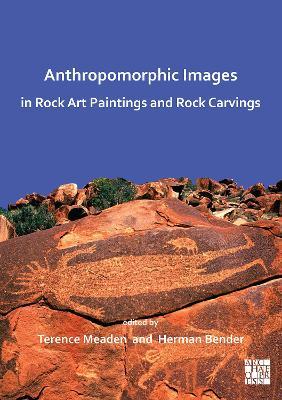 Archaeopress Anthropomorphic Images in Rock Art Paintings and Rock Carvings Uus! GTIN: 9781789693577 Raamatud In the realm of rock art, humanlike images appear widely through time and space from the Upper Palaeolithic to the Neolithic and Bronze Ages, and for some continents to later, yet still prehistoric, times. The artworks discussed in Anthropomorphic Images in Rock Art Paintings and Rock Carvings range from paintings, engravings or scratchings on cave walls and rock shelters, images pecked into rocky surfaces or upon standing stones, and major sacred sites (among them Gobekli Tepe, Avebury, Stonehenge, and the Palaeolithic Chauvet Cave) in which the possibility exists of recovery of the meanings intended by the artists and sculptors. Such prospects can relate to known or inferred legends, myths, folklore, rites and ritual, and often allude to matters that recognise the unremitting benefits of human, animal and crop fertility to humankind. Occasionally, relevant art forms are present not in whole but as pars pro toto, in which a part stands for or symbolises the whole. Images or artistic compositions often articulate, in ways more or less manifest, scenes of dramatic action as with hunting and dancing, mating and birthing, ritual and ceremony, some of which may openly or latently express yearnings for the rewards of fruitful fecundity &; as with the much-loved worldview known as the hieros gamos or Sacred Marriage. In rock art, humanlike images appear widely throughout the ages. The artworks discussed in this book range from paintings, engravings or scratchings on cave walls and rock shelters, images pecked into rocky surfaces or upon standing stones, and major sacred sites, in which exists the possibility of recovering the meanings intended by the artists. Autorid: Terence Meaden, Herman Bender | 1 | 77,25 € | Vaata | ||
 Annie's Publishing, LLC Creative Log Cabin Quilts: 10 Fresh, New Designs Uus! GTIN: 9781640255852 Raamatud This unique book includes patterns, all of which use Log Cabin blocks or variations of them to create fun, festive, beautiful, and intriguing quilts that the whole family will love! Included are pieced as well as appliqued designs for your walls, beds, and living room décor. Each pattern includes step-by-step instructions and full-colour images to help your imagination come to life! Autorid: Annie's Quilting | 1 | 16,44 € | Vaata | ||
 Amberley Publishing First Girl Guide: The Story of Agnes Baden-Powell Uus! GTIN: 9781445606170 Raamatud In 1909 Sir Robert Baden-Powell's rally of boy scouts at the crystal palace was joined by 2,000 'Girl Scouts'. In an age where single sex education and heavy chaperoning until marriage was the norm, Sir Robert Baden-Powell recognised that a separate organisation for girls was necessary, and his sister 'Agnes was seen to be the person to lead it'. Agnes Baden-Powell, The story of the first Girl Guide is the first ever biography of the extraordinary, and often overlooked, creator of the guiding movement. From her early years, growing up with her brothers and partaking in many boyish activities, Agnes Baden-Powell had all the hallmarks of a Scout. A woman of remarkable energy and drive, she was already in her fifties and caring for her elderly mother when she agreed take the lead role in the development of the Girl Guides. Interspersed with the recollections of those who met her, Agnes Baden-Powell, The story of the first Girl Guide presents the vivid and fascinating history of a life riddled with challenges. Combining Agnes' personal history with a rich and detailed account of the foundation and development of the Guiding movement, The story first Girl Guide will prove an invigorating read to those within the guiding movement and to the general reader. Autorid: Helen D. Gardner | 1 | 29,99 € | Vaata | ||
 EDINBURGH UNIVERSITY PRESS Multicultural Immunisation: Liberalism and Esposito New in Paperback Uus! GTIN: 9781399565912 Raamatud Multiculturalism has recently been declared dead; at the same time, the value of diversity is still emphasised. How can we explain this? In this book, Alexej Ulbricht sets out to completely reassess liberal theories of multiculturalism, and argues that the backlash is actually the strengthening of tendencies already present in liberal multiculturalism. Using the theories of Roberto Esposito, he argues that liberal multiculturalism is best understood as a series of immunitary processes. He examines three of these processes - using the work of Kymlicka, Parekh and Taylor - and looks to what cultural coexistence beyond immunity might be like. Autorid: Alexej Ulbricht | 1 | 29,99 € | Vaata | ||
 EDINBURGH UNIVERSITY PRESS Democracy Against Itself: Sustaining an Unsustainable Idea New in Paperback Uus! GTIN: 9781399565646 Raamatud Why do some democracies self-destruct? Using the collapse of democracy in ancient Athens and the Weimar Republic, as well as the uncertain fate of democratic rule in the United States and China today as illustrative examples, Mark Chou examines the conditions and characteristics of democracy that make it prone to self-destruct. In drawing out the political lessons from these past collapses, he explains how a democracy can, simply by being democratic, sow the seeds of its own destruction. Autorid: Mark Chou | 1 | 29,99 € | Vaata | ||
 EDINBURGH UNIVERSITY PRESS Immigration Justice New in Paperback Uus! GTIN: 9781399565622 Raamatud What moral standards ought nation-states abide by when selecting immigration policies? Peter Higgins argues that immigration policies can only be judged by considering the inequalities that are produced by the institutions such as gender, race and class that constitute our social world. He challenges conventional positions on immigration justice, including the view that states have a right to choose whatever immigration policies they like, or that all immigration restrictions ought to be eliminated and borders opened. Rather than suggesting one absolute solution, Higgins argues that a unique set of immigration policies will be just for each country. He concludes with concrete recommendations for policymaking. Autorid: Peter Higgins | 1 | 36,74 € | Vaata | ||
 EDINBURGH UNIVERSITY PRESS French Technological Thought and the Nonhuman Turn Uus! GTIN: 9781399539821 Raamatud Uncovers the nonhuman turns unexpected roots in the avant-gardes and mysticisms of nineteenth-century France. French Technological Thought and the Nonhuman Turn traces a genealogy of thinking and writing about technology, which takes us from the French avant-gardes to the contemporary nonhuman turn in Anglo-American theory via the Surrealists, Gilbert Simondon and Gilles Deleuze. Tracking the unruly transition from Catholic vocabularies of grace, potentiality and actuality to the modern and contemporary secular lexicon of agency, virtuality and affect, this book explores technology as a source of subject matter and conceptual metaphors, but also probes how ideas and words are modes of technicity through which we shape and reshape the world. Fusing literature, philosophy and theology, it offers readers new contexts and questions for the egalitarian ontological commitments of contemporary post- and nonhuman thinking. Autorid: Madeleine Chalmers | 1 | 29,99 € | Vaata | ||
 EDINBURGH UNIVERSITY PRESS Screens and Illusionism: Alternative Teleologies of Mediation Uus! GTIN: 9781399536547 Raamatud Explores the effects of illusionism within media representation and contemporary aesthetics with a focus on the uncanny. Screens and Illusionism explores the effects of illusionism as foundational to contemporary acts of perception and aesthetics. Our point of departure is the acknowledgement that our sensory perception is fundamentally subject to mediation, through a class of objects, techniques, and technologies. We emphasize mediation to consider the loss of optical certainty, and explore illusionism within the register of the uncanny. The volume is divided into three sections: Screens as Perceptual Vehicles (Part I), Mediation and its Avatars (Part II), and Alternative Teleologies of Media (Part III). Overall, the collection resonates with contemporary discussions of screen culture, media materiality and intermediality. It explores an array of pre- and post-cinematic devices and spectacular entertainments, forging links between old and new media, and across media formats. Autorid: Peter Bloom, Dominique Jullien | 1 | 36,74 € | Vaata | ||
 EDINBURGH UNIVERSITY PRESS Informality and Courts: Comparative Perspectives Uus! GTIN: 9781399535267 Raamatud This volume explores an understudied aspect of courts: The extent to which informal institutions and relational networks (e.g., professional, clientelist, family etc.) relations affect how courts are organised and operate. For instance, to what extent can good personal relations outweigh professional merits in judicial appointment processes? Or in what ways do international or domestic judicial networks help protect courts against other branches of power? Our relational-institutional perspective allows us to better understand a variety of important processes for the comparative study of courts including judicial appointments, judicial decision-making, judicial administration, institutional development, inter-branch relations, corruption, and court reform, among others. More importantly, an emphasis on informality sheds new light on the accountability role of courts in democratic regimes, at a time when democracy worldwide is at risk and authoritarian regimes are on the rise. Bringing together the thoughts of scholars with different levels of seniority and disciplinary expertise, this volume offers cross-national engagement with theory, providing systematic analyses of the configuration, operation, and roles of informal institutions and relations, and their importance in different socio-political contexts and legal systems. Uses a comparative perspective to demonstrate how informal institutions and relations shape the composition and performance of courts globally. Autorid: Björn Dressel, Raul Sanchez-Urribarri, Alexander Stroh-Steckelberg | 1 | 43,49 € | Vaata | ||
 Taylor & Francis Ltd Educators Guide to Youth Apprenticeships: Blueprinting Tomorrows Workforce in Todays High Schools Uus! GTIN: 9781041254102 Raamatud The Educators Guide to Youth Apprenticeships offers best practices and real-world solutions for high school leaders and administrators developing youth apprenticeship programs. The Educators Guide to Youth Apprenticeships offers best practices and real-world solutions for high school leaders and administrators developing youth apprenticeship programs. College isnt the only pathway to success. What about students who want or need to graduate high school debt-free, with in-demand skills and a salary already on their resumes? Through data-driven approaches and powerful stories of students thriving in trades, this book prepares educators to pilot and sustain youth apprenticeships, partner with local employers, and scale their efforts with minimal bureaucracy. High school principals, superintendents, counselors, career and technical educators, district leaders, and policymakers will come away empowered to help close the skills gap through the emerging model of work-based learning. Autorid: Heather Handler | 1 | 43,49 € | Vaata | ||
 Taylor & Francis Ltd Ball: Regaining Your Focus on What Matters Most in Work and Life 2nd edition Uus! GTIN: 9781041236931 Raamatud Looking for a powerful, unique way to engage your staff or team? This parable from best-selling author Todd Whitaker offers a refreshingly different form of professional development.It is a beautifully designed short story about a veteran teacher who reconnects with a former student who manages the local grocery store which has fallen on hard times. They reunite and confront the separate and unique challenges that have knocked them off course. Through each other, they find their way back on track with a message that will resonate with everyone.Use the book to kick off meetings with your school or organization, or as a thank-you gift to your fellow leaders. The tale will help your staff reengage with their priorities and consider what they value most, while feeling inspired along the way. The new edition is accompanied by a robust study guide that will help you and your teams get the most out of the book. Looking for a powerful, unique way to engage your staff or team? This parable from best-selling author Todd Whitaker offers a refreshingly different form of professional development. It will help your staff reengage with their prioritizes and consider what they value most, while feeling inspired along the way. Autorid: Todd Whitaker | 1 | 29,99 € | Vaata | ||
 Taylor & Francis Ltd Political Worldviews of American Social Movements: Partisan Politics and the Future of Democracy Uus! GTIN: 9781041235675 Raamatud This book explores the political worldviews of progressive American social movements and how they play an increasingly important role in defining social problems, setting the national political agenda, and offering viable policy solutions.Arguing that the liberal consensus that historically held the United States together politically has broken down, this book demonstrates how new forms of authoritarian and democratic populisms are being offered as alternatives to a rigged capitalist system by an unaccountable oligarchy. It utilises the method of frame analysis to elucidate the political worldview of particular, left-leaning social movements, exploring their historical backgrounds, organizing methods, social grievances, policy solutions, current actions, and future goals. It examines three movements concerned with economic issues, three organizing around identity, and three advocating for change in the domain of public safety. The last chapter focuses on the current political situation in the U.S. and potential futures of democracy. Bringing together lessons from U.S. history and the previous chapters, the book ends with a proposal for how to ensure more democratic and egalitarian outcomes in America as a whole.As such, it offers an important reference for both academics and activists in the fields of sociology, political science, and policy analysis. This book explores the political worldviews of progressive American social movements and their growing role in defining social problems, setting the national political agenda, and offering viable policy solutions. An important reference for academics and activists in the fields of sociology, political science, and policy analysis. Autorid: Jeremy J. Holland | 1 | 59,69 € | Vaata | ||
 Taylor & Francis Ltd Strategic Human Resource Planning: Text and Cases Uus! GTIN: 9781041227243 Raamatud This book analyses human resource planning (HRP) function with a strategic lens. Human Resource Management (HRM), being a business-aligned function of organizations, is primarily shaped by HRP. The need for strategic handling of the latter thus results in a revamped nomenclature SHRP.In addition to detailing the basic tools and techniques of HRP, this book delves into important strategic areas to transform SHRP as a critical HR function, on which the success of all other HR functions, including the success of organizations depend. The emerging areas of SHRP - post-merger integration of manpower through SHRP, manpower rationalization for organizational change, manpower outsourcing, the use of analytics for predictive decisions on SHRP, AI/ML support for effective SHRP - are some of the key topics that have been discussed in the book. This book uses organisational examples, case lets/vignettes, and case studies to make the learning process more practice oriented. This book will be useful to students, professionals, practitioners, researchers, and faculty members. This book analyses human resource planning (HRP) function with a strategic lens. Human Resource Management (HRM), being a business-aligned function of organizations, is primarily shaped by HRP. The need for strategic handling of the latter thus results in a revamped nomenclature SHRP. Autorid: Dipak Kumar Bhattacharyya | 1 | 59,69 € | Vaata | ||
 Taylor & Francis Ltd North American Waterfowl Management Plan: Building a Continental Conservation Partnership Uus! GTIN: 9781041224389 Raamatud This book provides a compelling insiders account of The North American Waterfowl Management Plan (NAWMP), a groundbreaking initiative that has transformed avian conservation across the continent.In the early 1980s, waterfowl conservation faced a dire crisis. By the mid-1980s, a bold and visionary idea took shape, culminating in the creation of the NAWMP. Now approaching its 40th anniversary, this extraordinary endeavour has conserved millions of habitat acres, mobilised billions of dollars in funding, and united thousands of partners from Latin America to the Arctic. Drawing on his experience as a founding member of the NAWMP science community, the author provides unparalleled insights into this remarkable conservation journey, honouring the visionaries who paved the way. Through a detailed exploration of NAWMPs origins, growth, achievements, and challenges, this book highlights the Plans enduring legacy and its relevance to todays conservation efforts. It offers valuable lessons for those striving to replicate its success in protecting other migratory species. At a time of escalating ecological crises, NAWMP stands as a testament to what can be achieved when diverse stakeholders come together with determination and shared purpose. This book not only celebrates NAWMPs transformative impact but also inspires a new generation of large-scale, cooperative conservation initiatives.This book is essential reading for conservation professionals, policymakers, natural resource students, and anyone passionate about protecting nature. This book provides a compelling insiders account of The North American Waterfowl Management Plan (NAWMP), a groundbreaking initiative that has transformed avian conservation across the continent. It is essential reading for conservation professionals, policymakers, natural resource students, and anyone passionate about protecting nature. Autorid: Michael G. Anderson | 1 | 55,64 € | Vaata | ||
 Taylor & Francis Ltd Generative AI in Software Development: A Practical Guide for Engineering Leaders Uus! GTIN: 9781041217992 Raamatud This book fills the gap for those who want to move beyond the hype and see exactly how generative AI can speed up development, improve code quality, and change the economics of software delivery. Generative AI in Software Development: Practical Ways AI is Building the Future of Code explores how large language models and generative tools are fundamentally changing the way software is created, tested, and maintained. This isnt a theoretical or academic deep dive its a practical, grounded guide for developers, product teams, and tech leaders who want to understand how generative AI can be embedded into real-world software workflows. From writing and debugging code to generating UI components, managing APIs, and automating deployment tasks, this book shows how AI is becoming a true co-developer.What sets this book apart is its balance: it's not just for hardcore engineers, nor is it a high-level overview filled with buzzwords. Instead, it sits at the intersection technical enough to be useful, but accessible enough for product managers and decision-makers. The industry is at an inflection point where AI-assisted development is no longer optional; it's becoming essential. This book fills the gap for those who want to move beyond the hype and see exactly how generative AI can speed up development, improve code quality, and change the economics of software delivery. Autorid: Sairohith Thummarakoti, Raghavendra Rao Chillarige, Ramesh Maddali, Sandeep Kautish | 1 | 63,74 € | Vaata | ||
 Taylor & Francis Ltd Translating as a Purposeful Activity: Functionalist Approaches Explained 3rd edition Uus! GTIN: 9781041159025 Raamatud This classic text has long been the essential guide to functionalist approaches to translation. Christiane Nord explains the complexities of theories and terms in simple language with numerous examples from a variety of languages and cultures, including new examples from Chinese language. Covering how the theories developed, illustrations of the main ideas, and specific applications to translator training, literary translation, interpreting, and ethics, Translating as a Purposeful Activity concludes with a concise review of the main criticisms of this approach. This edition also includes a new chapter on the latest developments and research currents since the turn of the century, focusing on functionalism at the translators workplace, in legal translation and in Bible translation. This new edition also has an improved layout and many new examples ensuring that this remains essential reading for students of translation studies and translator training. Nord's essential guide to functionalist translation theory features clear explanations, diverse examples including Chinese, and covers training, ethics, and applications. New edition includes recent developments chapter. Autorid: Christiane Nord | 1 | 59,69 € | Vaata | ||
 Taylor & Francis Ltd Stakeholder Perspective, Second Edition: Projects, People, and Performance in the Generative AI Era 2nd edition Uus! GTIN: 9781041149385 Raamatud The Stakeholder Perspective, Second Edition is both a continuation and a renewal. It preserves the spirit of the first editionhumanistic, systemic, stakeholder-centeredwhile taking it into the domain of data and intelligent systems. It recognizes that the biggest challenge in managing projects and stakeholders today is figuring out how to blend human skills with technology in smart systems so that people and machines work together to create and share value by balancing efficiency with purpose, understanding data analysis, and using AI responsibly and ethically. Nevertheless, the augmented capacity for managing relations effectively, interpreting and giving real meaning, and properly taking care of stakeholders increased requirements and expectations remains, as ever, absolutely human.Aligned with the last project management standards, the book focuses on the determinant role of the stakeholders in the process of value generation, perception, and delivery. Taking the view that managing stakeholders is a project in the project," it explores how AI has entered the stakeholder domain, not just as a technical tool but as a functional agent that influences communication patterns, decision-making, and, ultimately, value creation. This second edition introduces AI stakeholders, which are non-sentient entities capable of shaping choices, mediating interactions, and amplifying narratives. These systems behave like stakeholders even though they are not human: they can advise, filter, prioritize, negotiate, or even contest information. They can support or disrupt strategic alignment, and they can take on such different roles as influencers, mediators, proxies, or collaborators.The book presents a coherent vision of Stakeholder Management 4.0 as an intelligent, human-centered model in which data, technology, and consciousness form an integrated ecosystem. Rather than diminishing human relevance, using AI in stakeholder relations underscores the importance of humans because emotional intelligence, critical thinking, and ethical leadership are the defining competencies of project professionals today. This second edition shows how project success still relies on human relationshipseven in the age of generative AI. It introduces a new section on how AI is reshaping stakeholder identification, engagement, and communication, while reinforcing the essential role of human excellence, ethics, and strategic leadership. Autorid: Massimo Pirozzi | 1 | 56,99 € | Vaata | ||
 Taylor & Francis Ltd Project Management Maturity: Elevating Organizational Performance Uus! GTIN: 9781041107002 Raamatud This book demystifies the concept of project management maturity, linking it to tangible elements to assess project practices and organizational project management. Featuring actionable frameworks, real-world case studies, and evidence-based insights, it provides a roadmap to drive organizational performance and business results. Organizations simply can no longer execute projects the same way they have in the past. Their managers must rethink methods and change in response to an evolving context that is confronting every organization. An efficient way to realize this change is to evaluate project management and organizational project management maturity. Project Management Maturity: Elevating Organizational Performance explains how such an evaluation not only provides an independent benchmark of project management performance but also recommends targeted actions for change and improvement.The book offers a framework to assess project management maturity at both the project and organizational levels. This framework was developed by academics and professionals tasked with evaluating project management maturity to improve organizational performance. To explain the steps required for a successful maturity evaluation, the book takes an action research approach to describe in detail the evaluation process. It further illustrates the process with a real-world case study of a maturity evaluation in a public sector organization. Presenting key findings and recommendations that follow from an evaluation, the book explains the four categories of results and describes general avenues for improvement based on the authors field experience. To help managers with their own evaluations, the book discusses how project management professionals have experienced the evaluation process and how they have transformed their organizations. It also presents how evaluators have experienced the process and how they have collaborated with project and organizational managers. Autorid: Alejandro Romero-Torres, Maude Brunet, Benoît Lalonde, Monique Aubry | 1 | 51,59 € | Vaata | ||
 Taylor & Francis Ltd Strategic Partnership Management: Understanding Interfirm Collaboration for Competitive Advantage Uus! GTIN: 9781041028406 Raamatud The strategic importance of interfirm partnerships, their growing complexity, volume and frequently international nature has amplified the relevance of their study to ensure future leaders have the skills required to manage them. This book describes the strategic relevance of partnering, which frequently forms the basis for a firms competitive advantage.The various theories and models which describe the behaviour and operational management of partnerships, from the concepts of trust and commitment, through to contract management, are explained. The different forms including strategic alliances, supply chain networks, and other newer models of collaboration such as co-innovation are described and explored. Illustrative case examples drawn from a wide range of contexts, industries and multiple geographies show students how the theory translates to practice. Chapter outcomes, summaries, assignments and in-class activities will engage and help aid understanding.Providing a comprehensive and structured approach to how interfirm collaboration can be effectively managed for strategic advantage, this text is recommended as core reading for undergraduate, postgraduate and executive students of Strategic Management, Partnerships and Alliances, Leadership, Operations and Supply Chain Management. Online resources include chapter-by-chapter PowerPoint slides. The strategic importance of interfirm partnerships, their growing complexity, volume and frequently international nature has amplified the relevance to ensure future leaders have the skills required to manage them. This book describes the strategic relevance of partnering, which frequently forms the basis for a firms competitive advantage. Autorid: Richard Gibbs, Akash Puranik | 1 | 59,69 € | Vaata | ||
 Taylor & Francis Ltd Oligarchy and the End of Reformasi in Indonesia: Power Reorganised 2nd edition Uus! GTIN: 9781041017660 Raamatud Offering an in-depth account of how the forces and institutions of oligarchy established their ascendancy in post-authoritarian Indonesia, this volume represents the new and updated edition of a highly influential study. Offering an in-depth account of how the forces and institutions of oligarchy established their ascendancy in post-authoritarian Indonesia, this volume represents the new and updated edition of a highly influential study.In the wake of neo-liberal markets and democracy being progressively replaced by a more state-centred and nationalist vision of Indonesias destiny, this new edition charts the evolution of oligarchic power following Jokowis rise to power. Chapters argue that the developments of the last decade, now shaping the presidency of Prabowo Subianto, represent the culmination of processes of power reorganisation and oligarchic consolidation set in motion during the early post-Soeharto period. The book challenges resurgent pluralist explanations about the relationship between democracy and market institutions, demonstrating how democratic politics, populist impulses, and oligarchic domination can ultimately co-exist and sustain one another.This revised edition of one of the most highly cited and influential works on modern Indonesian politics will be suitable as a textbook on Indonesian and Southeast Asian society and economy. It will also be of interest to academics in Southeast Asian politics, as well as those interested in political economy, development and society in general. Autorid: Vedi R. Hadiz, Richard Robison | 1 | 59,69 € | Vaata | ||
 Taylor & Francis Ltd Innovative Qualitative Methods for Criminology: An Introduction to Dissertation Research Uus! GTIN: 9781041006008 Raamatud Innovative Qualitative Methods for Criminology showcases how lesser-known qualitative methods in social science can be used in dissertations researching sensitive and complex criminological topics. Innovative Qualitative Methods for Criminology showcases how lesser-known qualitative methods in social science can be used in dissertations researching sensitive and complex criminological topics.This book addresses the limitations of traditional qualitative methods and introduces innovative research approaches for criminology students. Each chapter focuses on a single underutilised method including visual methods, walkingmethodologies, observational research, news media analysis, case studies, archival research, literature-based approaches and socio-legal methods. These methods help criminology students choose the right data collection techniques to research their chosen topics, ensuring their ethical application and demonstrating how to use these methods via real-world examples and practical suggestions.Transferable across disciplines, the innovative methods in this book will be useful for students and educators of criminology and anyone seeking to support student engagement with less mainstream methods in social science. Autorid: Ruth Penfold-Mounce, Silvia Falcetta | 1 | 59,69 € | Vaata | ||
 Taylor & Francis Ltd Essential Concepts of Environmental Peacebuilding: An AZ Guide Uus! GTIN: 9781032994314 Raamatud This book provides a comprehensive introduction to the essential concepts of environmental conflict and peacebuilding by compiling and explaining key terms in an easy-to-navigate AZ format.Over the past 80 years, scholarly interest in war and peace has flourished, resulting in the institutionalization of disciplines such as international relations, security studies, and peace and conflict studies. Since at least the 1970s, research has also investigated the planetary effects of global environmental change. Environmental peacebuilding emerged at the intersection of environment, conflict, and peace, weaving together several related threads that address both environmental risks of conflict and environmental opportunities for peace. The language used to describe, explain, predict, teach, negotiate, and form policy in the arena of environmental peacebuilding is often nuanced, evolving, and contested. This book fills a gap in the literature by providing a consistent understanding and approach to key aspects of environmental peacebuilding. The book begins with a thematic introduction to contextualize the topic, written by a team of world-leading scholars. The book then follows an AZ format, with over 150 entries from experts in the field describing and explaining key concepts and providing examples of how different terms are applied within this growing discipline.This comprehensive AZ guide will be useful for students, academics, professionals, and policymakers seeking a wider understanding of environmental peacebuilding. The book will also be useful for those studying security studies, peace and conflict studies, environmental studies, and environmental law. This book provides a comprehensive introduction to the essential concepts of environmental conflict and peacebuilding by compiling and explaining key terms in an easy-to-navigate A-Z format. Autorid: Carl Bruch, Rachel Weaver, Richard Matthew, Erika Weinthal, Larry Swatuk | 1 | 56,99 € | Vaata | ||
 Taylor & Francis Ltd Cybersecurity and the Art of Cyberwar Uus! GTIN: 9781032993089 Raamatud The relevant statistic for this book is that only twenty-nine percent of the annual, overall loss to cyber exploits is attributable to purely electronic attacks. The remaining human and physical exploits account for seventy-one percent. Hence, it is self-evident that effective cyber-protection requires an appropriately tailored and synergistic electronic, human, and physical security control system.The problem is that the industry doesn't view it that way. Over the past thirty years, cyber protection has been viewed as a purely electronic computer-based problem. That thinking might even have made sense before the advent of sophisticated social engineering and other kinds of non-electronic attacks. But now that significant losses from exploits such as insider theft or phishing can occur, any cyber defence that relies solely on an electronic solution is, almost by definition, doomed to failure. That is because the modern adversary is smart.That is why reconnaissance is the hacker's first principle. Before any attack begins, the aim is to identify the places in the defence that are insufficiently secured or lack appropriate controls. Hence, in practical terms, investing in intricate electronic solutions is a waste of time. That's because they only encourage your adversary to try something else. Saltzer and Schroeder called this phenomenon the "work factor."In practical terms, the work factor principle means that the hacker will follow the path of least resistance. So, it is irrelevant whether the attack is elegant or brute forceif it succeeds in breaching the protection. Consequently, if there are robust electronic elements protecting your system, the intruder will simply go to exploits like social engineering, subverting an insider, accessing an unattended endpoint, or simply stealing the device.A proper defence requires all the fort's walls to be present and properly designed and implemented. So, robust human and physical controls must also be integrated into the solution. That requiremente.g., no apparent gaps in the defenceis the justification for this book.The book will present the basic principles of holistic security. Holistic security is based on developing a complete architecture of synergistic controls tailored to specifically address the actual concerns of a given protection target. It is a strategic reconnaissance design and implementation process, not a head-down focus on deploying electronic controls. The art of war is of vital importance to the state. It is a matter of life or death. Hence, it is a subject which can on no account be neglected. Sun Tzu Why are we calling this war? Its because the conflict in cyberspace is a matter of national concern, and we are, most assuredly, losing the current struggle. Autorid: Dan Shoemaker, Tamara Shoemaker, Amir Jabri | 1 | 63,74 € | Vaata | ||
 Taylor & Francis Ltd John Dixon and English in Education and the Language Arts Uus! GTIN: 9781032962375 Raamatud Part of the ground-breaking series Key Thinkers in English in Education and the Language Arts, this text focuses on the work of British curriculum theorist, John Dixon. Regarded widely as the de facto father of the influential Growth model of English, this book accessibly presents Dixon as a much broader thinker around the nature of subject English, and, in particular, as a key theorist around writing and literary response. By concentrating on three major book publications and a number of seminal research-based booklets throughout the late 20th century, the author provides readers with an influential overview on Dixons work as a major curriculum thinker, which will be of interest to scholars in the fields of teacher education, English Education and curriculum studies around the world. Part of the ground-breaking series Key Thinkers in English in Education and the Language Arts, this text focuses on the work of British curriculum theorist, John Dixon. This book accessibly presents Dixon as a much broader thinker around the nature of subject English, and, in particular as a key theorist around writing and literary response. Autorid: Wayne Sawyer | 1 | 46,19 € | Vaata | ||
 Taylor & Francis Ltd Learning and Teaching Early Math: The Learning Trajectories Approach 4th edition Uus! GTIN: 9781032949758 Raamatud This definitive fourth edition synthesizes the research and wisdom of expert teachers on how young children learn mathematics and how effective teachers support their development with learning trajectories. The learning trajectories approach builds on what children know and can do, using activities tailored to develop the next level of thinking. By focusing on the inherent delight and curiosity behind young childrens mathematical reasoning, learning trajectories make teaching more joyful. Through helping teachers understand the varying levels of childrens thinking and learning, this approach allows teachers to better meet the learning needs of all children. This thoroughly revised edition builds on the comprehensive research base of past volumes while drawing on numerous new research studies, expanded international examples, and updated illustrations. Chapters are also more closely linked with Learning and Teaching with Learning Trajectories (LT]²an open-access, web-based tool that includes videos, interactive games, and practical classroom resources to help early childhood educators understand how children think and learn about mathematics. Ideal as a curriculum planning resource for mathematics administrators and leaders, as a professional development resource for early math teachers, and as a resource for math methods courses, this book brings the authors' nationally recognized learning trajectories approach directly into your classroom. Autorid: Douglas H. Clements, Julie Sarama | 1 | 77,24 € | Vaata | ||
 Taylor & Francis Ltd Cost and Project Management of Modern Methods of Construction Uus! GTIN: 9781032916064 Raamatud This textbook is aimed at providing students with an insight into the complexities of project management and cost management when working with modern methods of construction (MMC) such as off-site and volumetric construction.Part one begins with an introduction to the MMC sector and educates readers on what is meant by modern methods of construction. Chapters then cover procurement, supply chain management, quality management, and time management. Part two delves into the detail of cost management by introducing the basics of construction economics, cost variable analysis and the overall impact of introducing MMC into cost management.Through a series of easy to follow discussions, case studies from real-life industry experience, the authors clearly communicate the complexities of finance, contract, and project management when using modern methods of construction.Cost Management of Modern Methods of Construction is an essential new textbook for undergraduate and further education students on construction, architecture, built environment and quantity surveying courses, but is also a handy guide for practicing Quantity Surveyors and Project Managers dealing with an increasingly MMC focused industry. This textbook is aimed at providing students with an insight into the complexities of project management and cost management when working with modern methods of construction (MMC) such as off-site and volumetric construction. Autorid: David Roberts, Gopalakrishnan Gomathinayagam | 1 | 63,74 € | Vaata | ||
 Taylor & Francis Ltd Theory and Philosophy in Qualitative Research Methods: Key Concepts Uus! GTIN: 9781032913360 Raamatud This volume serves as an essential resource for advanced graduate students, early-career faculty, and anyone seeking a deeper, more dynamic understanding of the philosophical and theoretical foundations of qualitative research in education. It emphasizes the idea that all research projectsregardless of discipline or methodare inherently shaped by philosophical and theoretical assumptions, many of which often go unrecognized. By bringing these assumptions to the forefront, the book encourages readers to critically examine the frameworks that underpin their inquiries.Rather than presenting philosophy and theory as static tools to be applied, each chapter invites readers to engage with generative philosophical orientations and concepts. Topics such as epistemology, genealogy, posthumanism, and new materialism are explored by contributors who offer not prescriptive models, but new possibilities for understanding and engaging with research phenomena. The volume also delves into feminist theory, diffractive methodologies for racial justice, immersive cartography, hauntology, and sonic methodologies, demonstrating how philosophical thinking can inspire fresh questions, methods, and insights.Designed for those committed to reflective and socially responsive educational inquiry, this collection positions philosophy and theory as living, evolving resources. It equips readers to uncover and engage with the often-hidden assumptions that shape research, fostering a more thoughtful, creative, and impactful approach to qualitative inquiry. This volume serves as an essential resource for advanced graduate students, early-career faculty, and anyone seeking a deeper, more dynamic understanding of the philosophical and theoretical foundations of qualitative research in education Autorid: Aaron M. Kuntz | 1 | 59,69 € | Vaata | ||
 Taylor & Francis Ltd Women in Turbulent Times: Crises, Transitions and Challenges for Gender Equality Uus! GTIN: 9781032865836 Raamatud The last two decades have been marked by economic and social turmoil from the global financial crash and the austerity turn to the Covid-19 pandemic, followed by cost-of-living crises, geopolitical conflicts and heightened political divisions. This succession of crises has destabilised economic and political systems and risks undermining the hard-won, albeit slow, progress towards gender equality in contemporary societies. At the same time, the way we live and work is being challenged by rapidly developing AI and digital technologies, the imperative to accelerate the transition to net zero emissions, and unresolved pressures to transform care systems to support womens sustained participation in waged work. Against this backdrop, this volume offers a long-term perspective on turbulence, grounded on comparative and country evidence from Europe, the USA, Australia, and the Global South. The chapters trace how acute shocks, chronic crises and systemic transformations reverberate through labour markets, households and state policies, reshaping gender inequalities and vulnerabilities and their intersections. The concluding discussion argues that turmoil is evolving into a polycrisis an entanglement of economic, social, and ecological disruptions while exposing a critical but neglected dimension of turbulence: the crisis of social reproduction and womens pivotal role in managing the tensions between production and the social reproduction spheres. By introducing a gender perspective into the polycrisis debate, this volume speaks to scholars in socioeconomics and gender studies; policy experts and advisors on gender equality; and activists, educators and the general public seeking to understand and address the challenges to gender equality in turbulent times. This book offers a long-term perspective on turbulence, arguing that turmoil is evolving into a polycrisis an entanglement of economic, social, and ecological disruptions while exposing the crisis of social reproduction and womens pivotal role in managing the tensions between production and the social reproduction spheres. Autorid: Jill Rubery, Núria Sánchez-Mira, Valeria Insarauto | 1 | 62,39 € | Vaata | ||
 Taylor & Francis Ltd Protests Beyond the Plaza: Everyday Spaces, Urban Morphologies, and Strategies Uus! GTIN: 9781032853840 Raamatud Through a global cross-section of case studies of some of the most important urban upheavals in recent history, this book envisions the future of the successful urban protest as a whole-society movement in which all aspects of a citys morphology are effectively leveraged. The chapters in this volume investigate some of the most important urban upheavals in recent history through different political, social and cultural contexts. Through this cross section of case studies from Ukraine, Belarus, Myanmar, Lebanon, Spain, United States, South Korea and Iran, authors envision the future of the successful urban protest as a whole-society movement in which all aspects of a citys morphology are effectively leveraged. The volume illustrates the ways in which these protests consciously and subconsciously drew lessons from each others experiences and integrated physical and virtual tools. Urban environments shape, facilitate, and/or complicate protests and the degree to which protesters recognize and internalize these features is often key to their efficacy. Moreover, emerging protest strategies proliferate and change to fit the context in which they occur. Using interviews, mapping, architectural and planning-scale documentation of urban morphologies, this volume traces the development of important protests and the evolution of protest strategy in balancing the physical and the virtual. It will be of interest to architects, urban sociologists, urban planners, historians, political scientists, journalists, and anyone else interested in how the city shapes resistance. Autorid: Kateryna Malaia, Nathan M. Hutson | 1 | 59,69 € | Vaata | ||
 Taylor & Francis Ltd Producing Audio Drama: A Practical Guide for Radio and Podcasting Uus! GTIN: 9781032822860 Raamatud Turn sound into storytelling magic. Whether youre an indie creator, media student, or creative professional eager to dive into audio drama, this guide gives you everything you need to produce professional-quality work that captivates listeners. Turn sound into storytelling magic. Whether youre an indie creator, media student, or creative professional eager to dive into audio drama, this guide gives you everything you need to produce professional-quality work that captivates listeners.Drawing on nearly two decades of award-winning experience, the author lays out a clear, step-by-step roadmap for every stage of audio production, from idea to finished masterpiece. Learn how to develop and format scripts that shine; direct actors and manage recording sessions like a pro; edit, mix, and arrange sound for maximum impact; and budget, promote and publish your projects effectively. Whether youre producing for radio or podcasting, this book delivers proven production techniques illustrated with real-world examples and includes a comprehensive glossary of essential terms to strengthen your professional vocabulary. It combines industry insights from several award-winning professionals with an accessible writing style that makes complex processes easy to understand and master.This book is ideal for both beginners and those looking to develop their skills within radio and podcast production and offers transferable skills for related media professions. Autorid: Daithí McMahon | 1 | 54,29 € | Vaata | ||
 Taylor & Francis Ltd Mass Public Shootings in Neoliberal America: Killing for Recognition Uus! GTIN: 9781032751955 Raamatud Why have mass public shootings in the U.S. become more frequent and lethal over the last two decades? This question cannot be answered by looking exclusively at the biographies, personalities, or mental health problems of individual shooters. Why have mass public shootings in the U.S. become more frequent and lethal over the last two decades? This question cannot be answered by looking exclusively at the biographies, personalities, or mental health problems of individual shooters. Instead, to paraphrase C. Wright Mills, human behavior is never self-contained and must be understood at the intersection between the personal and social realms. Employing a sociological perspective and drawing from various data sources and case studies, this book offers a theoretical analysis of mass public shootings and the structural factors that drive these incidents. Our analysis highlights how neoliberalismnot simply as a set of pro-market policies but as an ideology and governing rationalityis linked to the mass shooting phenomenon in the United States.Since the late 20th century, neoliberalism has not only heightened economic precarity and feelings of despair, but also encouraged ruthlessness, ideological extremism, and the prioritization of personal aims over others well-being. These tendencies have been amplified by digital technologies that encourage social isolation and egoistical forms of agency, all of which weaken social bonds, erode empathy, and drive some individuals to kill as an effort to seek respect and recognitionwhat the classical Greeks called thymosin a society that strips them of their dignity and makes them feel devalued and irrelevant.This book will be an appropriate and useful supplementary text for various types of courses within sociology, criminology, and other social sciences that look at the social dimension of violence. In addition, the book should be of interest to a wider, non-academic audience that seeks a data-driven, sociological analysis of this phenomenon that is written in clear, accessible language. Autorid: Luigi Esposito, Fernando M. Perez | 1 | 51,59 € | Vaata | ||
 Taylor & Francis Ltd Writing Partnerships in Higher Education: A Guide for Academics and HE Professionals Uus! GTIN: 9781032562629 Raamatud This book offers a timely account of practical strategies and personal insights designed to help with the process of writing with others. It articulates the unspoken rules of the game for developing effective writing partnerships and brokering new writing networks at individual, institutional and strategic levels. Writing Partnerships in Higher Education offers a timely account of practical strategies and personal insights designed to help with the process of writing with others. This book articulates the unspoken rules of the game for developing effective writing partnerships and brokering new writing networks at individual, institutional and strategic levels.Whether writing with students or supervisors, co-writing papers, setting up writing groups, editing book volumes or supporting writing partnership practices, this book provides a one-stop-shop for all types of collaborative writing endeavours relevant to academic writing for publication. Featuring contributions from a range of scholars who offer their insights, experience and frameworks for effective writing partnerships, the carefully curated chapters are organised into three easily navigated themes:Section one: Insights from writing at the coalfaceSection two: Cultivating writing culturesSection three: Writing with others in creative and innovative waysBy addressing all aspects of writing collaborations and partnerships, this book is a must-have guide for any academic writer looking to start co-writing themselves, lead and support the co-writing of others, or expand and develop new practices in their writing partnerships. Autorid: Verity Aiken, Lin Norton | 1 | 43,49 € | Vaata | ||
 Cambridge University Press Cambridge Handbook of Media Law and Policy in Europe Uus! GTIN: 9781009568166 Raamatud This Handbook analyses pressing legal and policy issues that have arisen in the rapidly changing media ecosystem: from threats to media freedom and pluralism and the safety of journalists to challenges arising from the shift to platform-based communication, the spread of disinformation and the impact of AI on media and news production. Seeking to pave the way for new, integrated regulatory responses, the individual chapters address legal and policy developments from an overarching perspective that includes insights from human rights law, media law and copyright law. Following this holistic approach, the Handbook identifies common principles for a coherent regulatory framework for news and media in Europe. It evaluates existing laws and media governance institutions in light of the economic, technological and political challenges posed to the media sector. The individual contributions present new directions for an integrated approach to European media law and policy. This title is also available as open access on Cambridge Core. Autorid: Martin Senftleben, Kristina Irion, Tarlach McGonagle, Joost Poort | 1 | 70,50 € | Vaata | ||